
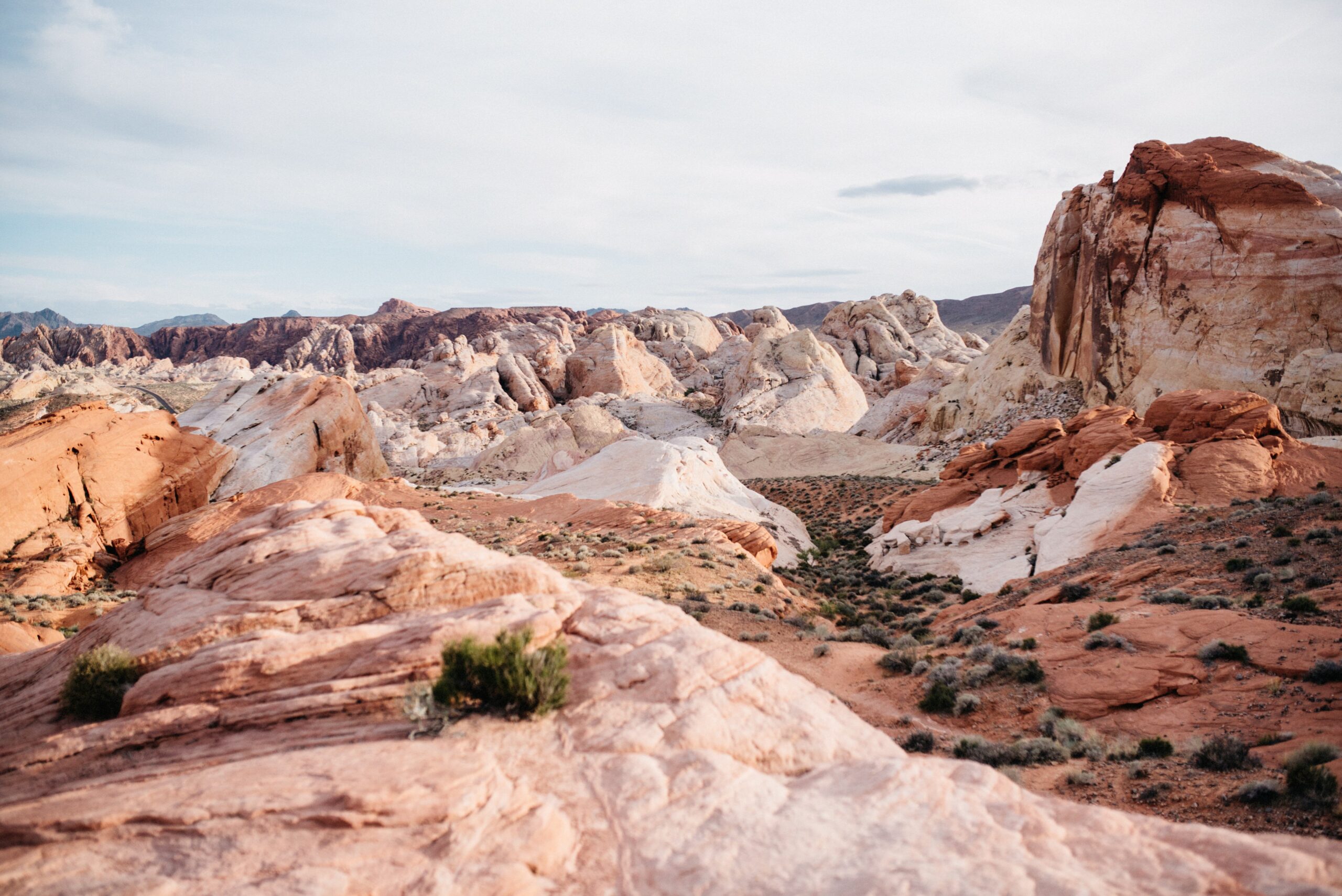
After Zion, the route led us through Valley of Fire and into Las Vegas. The two stops sat close together and looked as though they belonged to different journeys: pale desert roads and striped sandstone first, hotel towers, fountains and a circular theatre the next day.
The three days had a simple rhythm: one day among the rocks, a night on public land and two nights at Circus Circus. Le Rêve was the one Las Vegas experience we had booked in advance; everything around it was left open for walking the Strip and seeing where the city took us.
Entering Valley of Fire
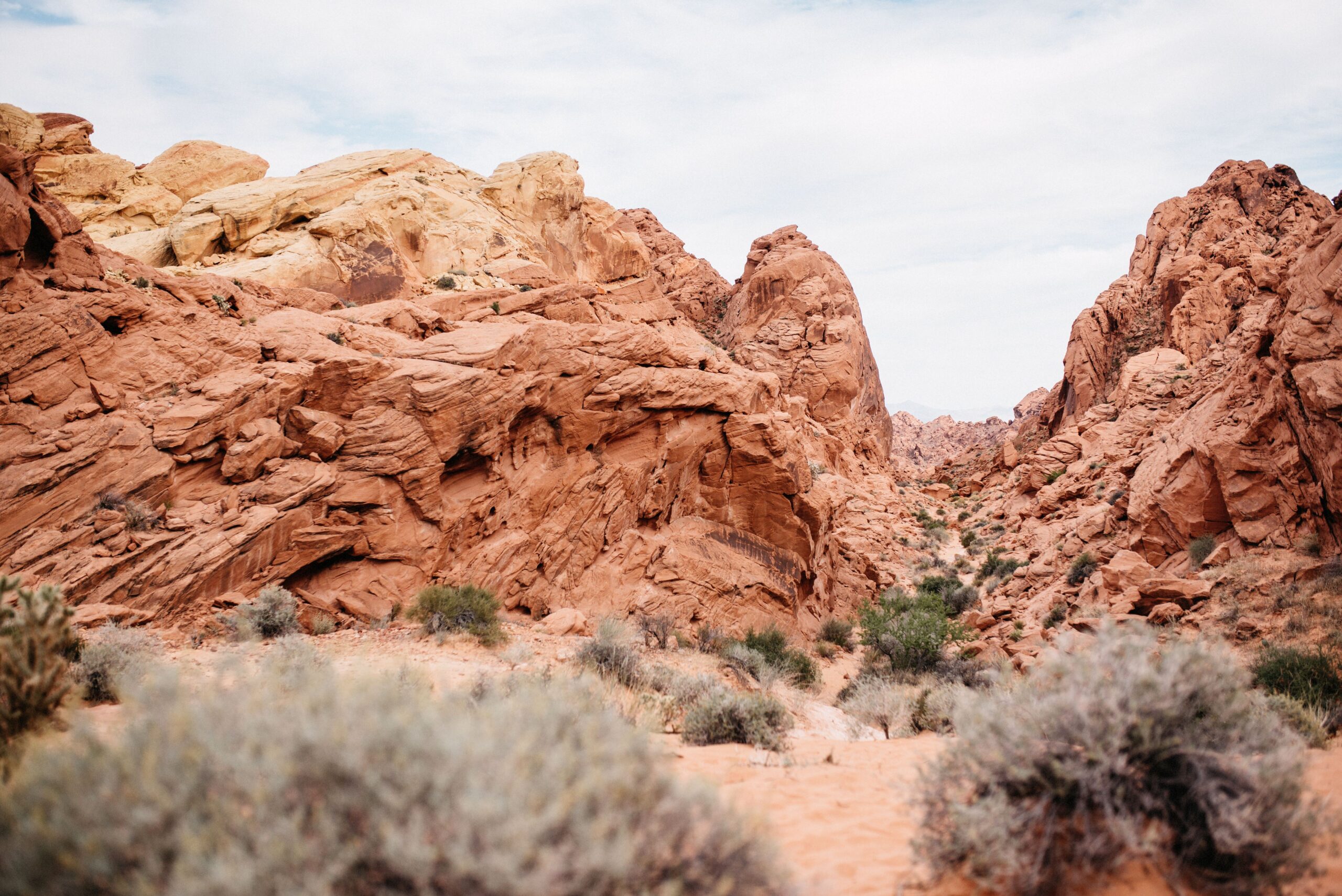
Valley of Fire State Park lay northeast of Las Vegas and charged an entrance fee per vehicle. The road entered a landscape of red sandstone that became brighter and more varied the further we drove. There were no huge visitor complexes, just pullouts, short trails and rock in every direction.
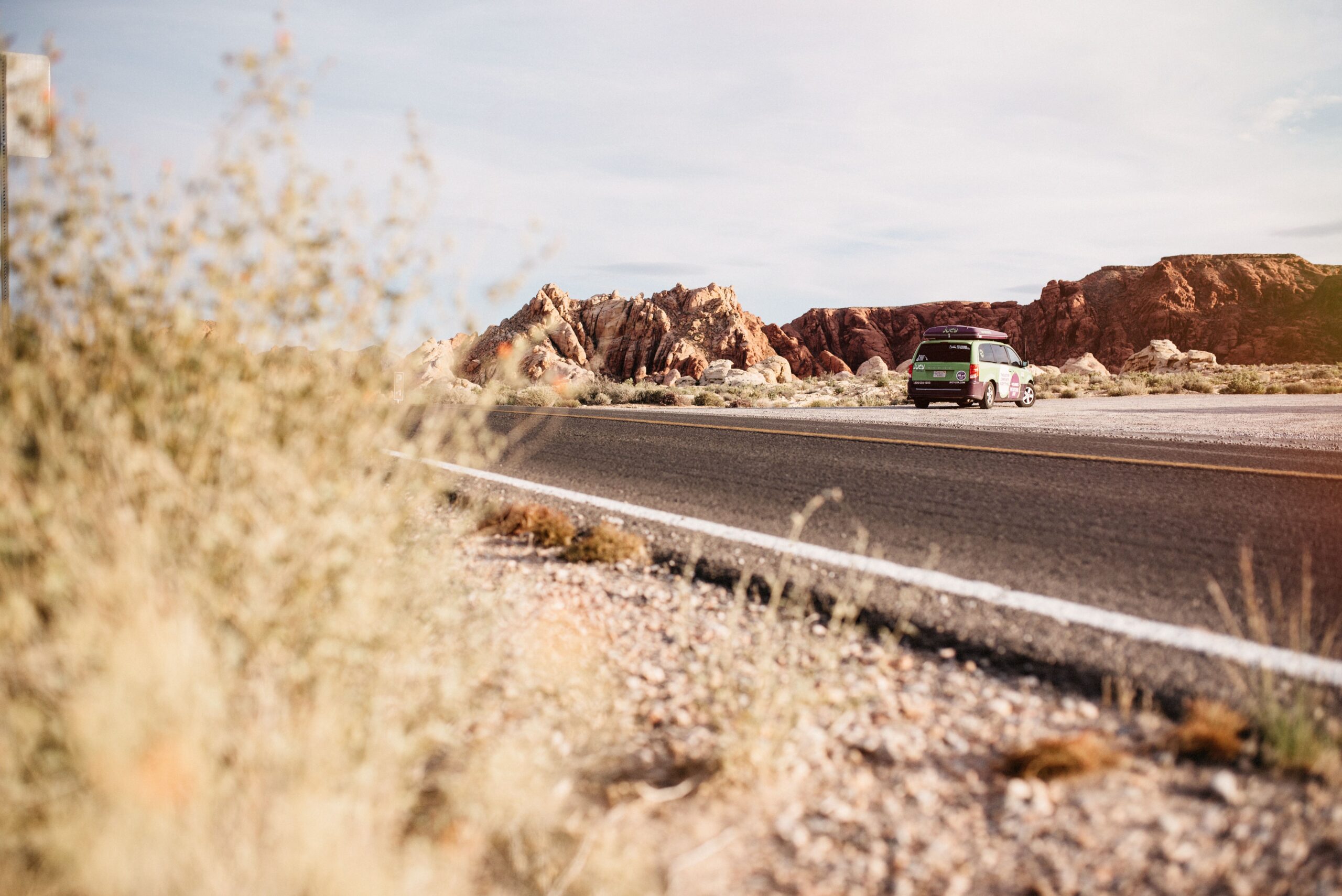
The road was part of the park
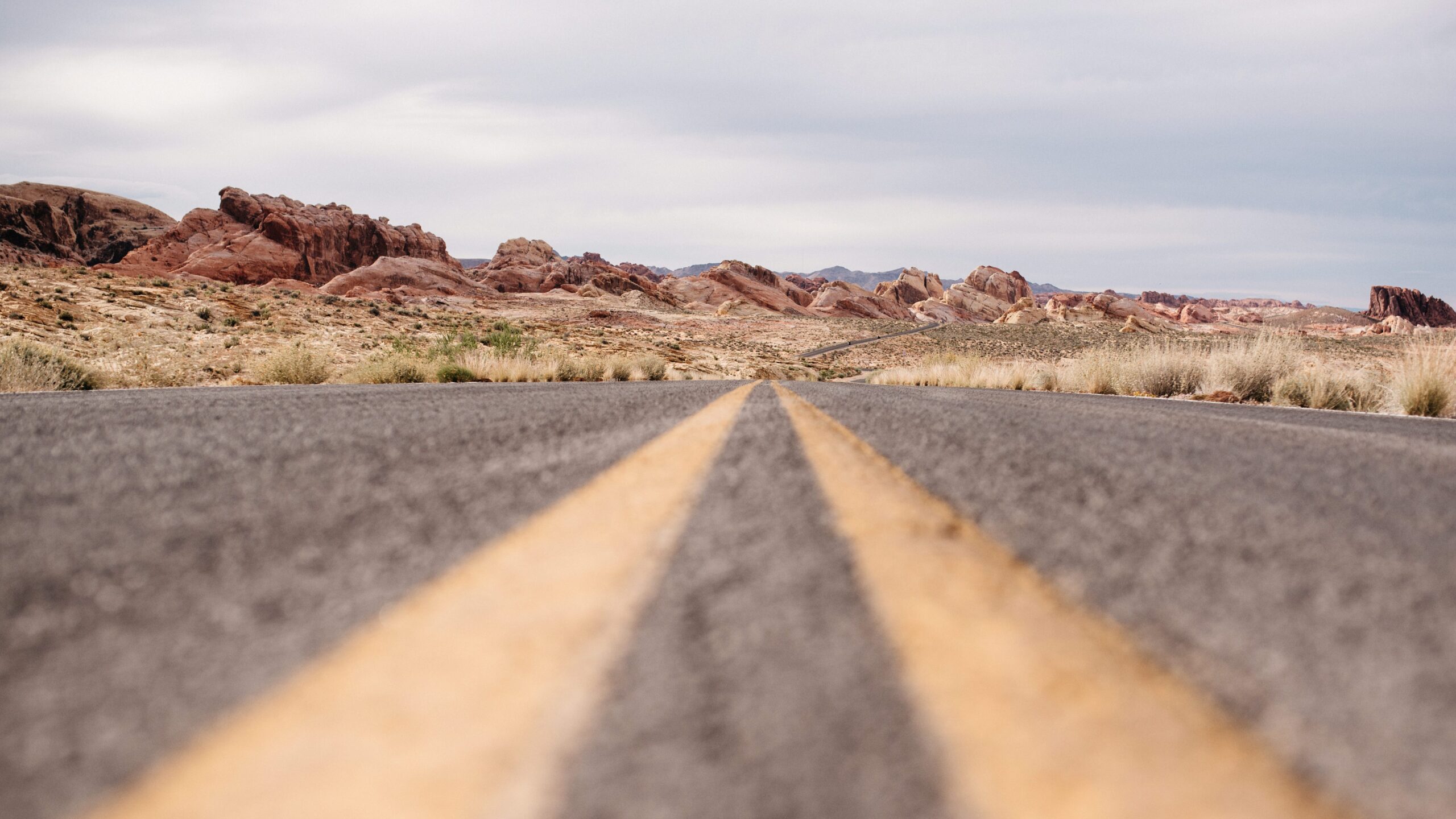
Driving was not merely how we moved between sights. The dark asphalt cut between orange, white and red hills, and several of our favourite views came from stopping beside the road rather than reaching a named viewpoint.
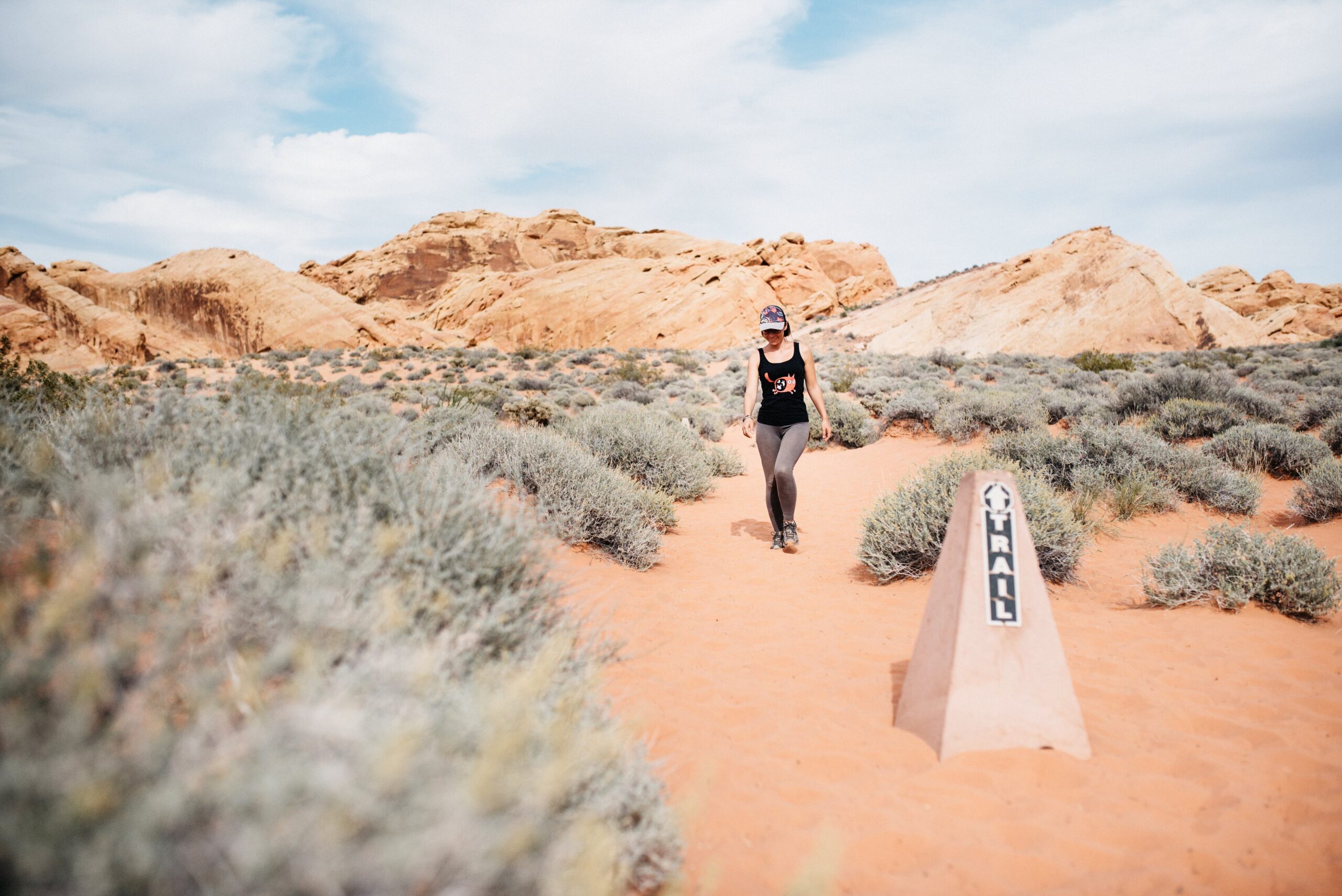
The park felt open and quiet after Zion. We could see other visitors in the distance without joining a continuous line, which made exploring the soft-looking rock much more relaxed.
We had no need to hurry towards Las Vegas. The hotel would still be there in the evening, while the empty road and muted desert light were exactly what would disappear as soon as we reached the city.
Walking to the Fire Wave
The Fire Wave was the visual highlight: broad sandstone with curved red and white stripes flowing across its surface. The walk was short and exposed, with almost no shade, so even a simple trail required water and a little respect for the heat.
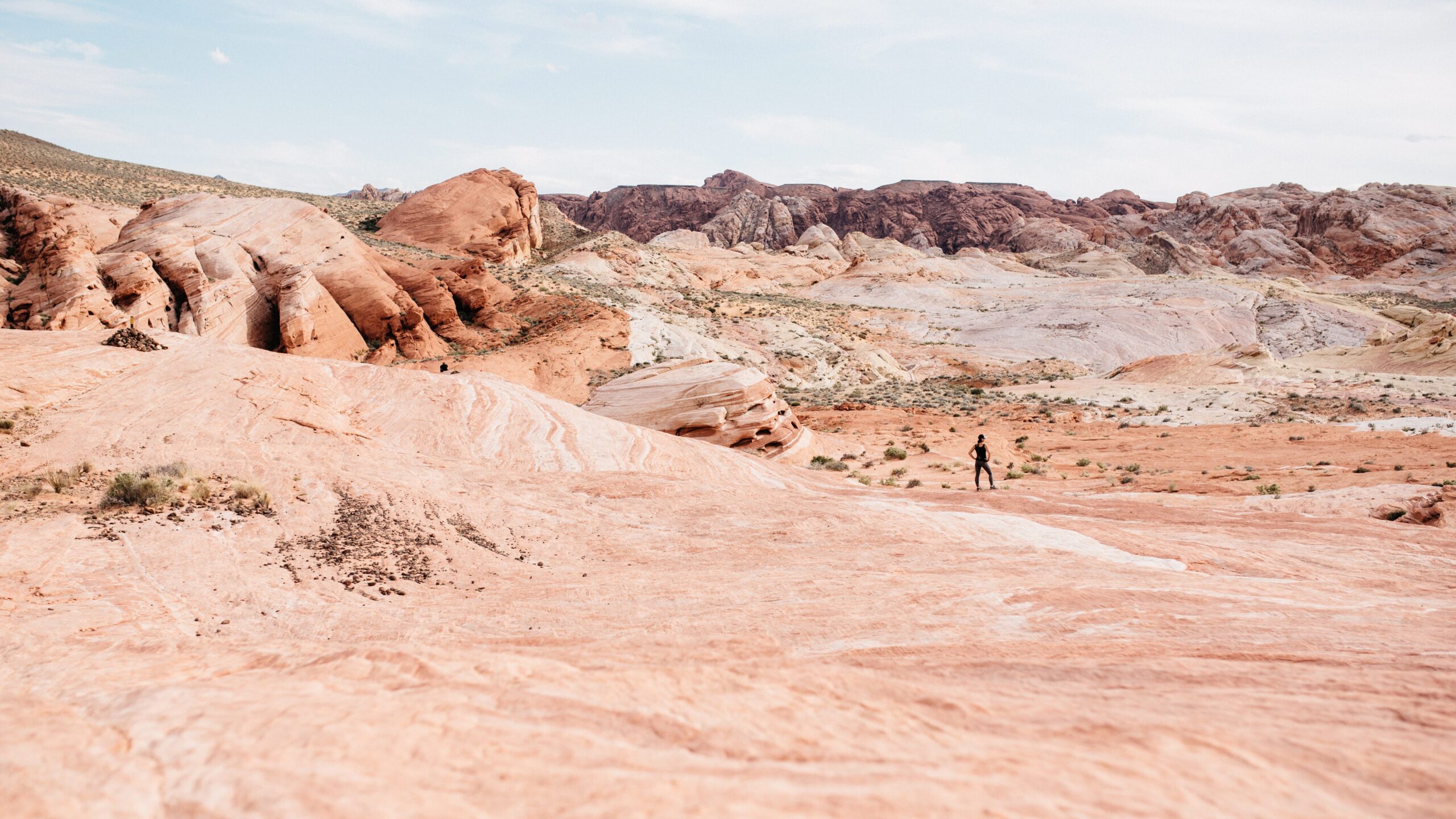
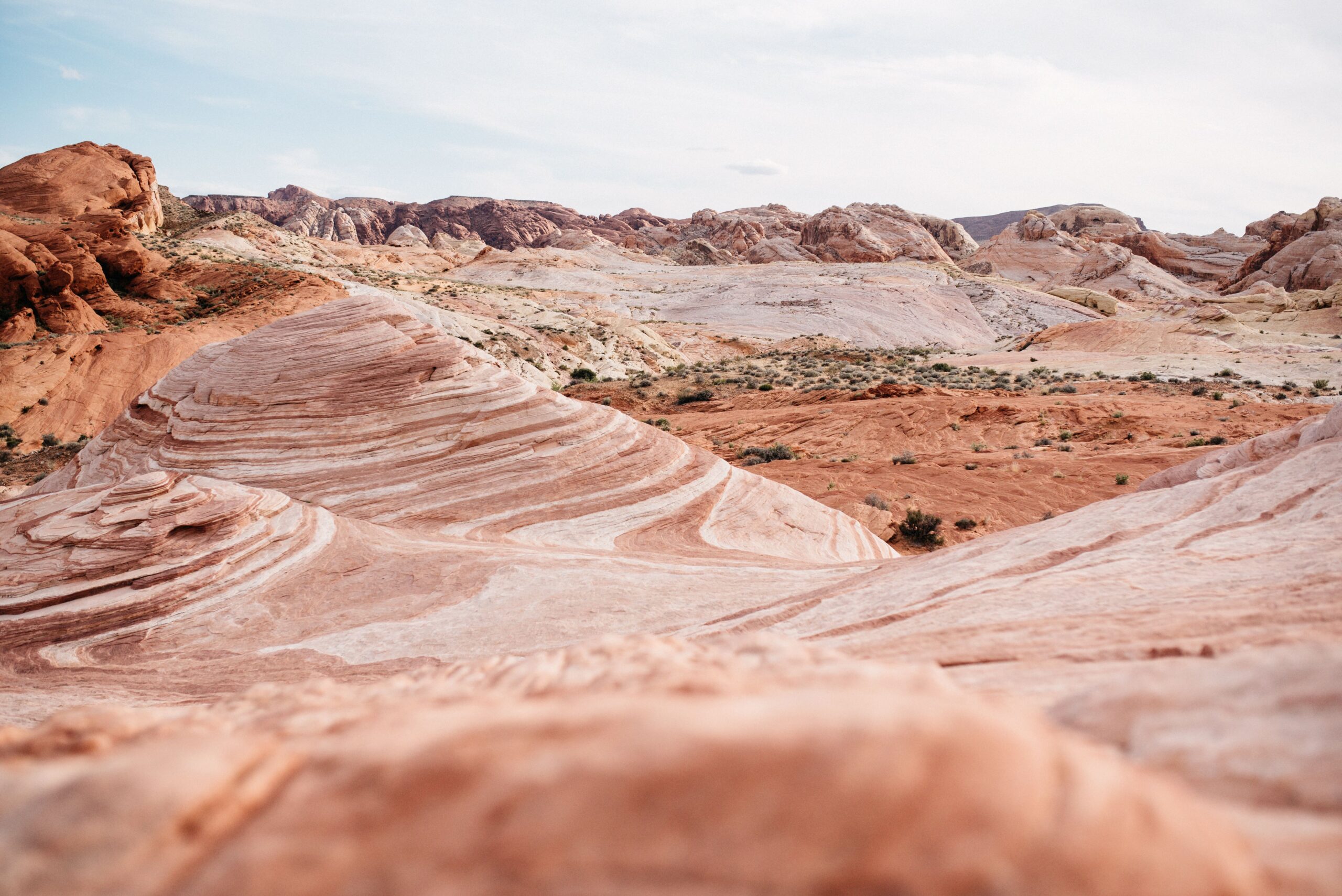
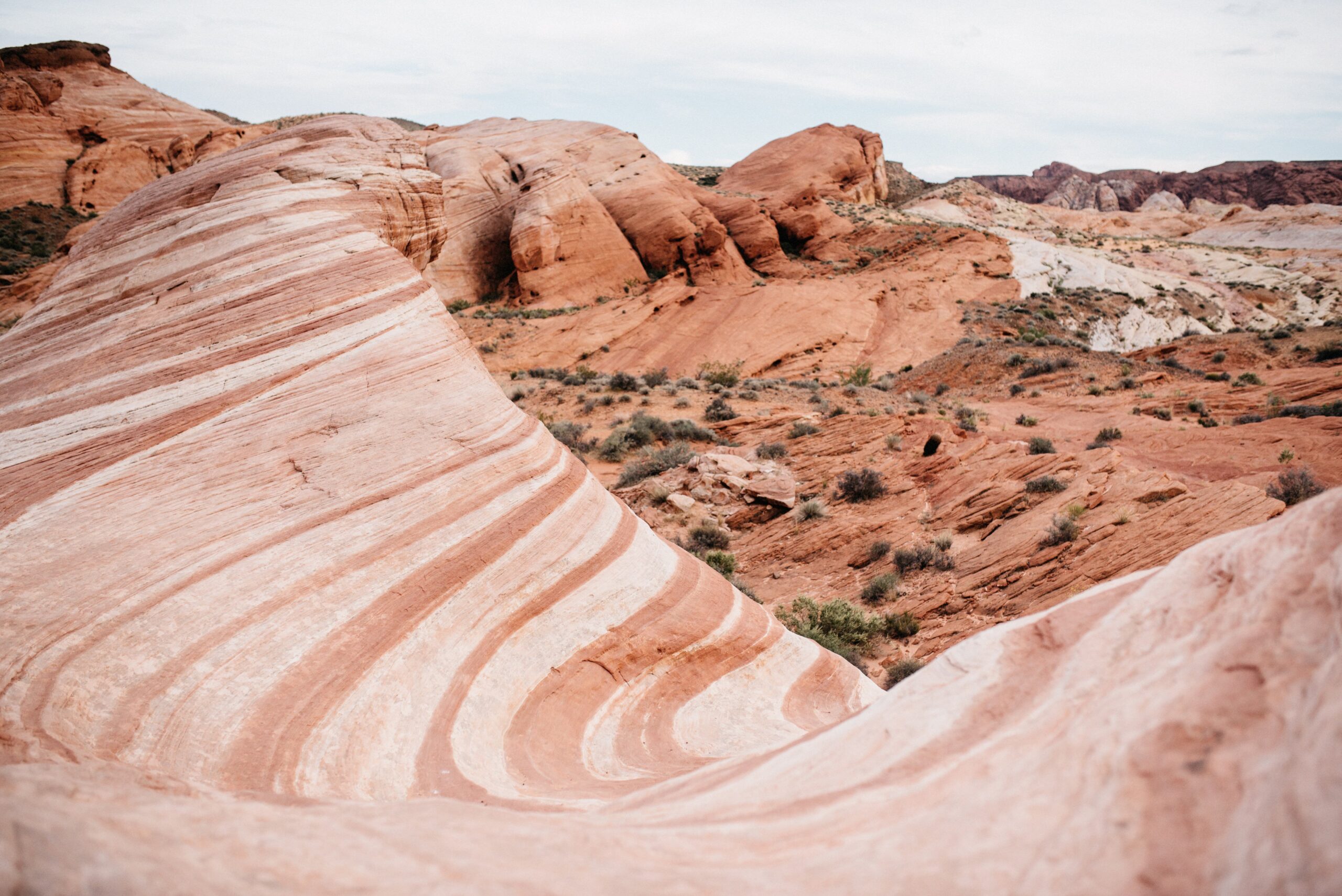
We stayed long enough to walk across the different layers and watch the colours change with the angle. Valley of Fire did not need a long list of activities. The shapes and empty space were the activity.
From public land to Circus Circus
After a night on public land near Valley of Fire, we drove into Las Vegas and checked into Circus Circus for two nights. After weeks of national parks and sleeping in the camper, even a basic hotel room changed the pace immediately.
Las Vegas was deliberately excessive. Each hotel tried to become its own world, and walking the Strip meant moving between replicas, fountains, casinos and themed interiors without ever leaving the same road.
We walked far more than the map made it appear. Hotel entrances sat back from the street, pedestrian bridges redirected the route and the next building always looked closer than it was. The Strip was designed to keep us looking, not to help us arrive quickly.
Le Rêve at Wynn
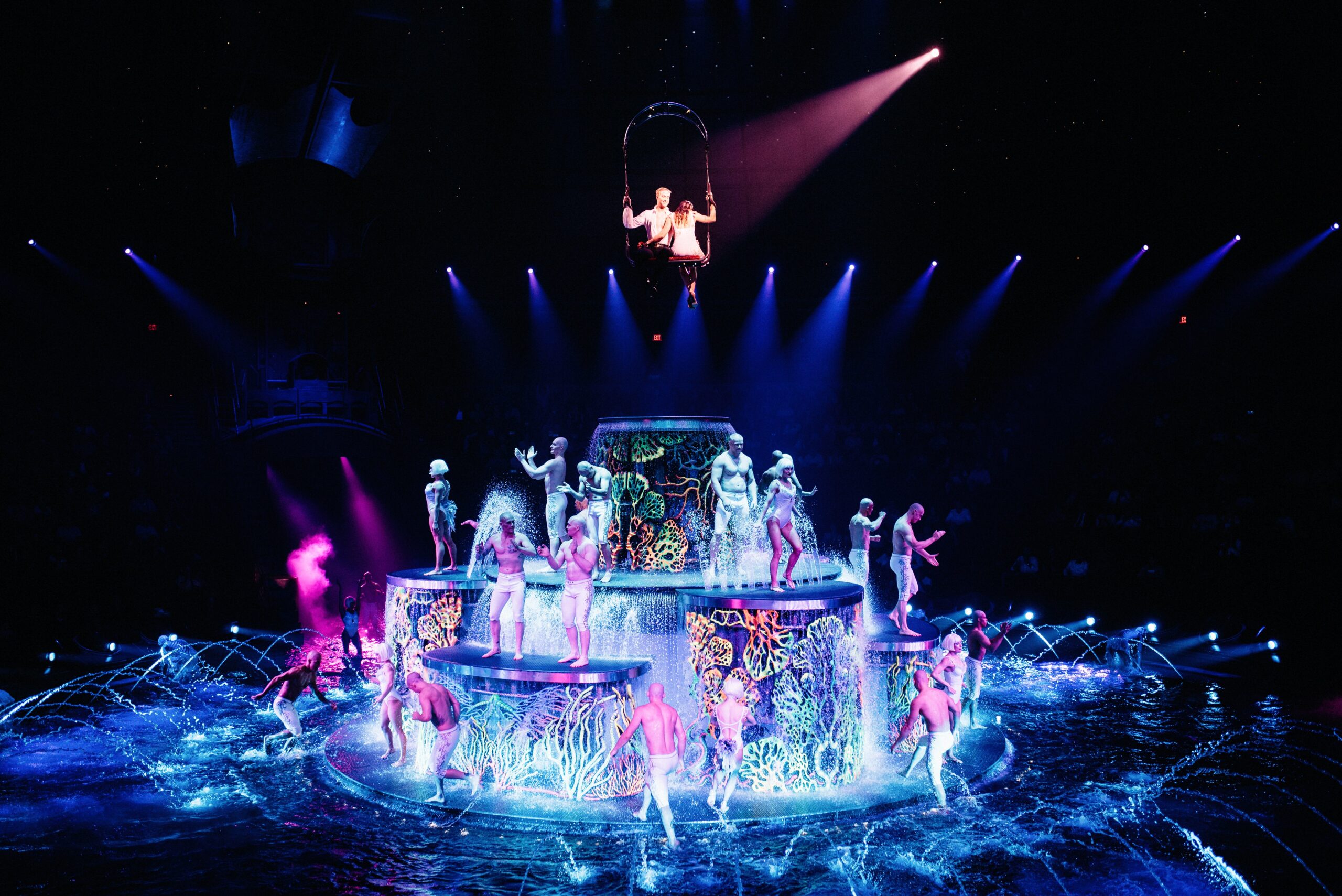
Our major Las Vegas booking was Le Rêve at the Wynn. The circular stage was built around water, with the audience surrounding it from every side. Performers appeared above the pool, disappeared below it and used the entire vertical space over the stage.


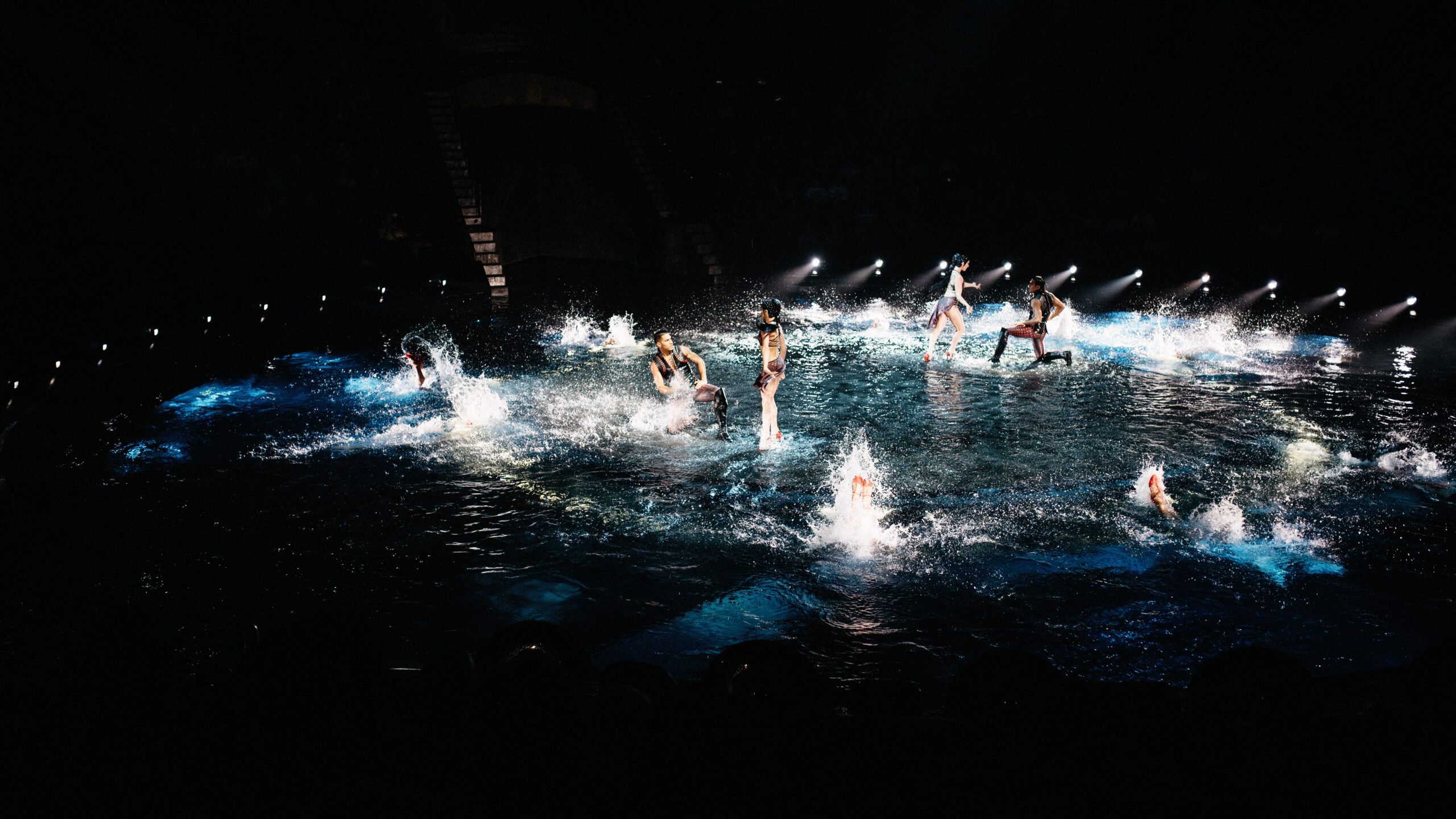
The show cost us USD 188 for two tickets in 2018, making it one of the more expensive individual activities of that month. It was also the Las Vegas experience that justified the price for us. The mixture of acrobatics, lighting and water felt designed for a city where ordinary scale was not enough.
Walking the Las Vegas Strip
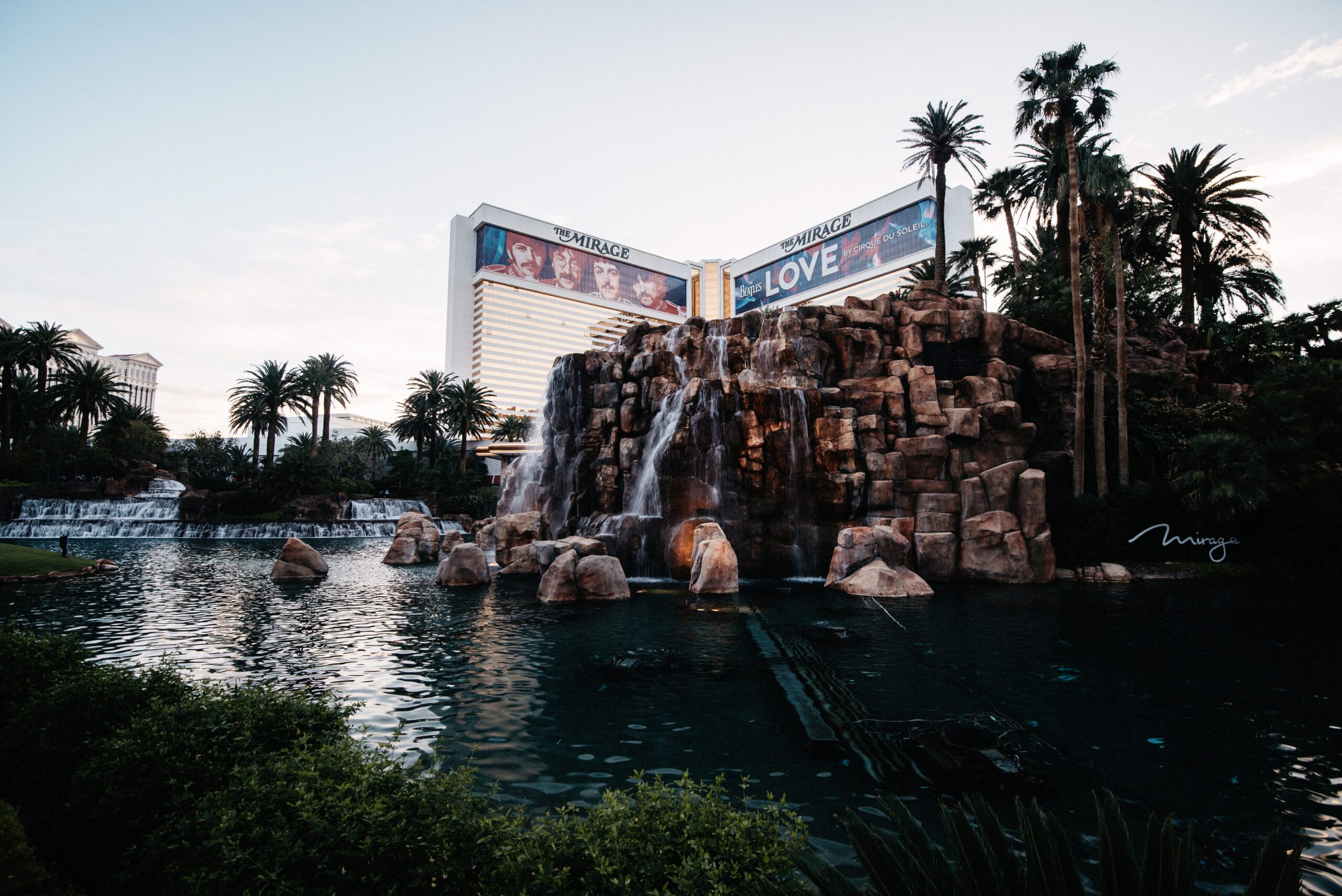
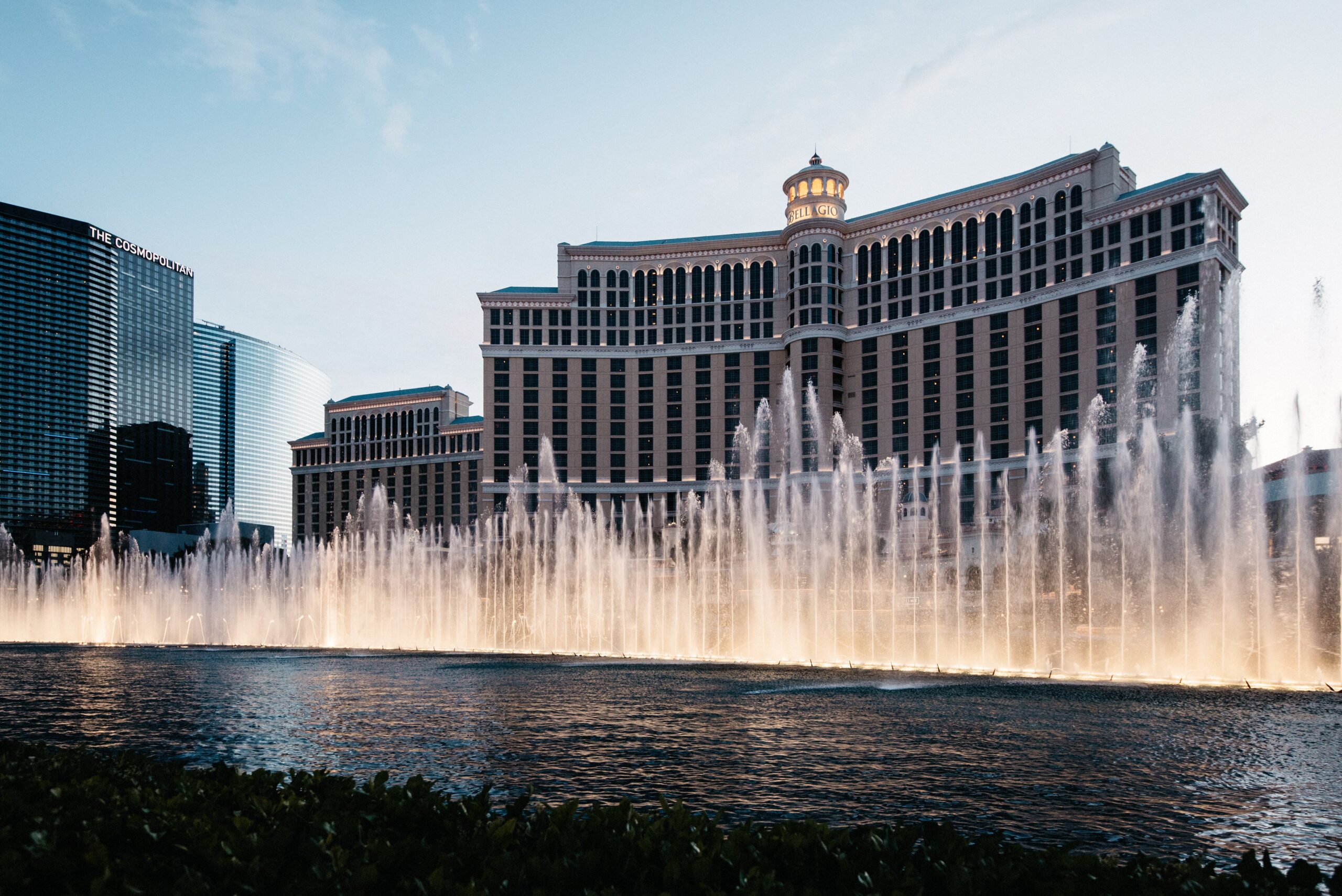
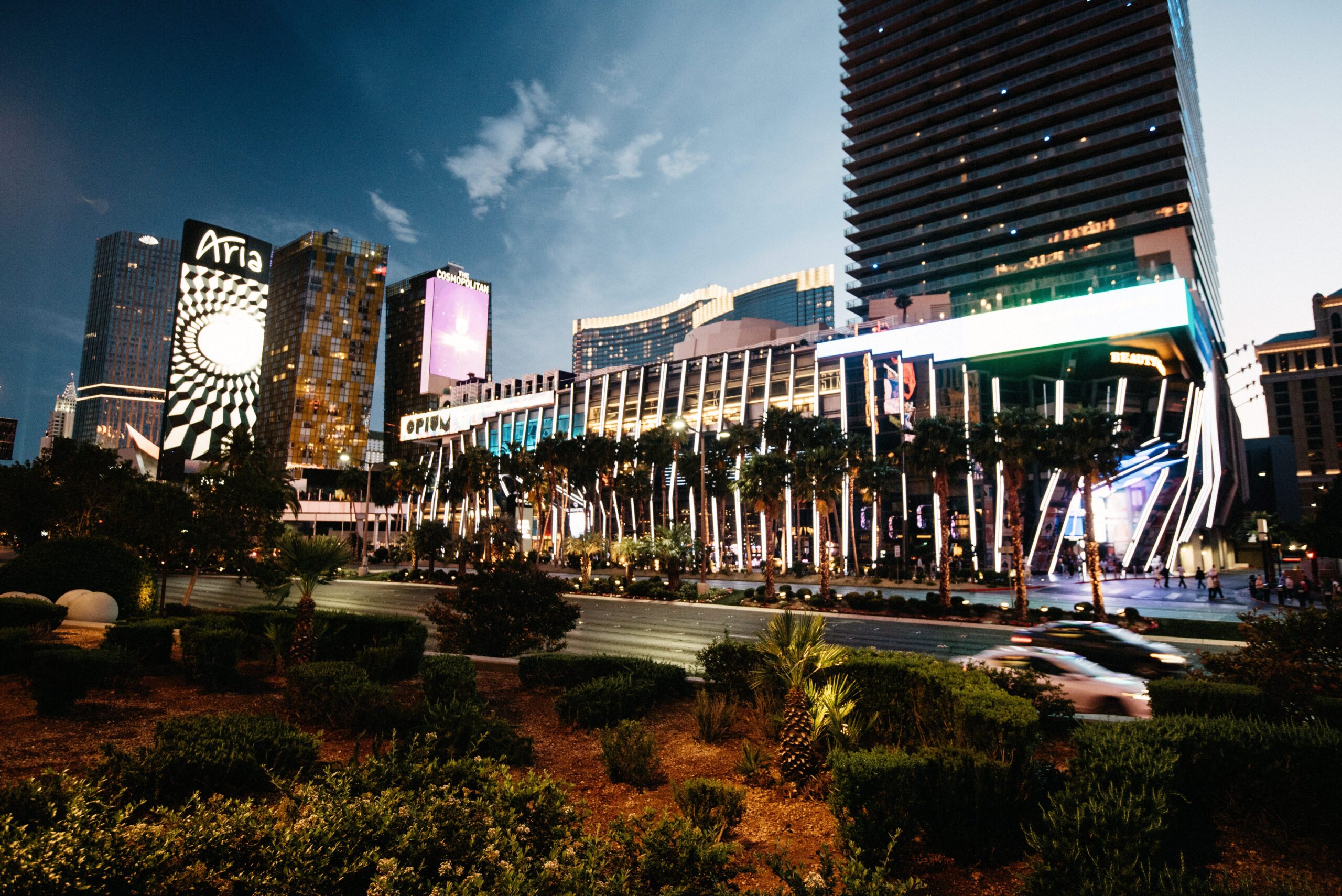
Outside the theatre, we followed the Strip past the Mirage, Bellagio and the enormous hotel façades between them. We were not in Las Vegas to gamble, and the photographs show the city we actually watched: architecture, people, lights and free spectacles outside.
The Bellagio fountains turned the lake in front of the hotel into a stage of its own. Watching from the pavement cost nothing and still delivered the kind of carefully timed excess that made the city entertaining even without entering a casino.
The obligatory Las Vegas sign
Before leaving, we stopped at the Welcome to Fabulous Las Vegas sign. It was an obvious photograph and therefore one we obviously wanted. We waited our turn, stood beneath it and accepted that originality was not the point.

Then we drove towards the Grand Canyon. The quiet red rock of Valley of Fire and the controlled spectacle of Las Vegas had filled the same three-day chapter, and neither would have worked as well without the contrast of the other.
We did not leave as gamblers or Las Vegas converts. We left happy that we had seen one excellent show, walked the famous street and given the city exactly two nights before returning to the road.