
Chicago was the point on the map where our first world trip would end. That felt completely unreal right up until the skyline appeared. After months of new roads, unfamiliar beds and deciding where to go next, we suddenly had only two city days left before the flight home.
By the time we reached Chicago, the rhythm had changed. We were no longer trying to squeeze another great detour into the route. We walked, looked up at the skyline, carried the flag one last time and slowly understood that after 247 days there really would be no next stop.
Leaving the Badlands
From the Badlands we drove to Sioux Falls. The open western landscapes slowly gave way to the long eastbound roads that would take us back to a major city. This part of the journey was less about finding another highlight and more about closing the distance without rushing the final days.
Two nights in Minneapolis
From Sioux Falls we continued to Minneapolis and stayed for two nights. The stop divided the drive and gave us a last pause before Chicago. By then our luggage, daily routines and constant movement had become completely normal, even though we knew we would soon exchange them for home again.
Arriving in Chicago
We spent our first night near Midway and then moved into the city for two nights. For the first time in months, every remaining morning fitted on one hand, and the flight home was no longer some distant entry at the end of the route.
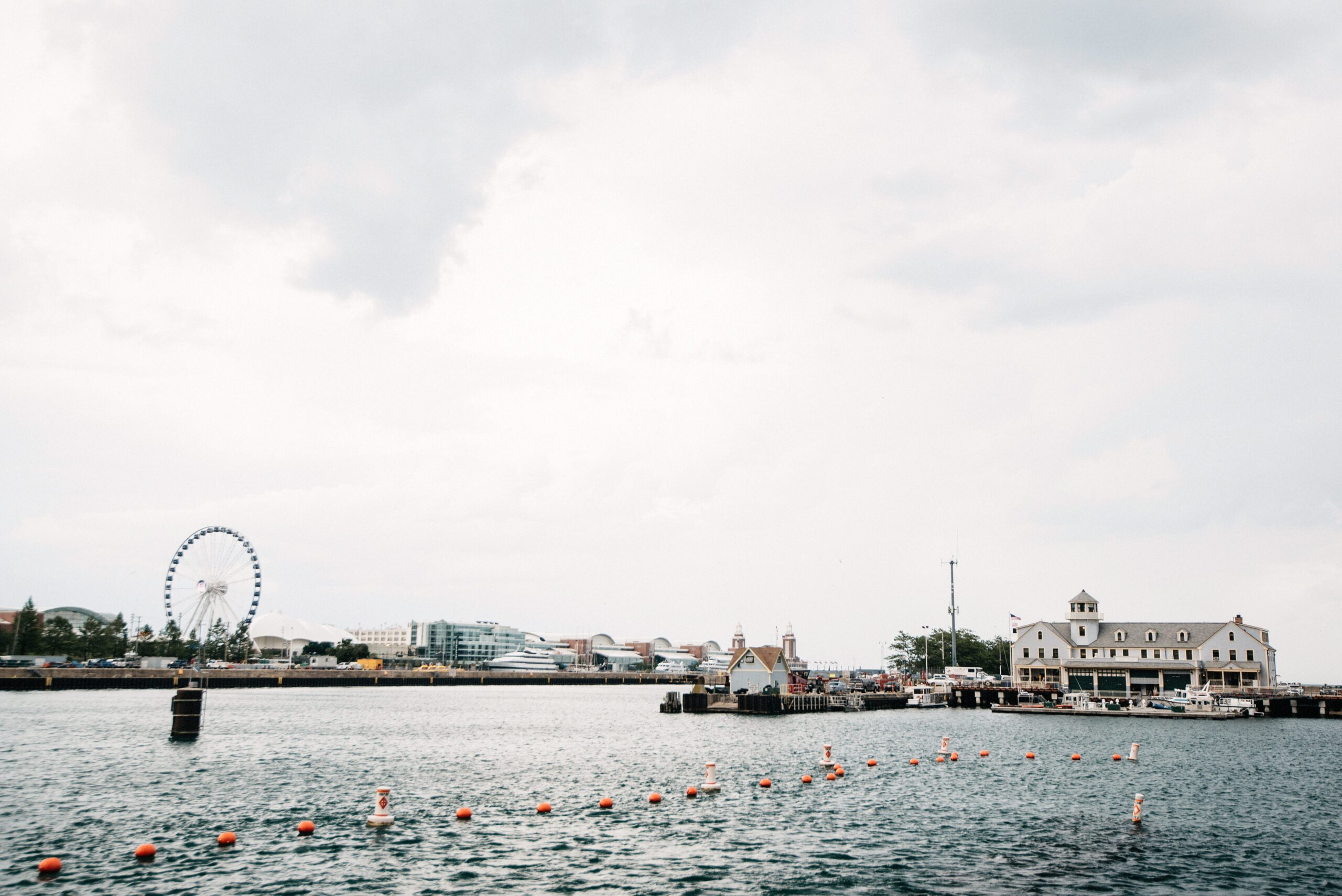
The lakefront made Chicago feel unusually open for a city of this size. Navy Pier, boats and the Ferris wheel sat against the skyline, with Lake Michigan stretching far enough to look more like a coast than an inland lake.
Giving back the car
Before our final nights in the city, we returned the car that had carried us across the USA and Canada. Handing over the keys made the ending more tangible than any countdown. Until then, there had always been another road, another campsite and another place to reach the following day.
From that point on, our world became smaller again. Chicago was no longer another stop on a road trip but the place from which we would fly home. We still had time to walk through the city, but the long North American drive was already behind us.
A rainy walk through the city
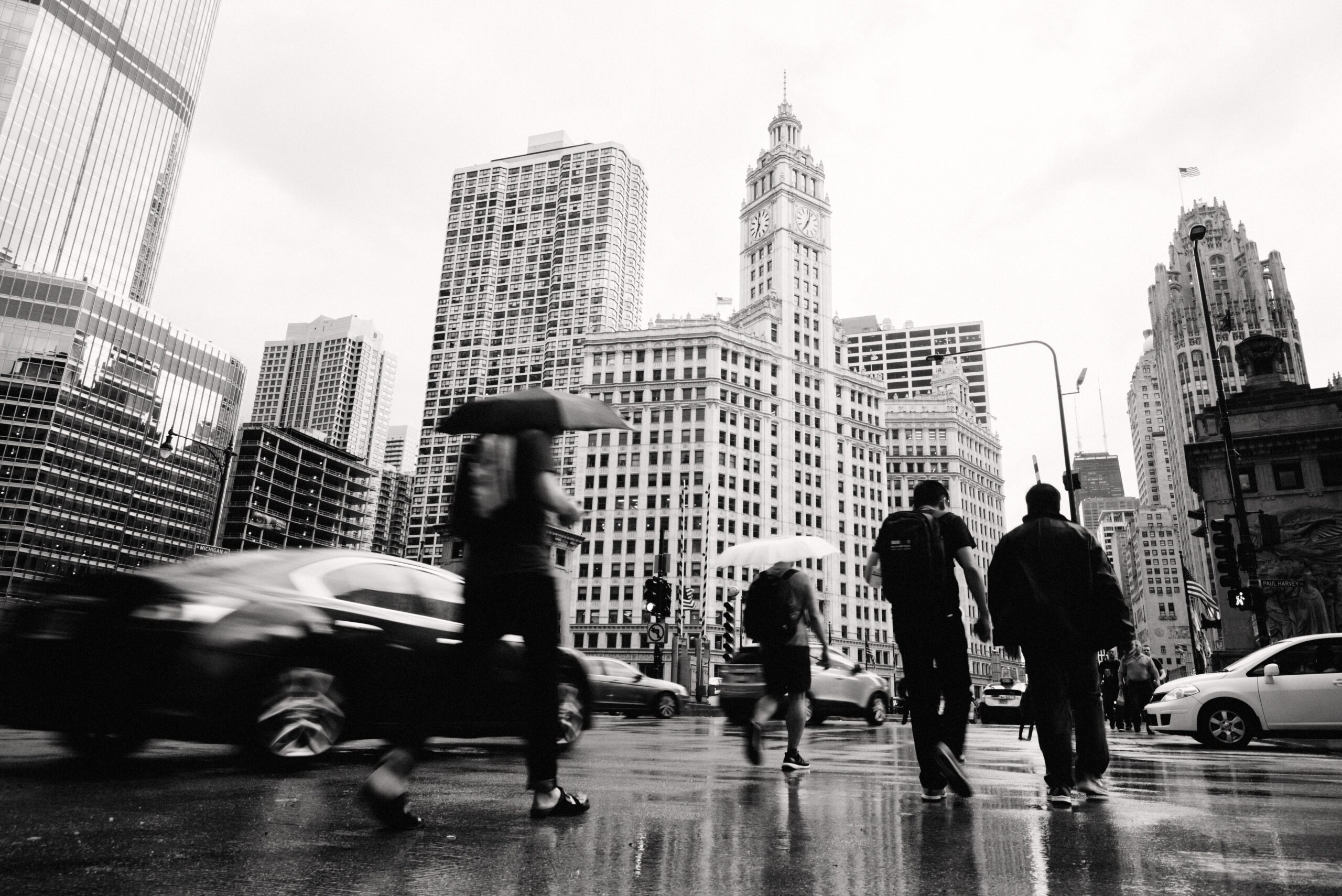
The weather did not give us the clear final-city photographs we might have ordered. Streets reflected the towers, people crossed under umbrellas and the buildings disappeared into pale cloud. We walked anyway. After eight months, waiting for ideal weather was not a strategy we needed anymore.
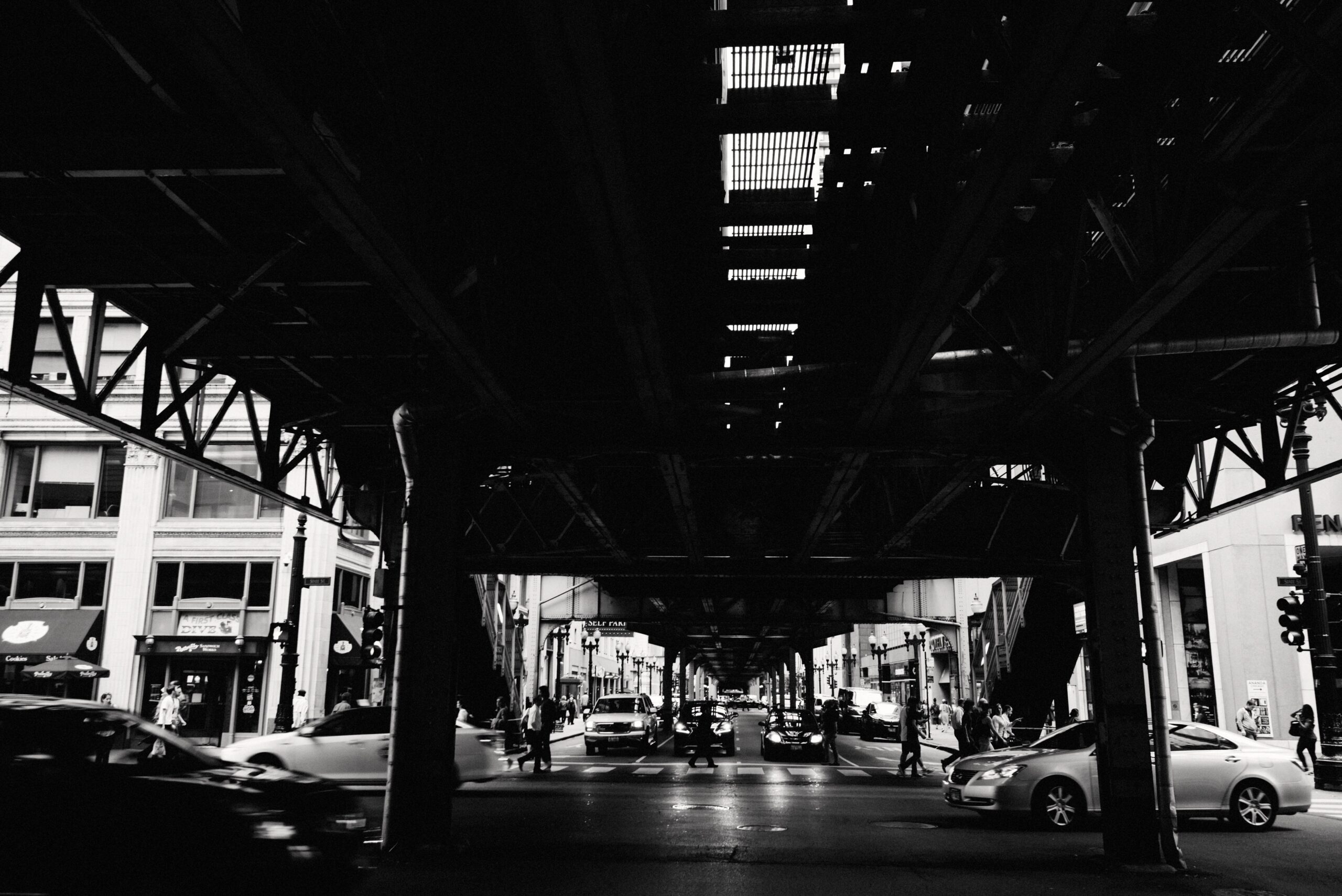
Chicago looked best when the structure of the city became visible: the elevated railway above the streets, bridges over the river and towers packed close to the water. It felt different from Los Angeles, San Francisco and Vancouver, our other major North American city stops.
One final photograph at Cloud Gate
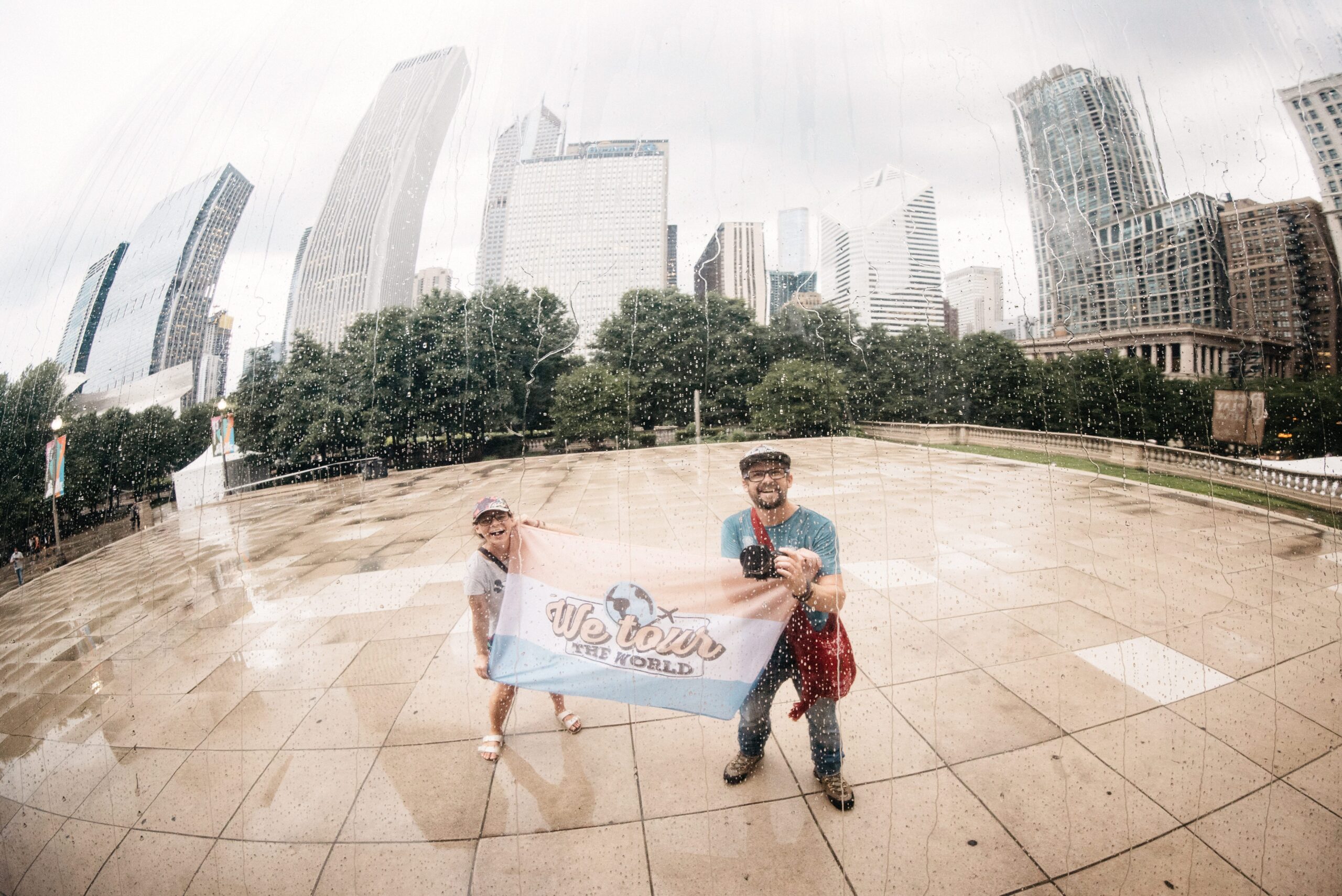
We took our travel flag to Cloud Gate in Millennium Park. The polished surface reflected the skyline, the wet pavement and two people who had carried the same flag through a large part of the world.
It was an obvious place for the final flag photograph, which did not make it less meaningful. The picture connected Chicago with all the earlier stops where we had unfolded it, held the corners and tried to keep the wind from turning the logo backwards.
Along the Chicago River
The river brought the architecture together. Marina City, modern glass towers and older stone buildings stood directly beside the water, while bridges and water taxis moved between them. We followed the river rather than trying to add one more paid attraction to the final budget.
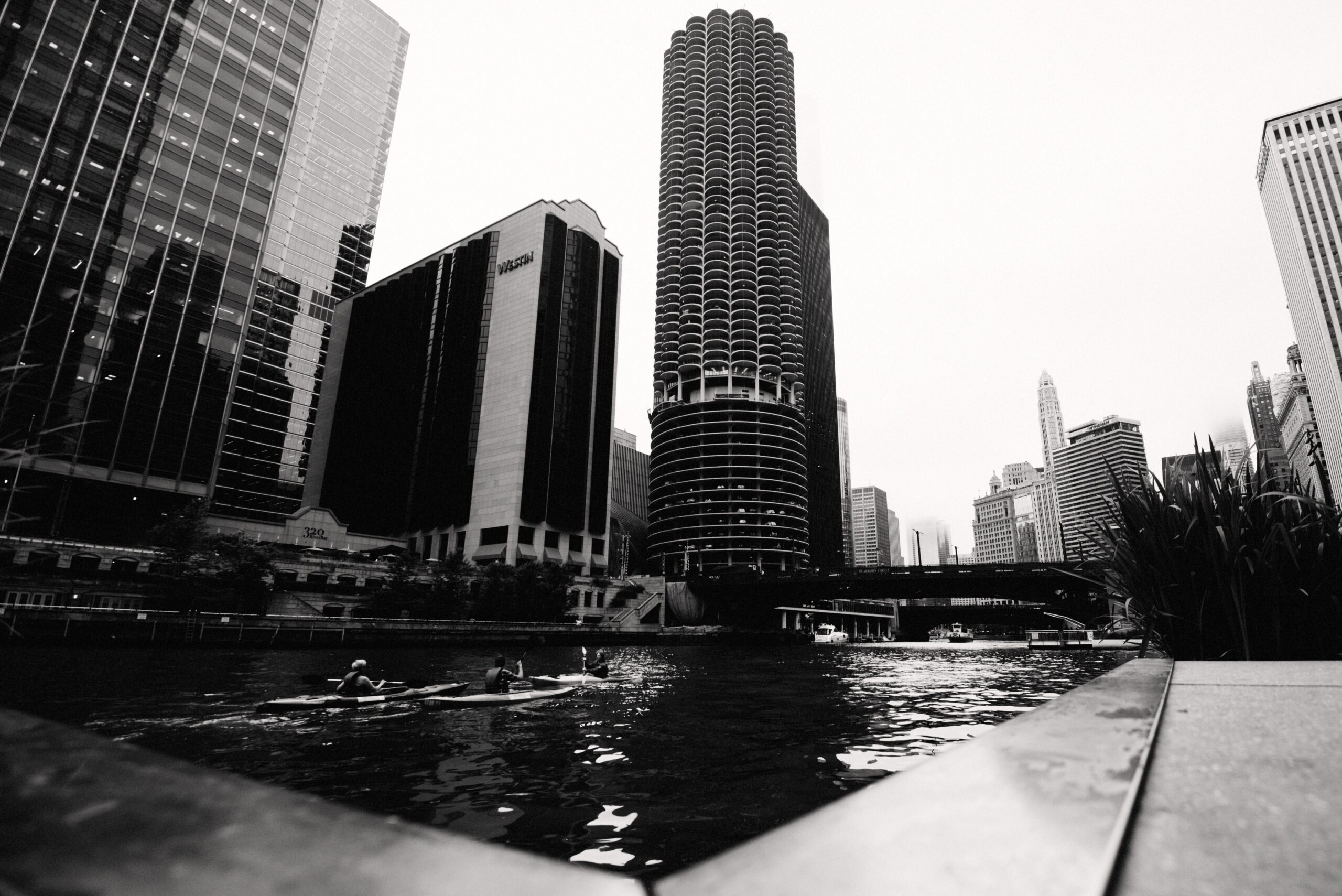

That walk became the visual ending of the journey: no single monument, just the city moving around us while we understood that there would not be another road-trip stop after it.
Flying home after 247 days
From Chicago we flew back to Munich. The first world trip had lasted 247 days and crossed five continents. The final flight did not need a dramatic farewell scene. We packed, went to the airport and did the thing that had once felt unimaginably far away: we went home.
Chicago was not the loudest chapter of the trip, but it was the right final one. It gave us a last city to explore and enough space between the sights to notice what was ending.