Israel is one of the most fascinating places we have visited. Traces of thousands of years of history appear around almost every corner, and the country brings cultures and religions together in a way we had never experienced before. We spent seven days exploring places we had learnt about at school and discovered that the food was just as memorable as the history.
We were not familiar enough with all the historic and religious background to understand the places on our own, so we joined a guided round trip. We were very glad we did. We learnt a lot that we would otherwise have missed, and the route allowed us to see a surprising amount in one week without spending every day looking for parking.
Seven days in Israel over Christmas
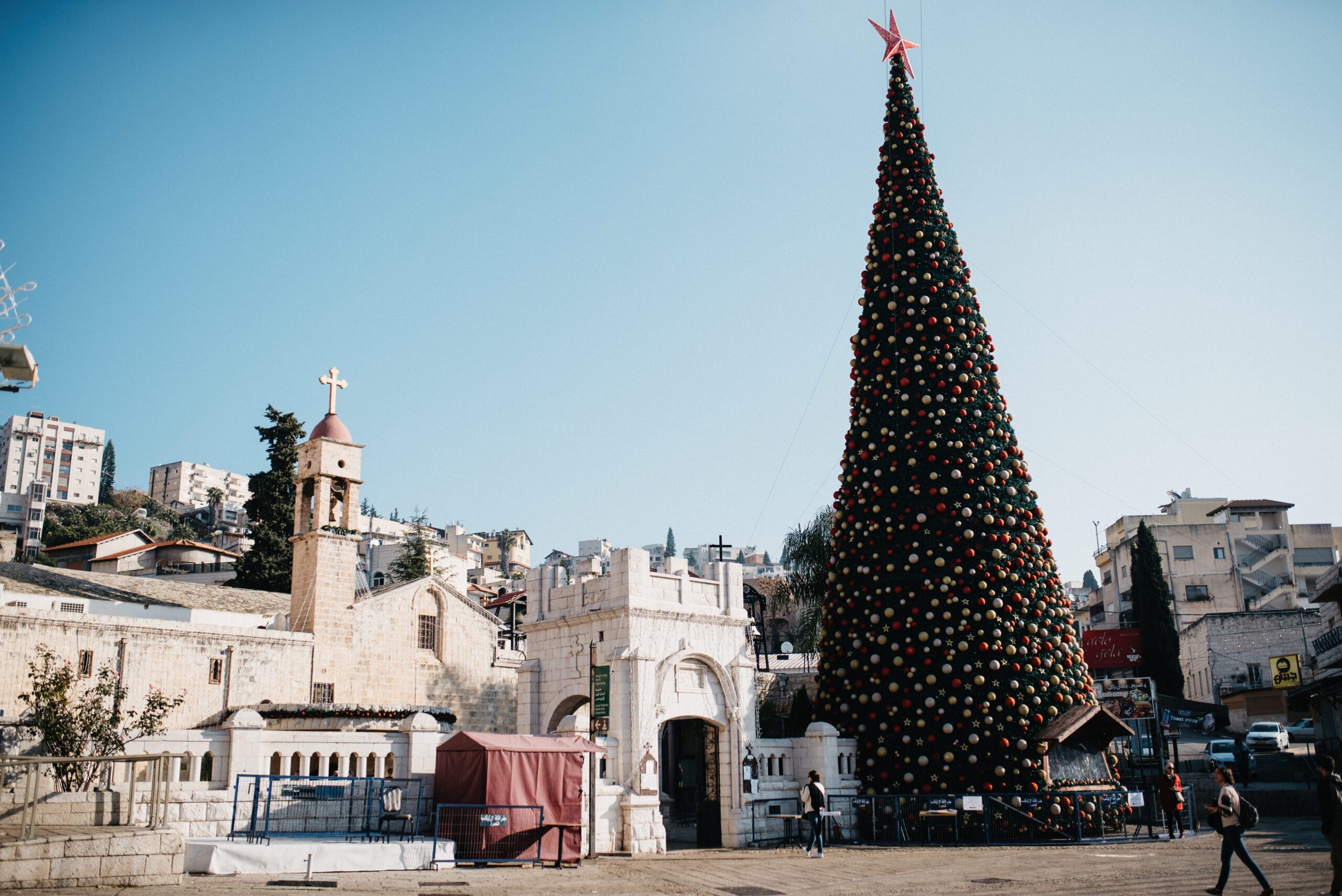
We travelled in December 2018, over Christmas. Winter is the rainy season, but we were lucky and had mostly sunny weather. The light was beautiful, the temperatures were comfortable for walking and the Christmas decorations in Nazareth made the timing feel rather appropriate.
Our route started around Tel Aviv and Old Jaffa, continued north through Caesarea, Haifa, Nazareth and the Sea of Galilee, and then took us to the Jordan River, Jerusalem, Bethlehem, Masada and the Dead Sea. It was a lot for seven days, but every stop showed us a completely different side of the trip.
Old Jaffa: the historic side of Tel Aviv
Tel Aviv felt modern, lively and very much like a party city. Old Jaffa was the historic and cultural counterpart right beside it. Together they formed a fascinating mix of old harbour walls, narrow stone alleys, street art, musicians and a modern skyline across the water.
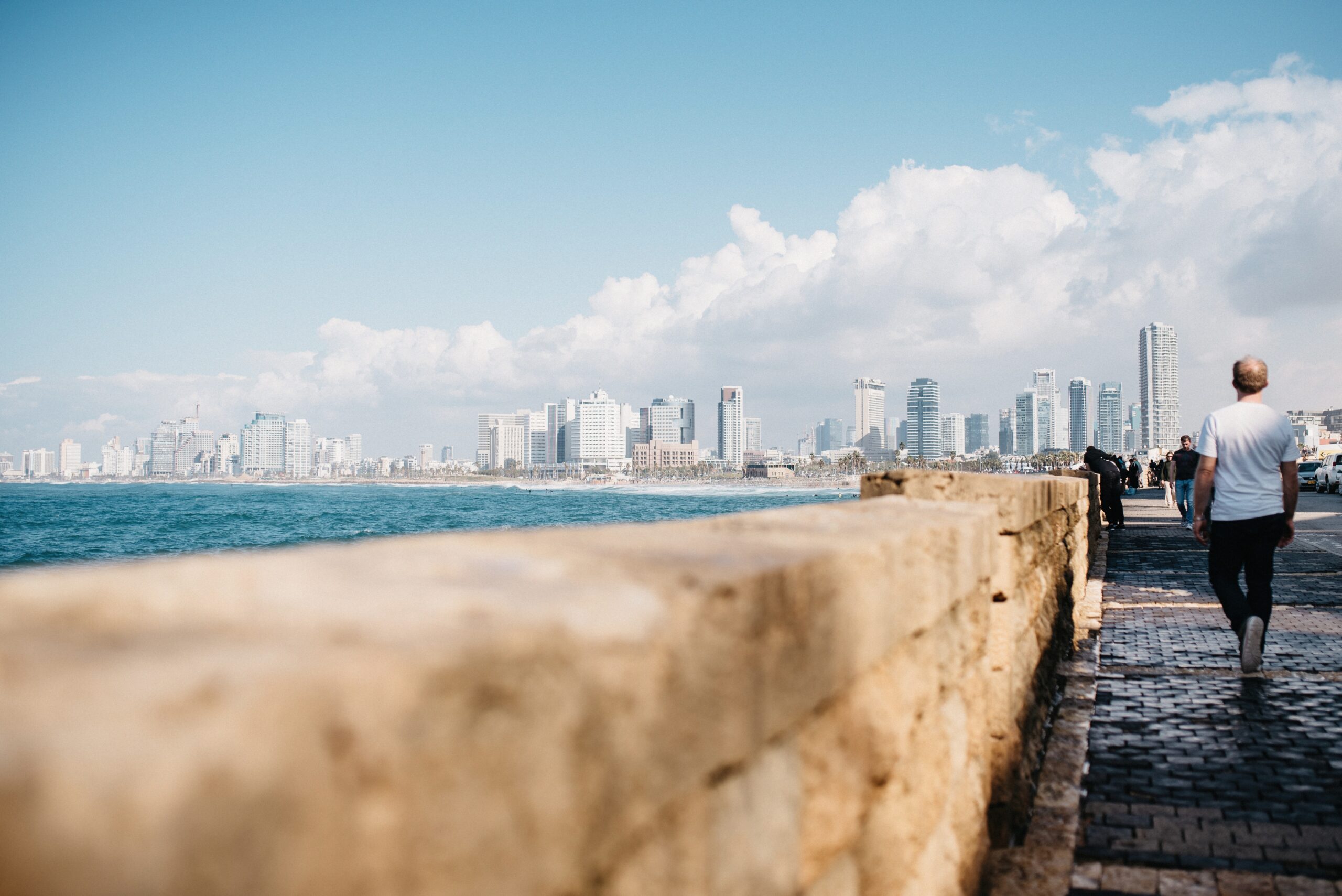
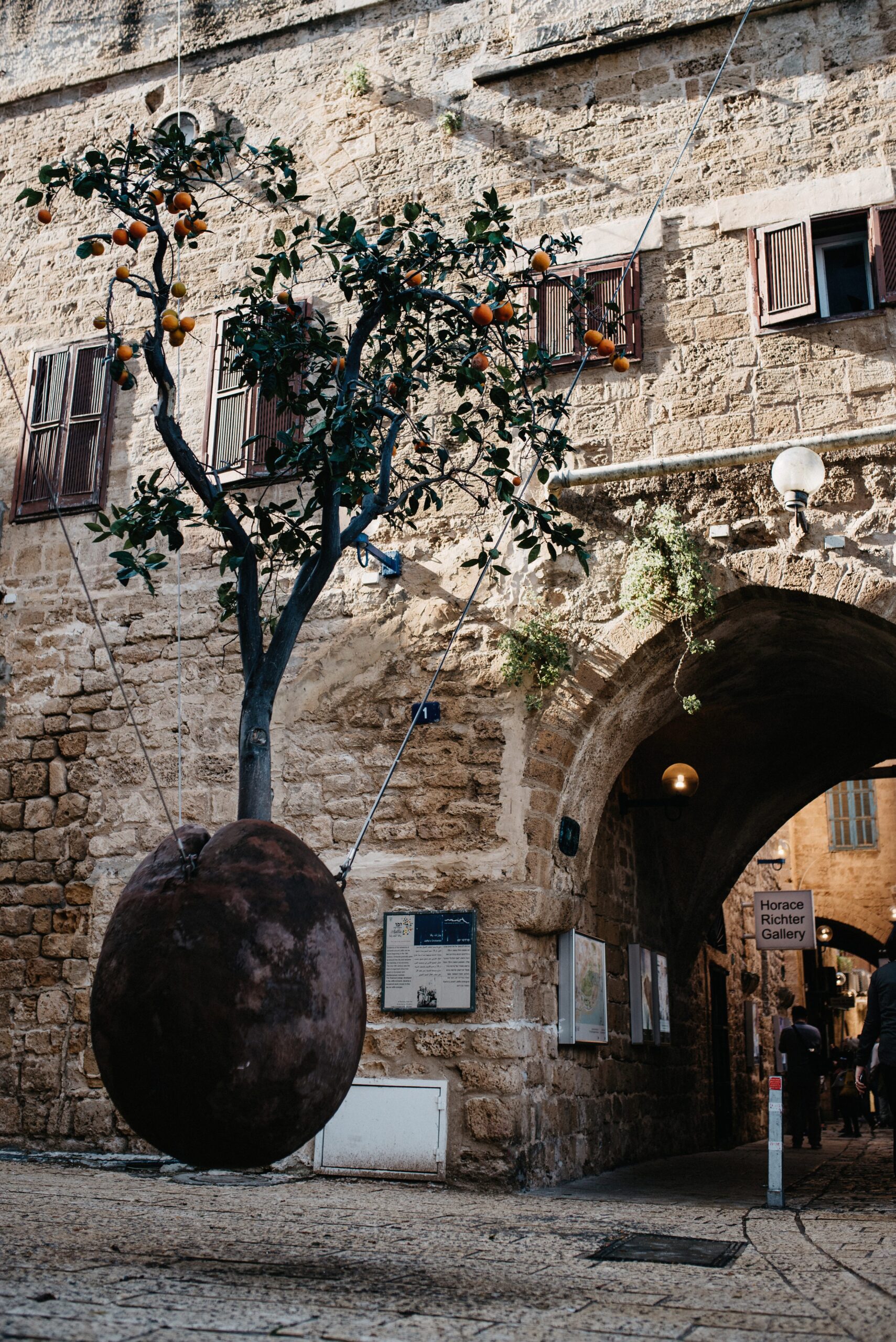
We joined a free walking tour because we wanted more than pretty alleys and sea views. The guide gave us the background to the harbour town, its architecture and the people who had passed through it. Two hours were enough for a good overview and left us time to walk back through the places we wanted to photograph again.
Ancient history at Caesarea
Israel’s history did not start with the places connected to Jesus. At Caesarea, the ruins of the harbour city built under Herod sit directly beside the Mediterranean. The remains of public buildings, the theatre, the harbour and the aqueduct gave us a first idea of the scale on which he built.
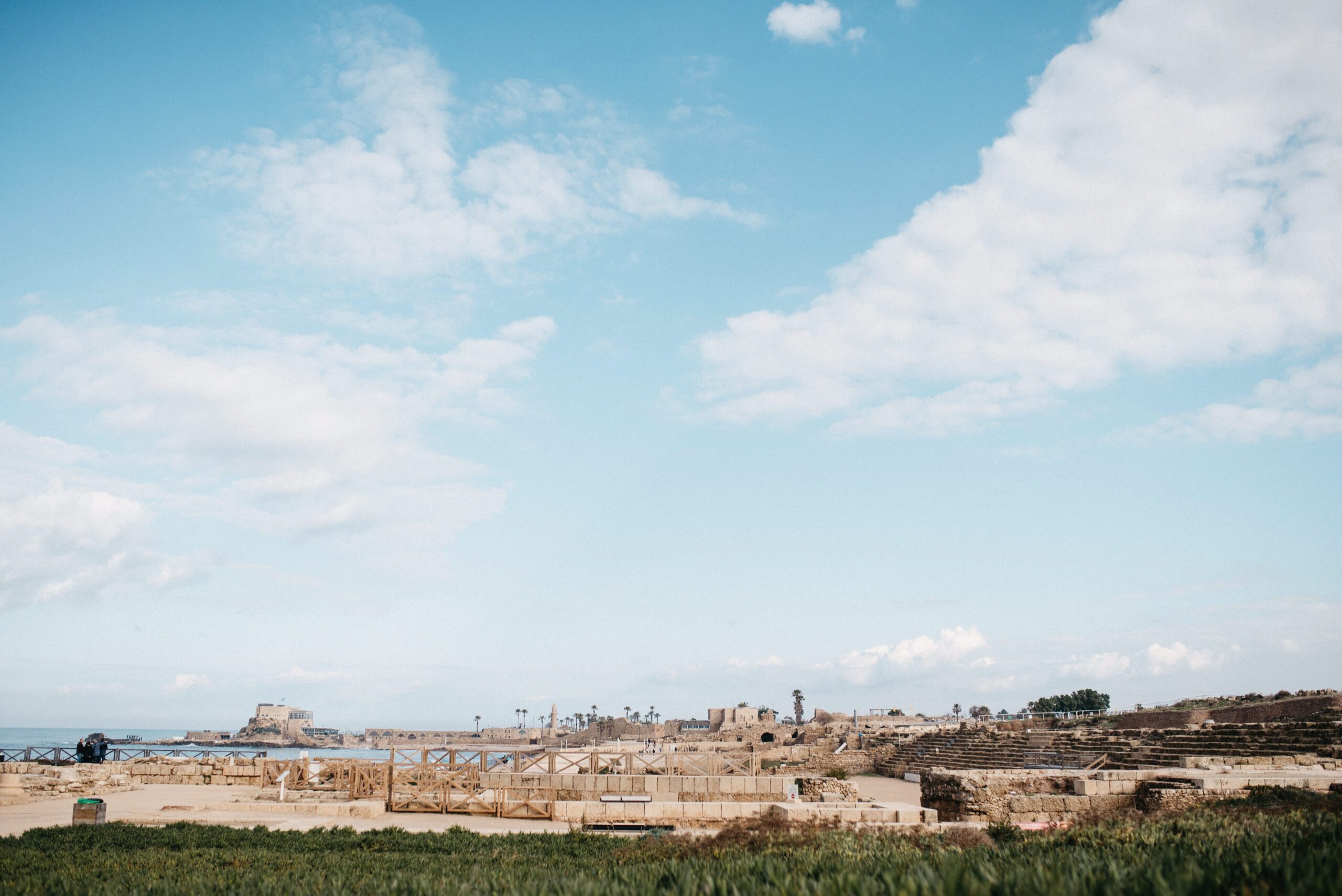
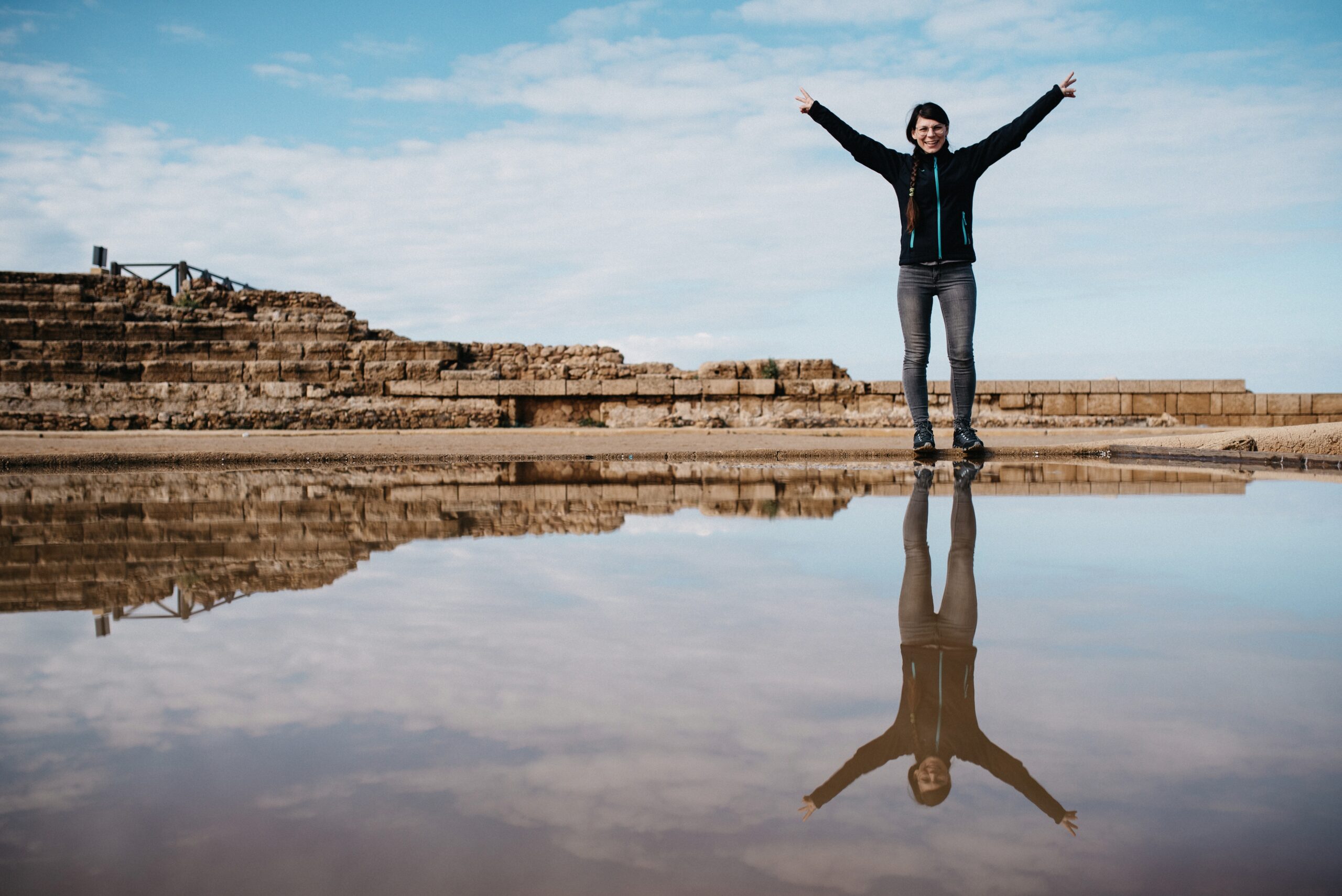
It was one of those archaeological sites where the location does half the work. The pale stones, blue sky and sea made the ruins look beautiful even before we understood what we were seeing. With the historical background from our guide, the broken walls became much easier to imagine as part of a real city.
Haifa, the Sea of Galilee and Nazareth
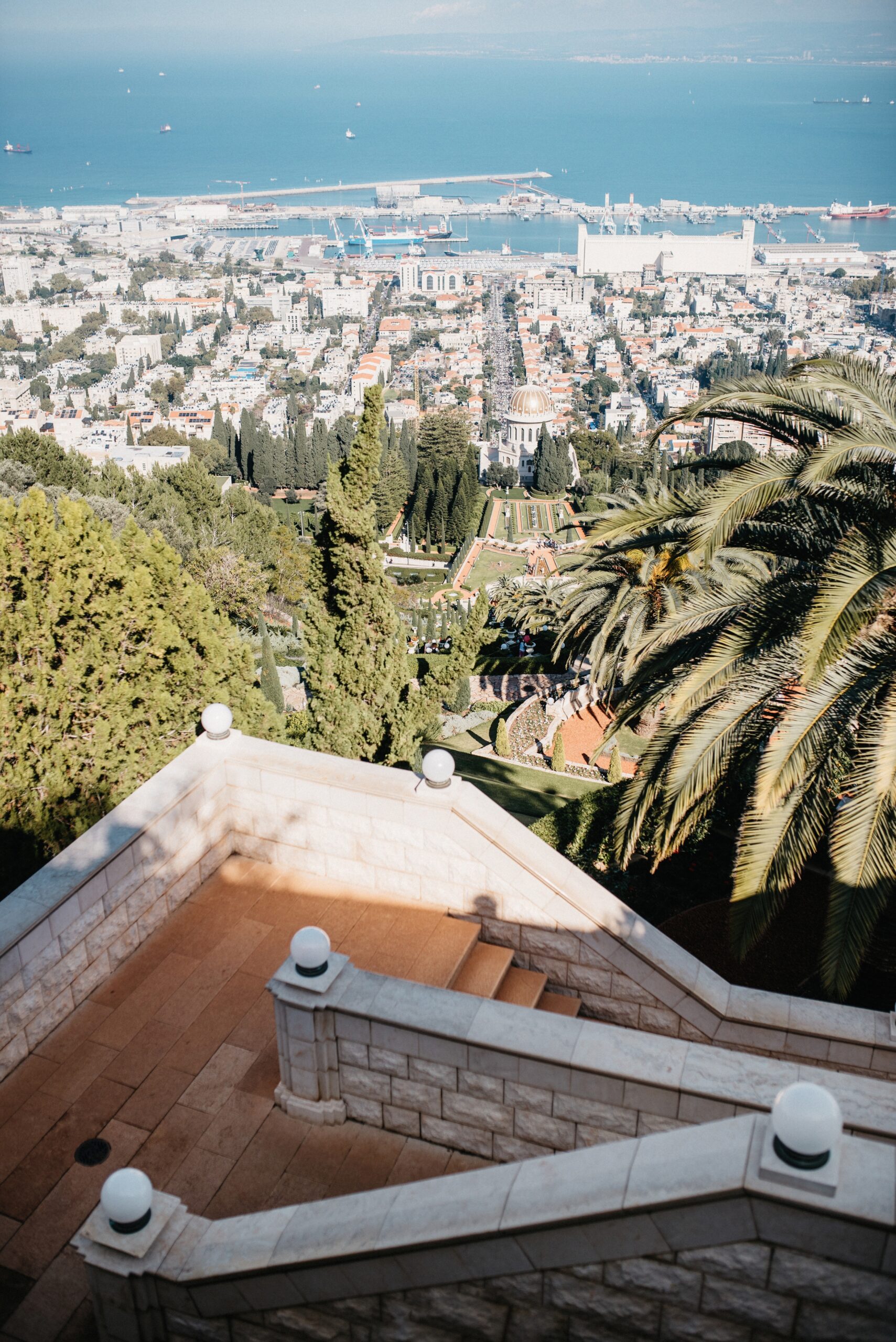
From Caesarea, our route continued north. We looked down over Haifa and the terraces of the Bahá’í Gardens before travelling towards the Sea of Galilee. After the dense history of the cities, the calm water and open landscape felt like a pause.
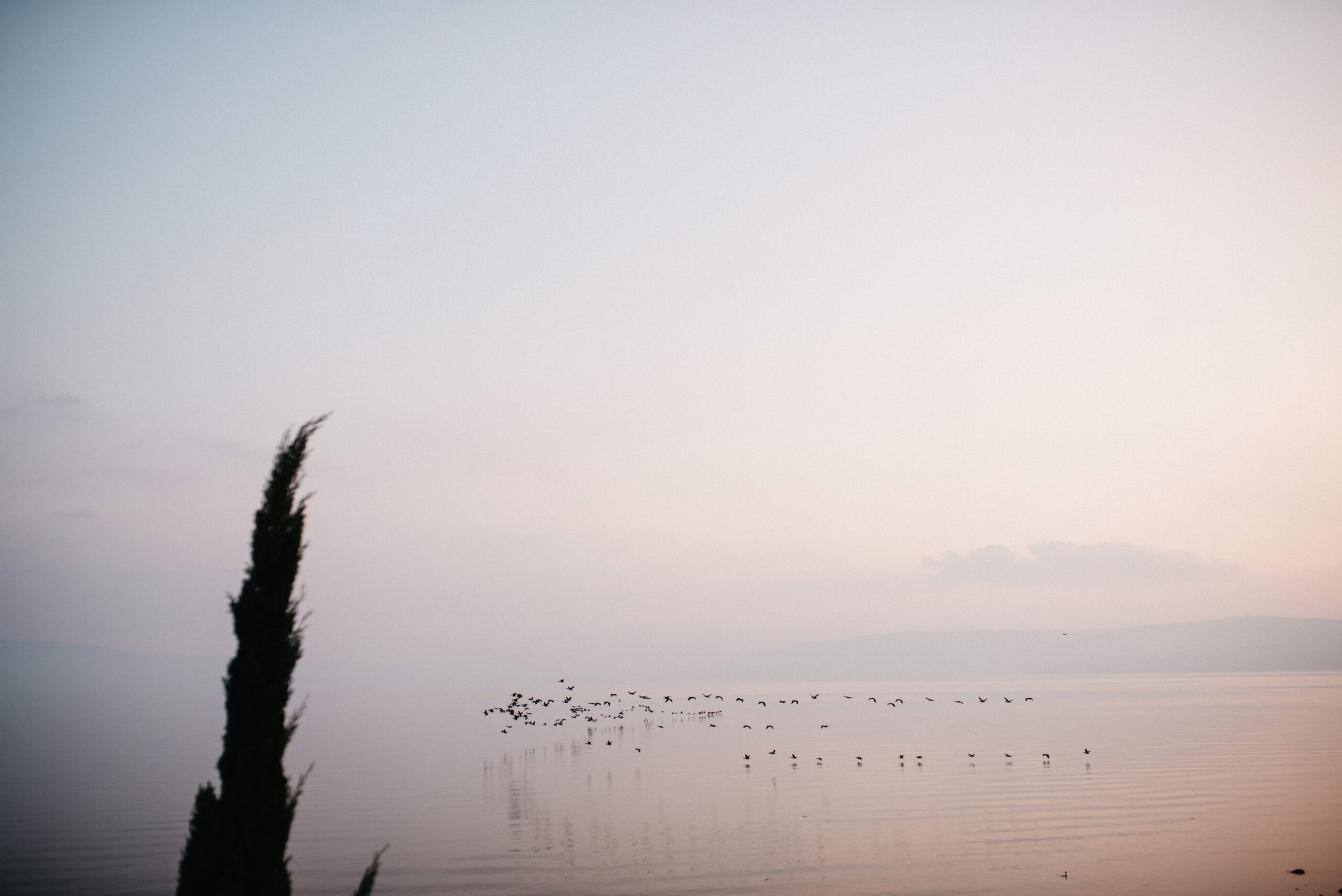
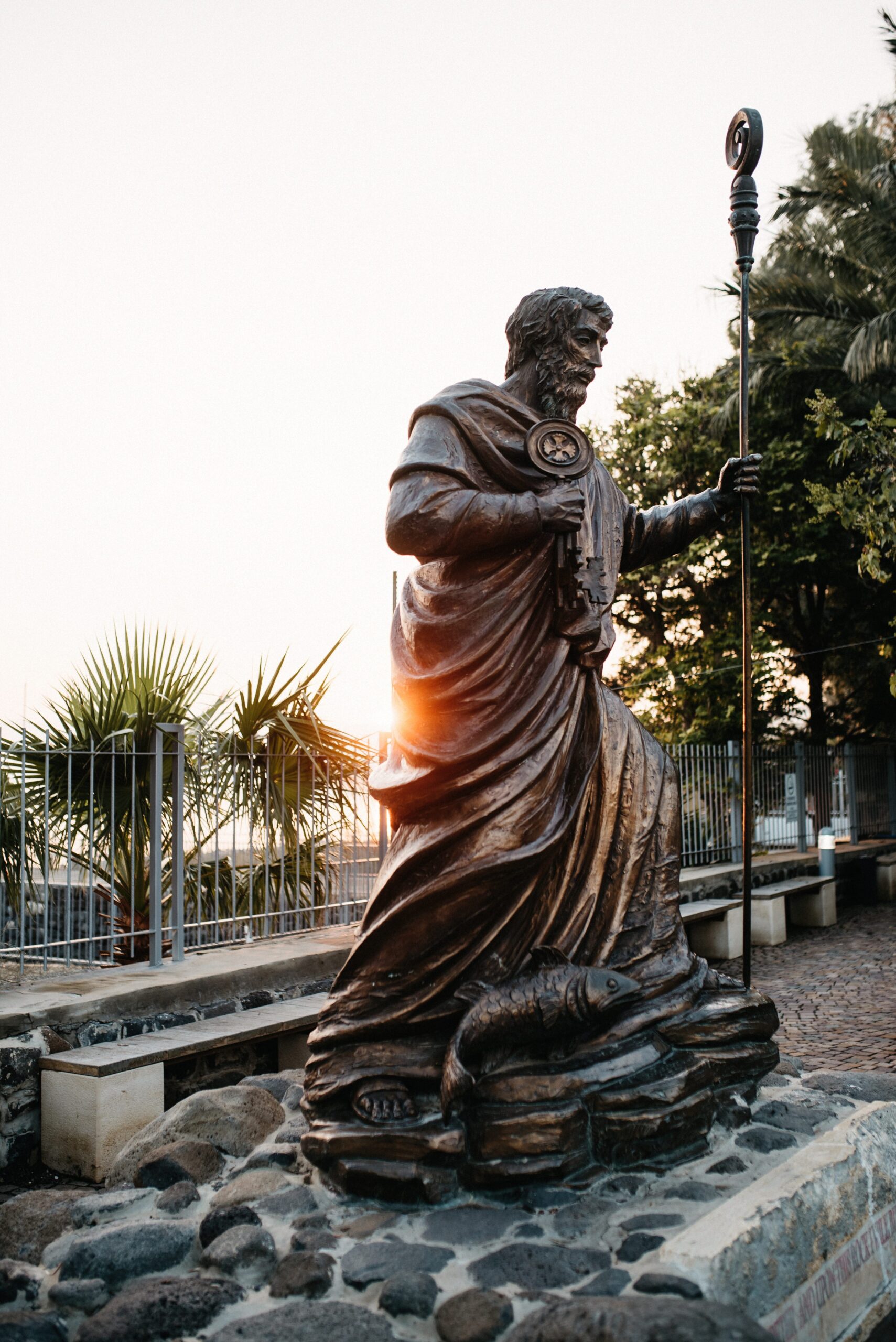
Many places around the lake are connected with stories from the life of Jesus. We visited churches and sites along the shore, including the Church of the Primacy of Saint Peter. You do not need to visit for religious reasons to notice how different the small churches and quiet landscape feel after Tel Aviv and before Jerusalem.
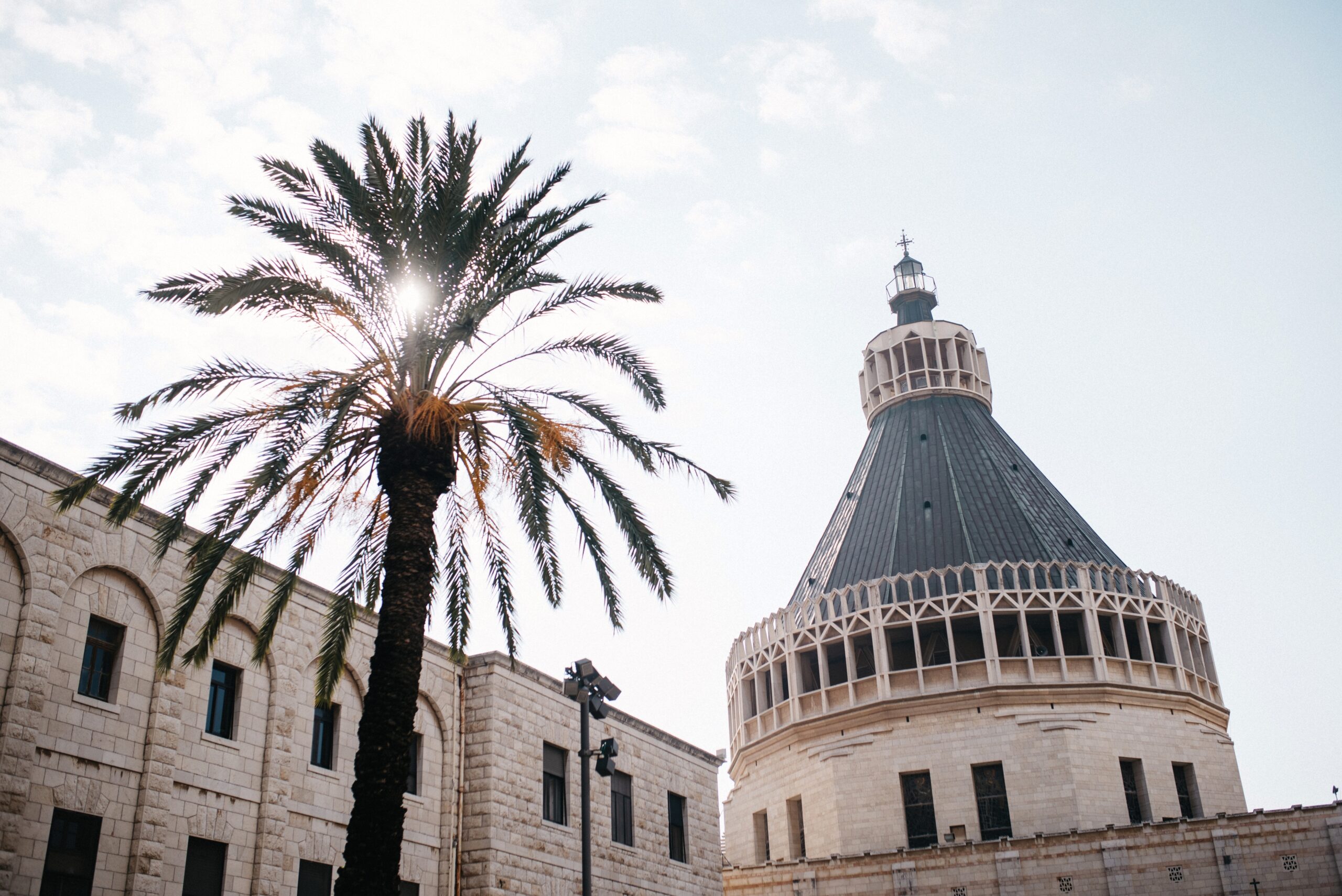
In Nazareth, we focused on the Basilica of the Annunciation. According to Christian tradition, this is the place where Mary learnt that she would give birth to Jesus. The modern basilica is far larger and more imposing than the simple setting we had imagined from the story.
The Jordan River at Qasr al-Yahud
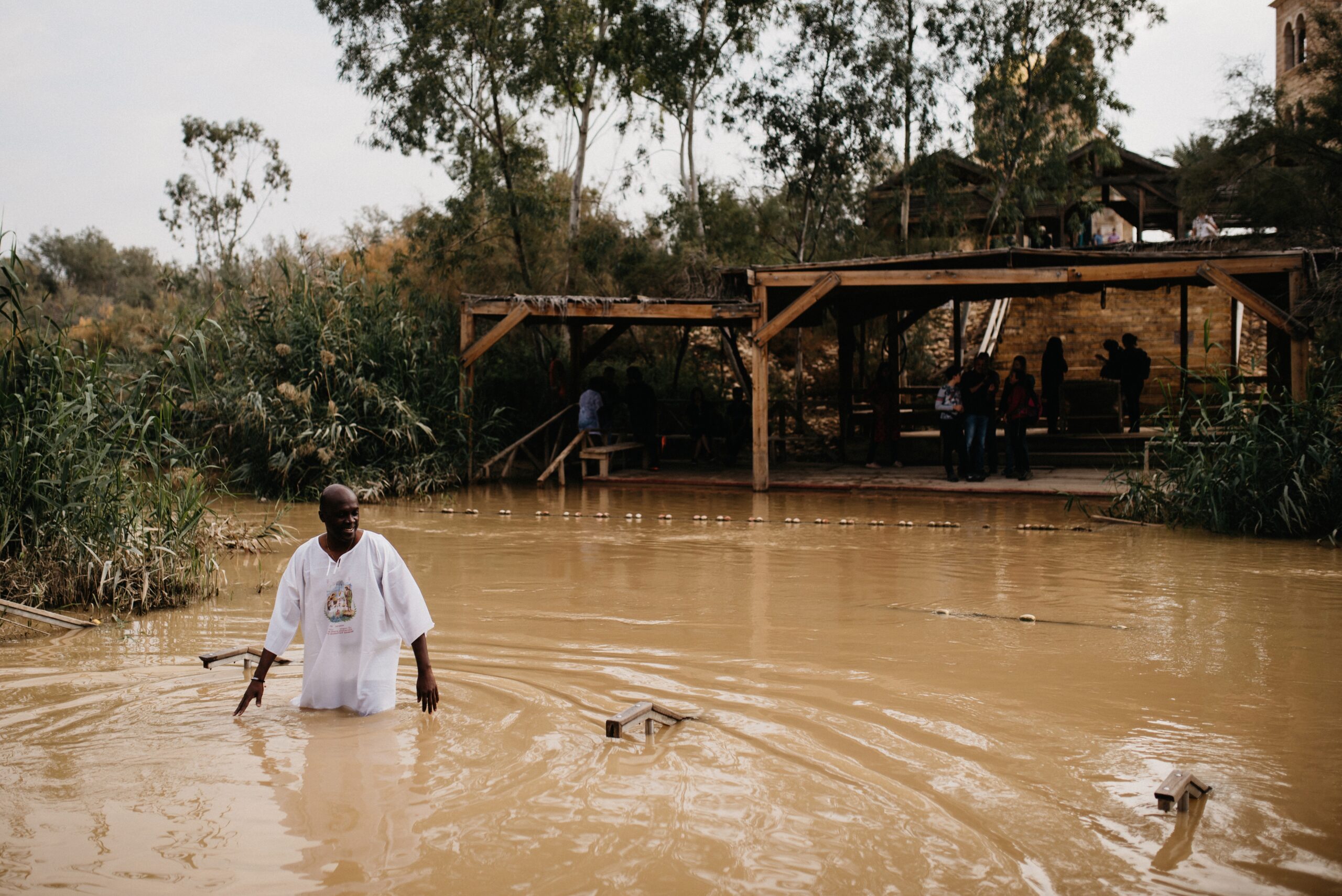
Qasr al-Yahud lies on the Jordan River and is traditionally identified by Christians with the baptism of Jesus. The opposite riverbank is Jordan, so the border is suddenly only a narrow strip of muddy water away.
Pilgrims still come here to enter the river in white robes, and some fill bottles with water to take home. Watching those ceremonies made the site feel much more alive than a place marked only by an information board ever could.
Jerusalem and Bethlehem
Jerusalem and Bethlehem are only about ten kilometres apart and still felt like two different worlds. Bethlehem lies in the West Bank and remains important to Christians because of the Church of the Nativity. Nothing there resembled the small stable from the Christmas story, but visiting at Christmas still made it a special stop for us.
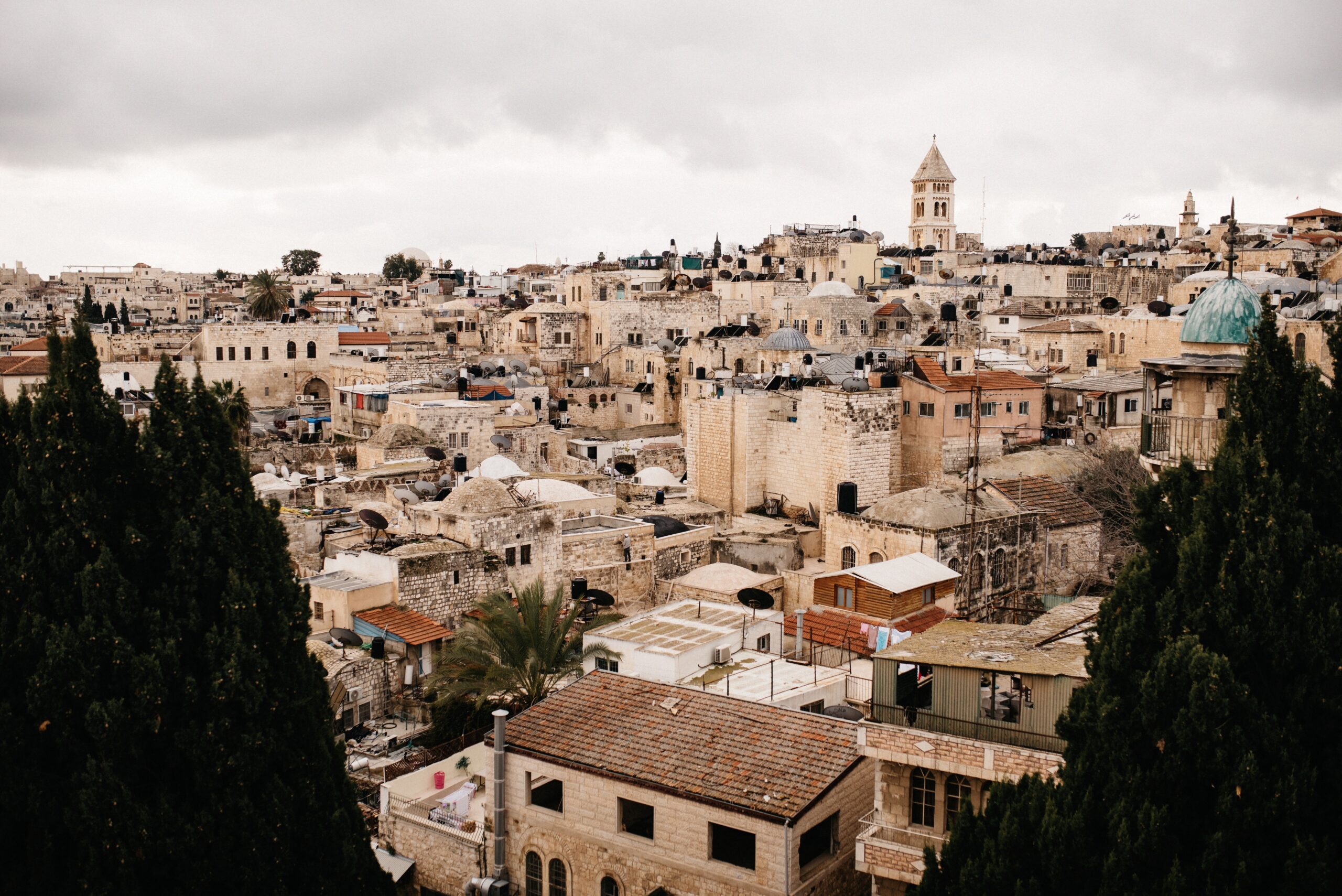
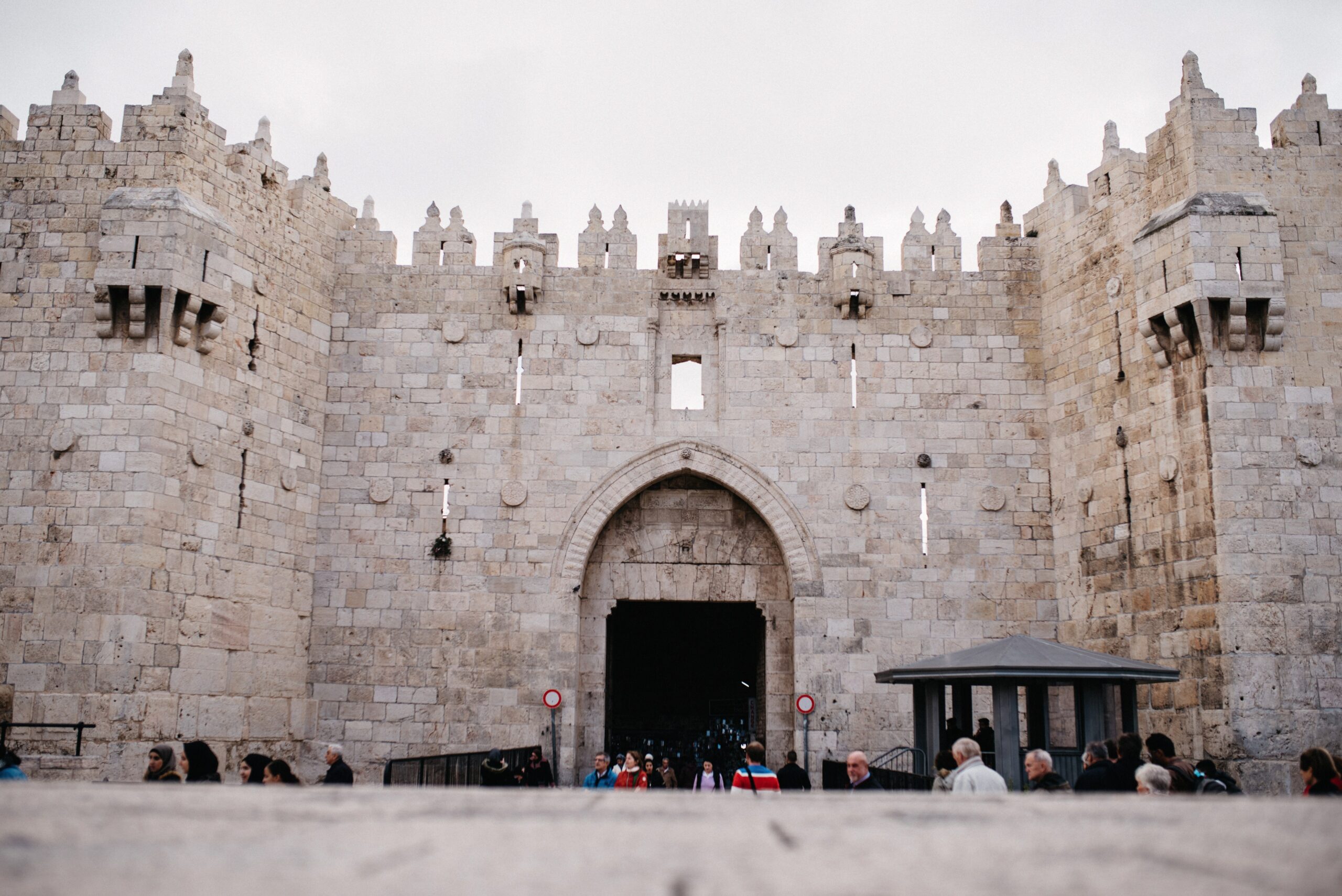
Jerusalem turned out to be one of the most impressive and interesting cities we had ever visited. It is huge, crowded and full of places that are holy to Judaism, Christianity and Islam. You could easily spend two or three days exploring the Old City and its surroundings, and even then you would only begin to understand it.
Via Dolorosa and the Church of the Holy Sepulchre
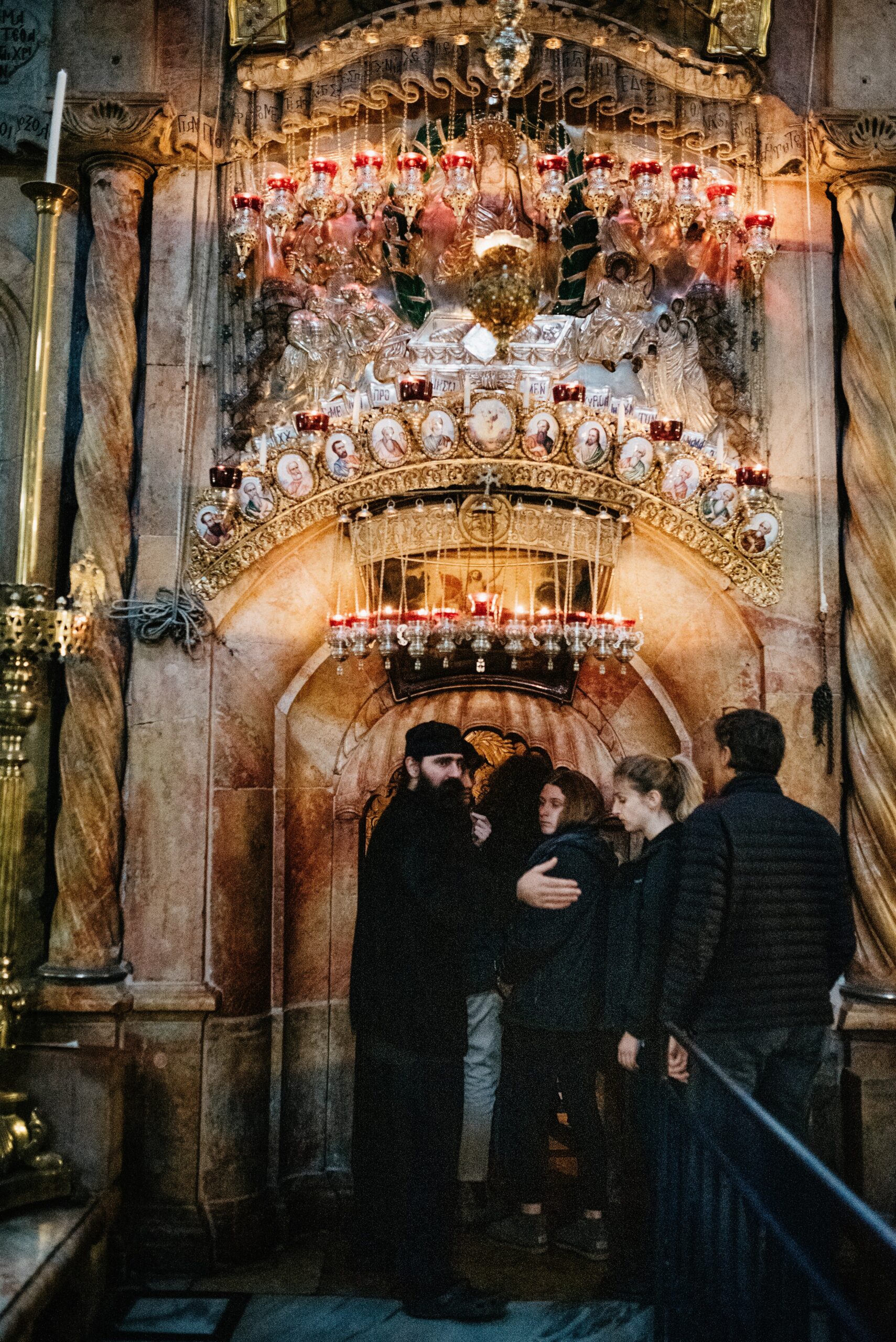
The Via Dolorosa follows the route that Christian tradition associates with Jesus carrying the cross. You can walk the fourteen stations from the place linked with his condemnation to the final stations inside the Church of the Holy Sepulchre.
It was hard to imagine the events in silence because the route now runs through a huge bazaar. The alleys were narrow, loud and packed with people. It was not what we would call a peaceful place of worship, but following the route through the living city was a unique experience.
The Church of the Holy Sepulchre contains the final stations and the places Christian tradition associates with the crucifixion, burial and resurrection of Jesus. The queues were long, but the atmosphere inside made it worth waiting for us.
Mount of Olives, Dome of the Rock and Western Wall
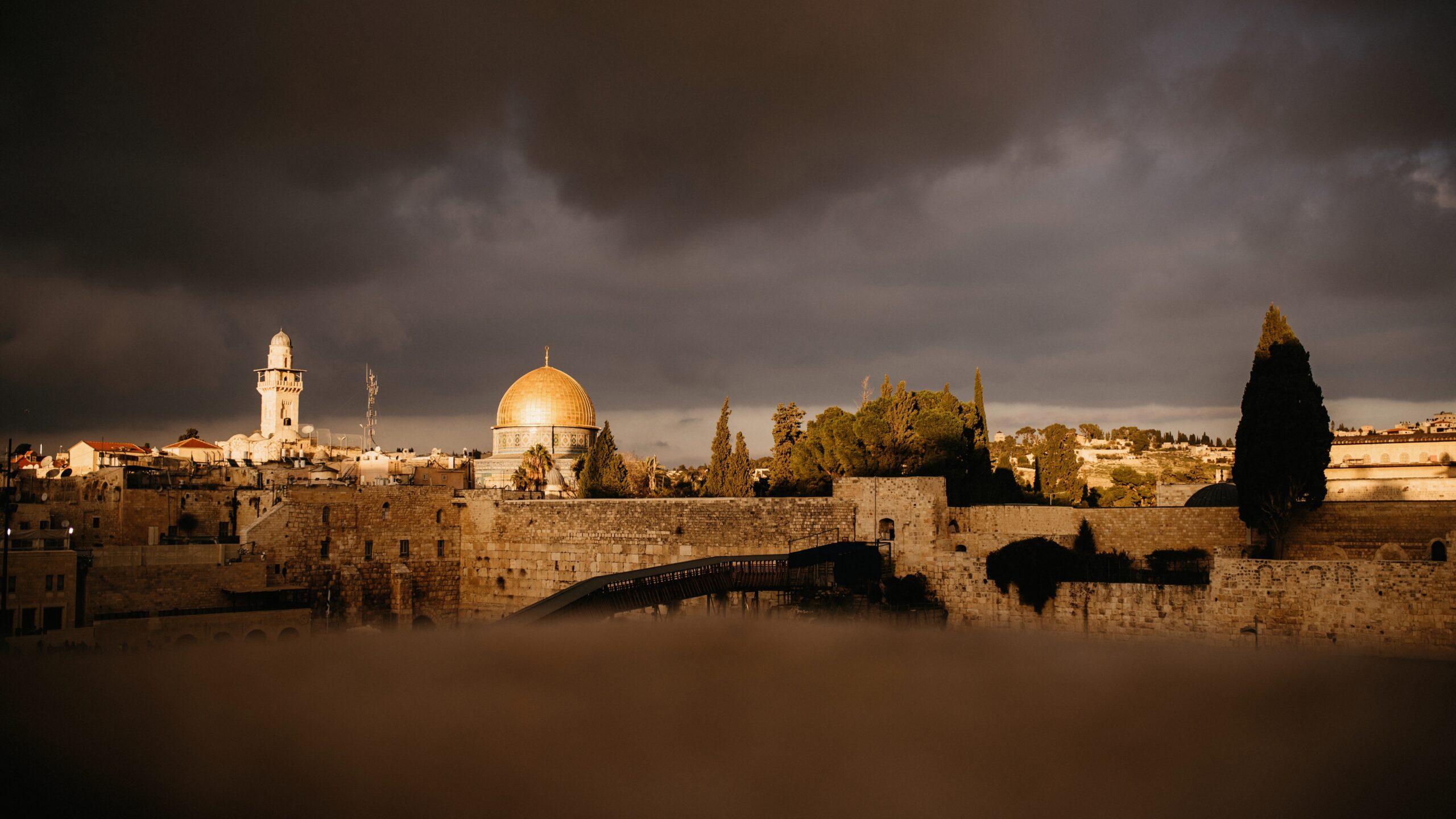
The Mount of Olives gave us the wide Jerusalem view we had seen in photographs: pale stone buildings, the walls of the Old City and the golden Dome of the Rock above them. The Islamic shrine is one of the city’s most recognisable landmarks.
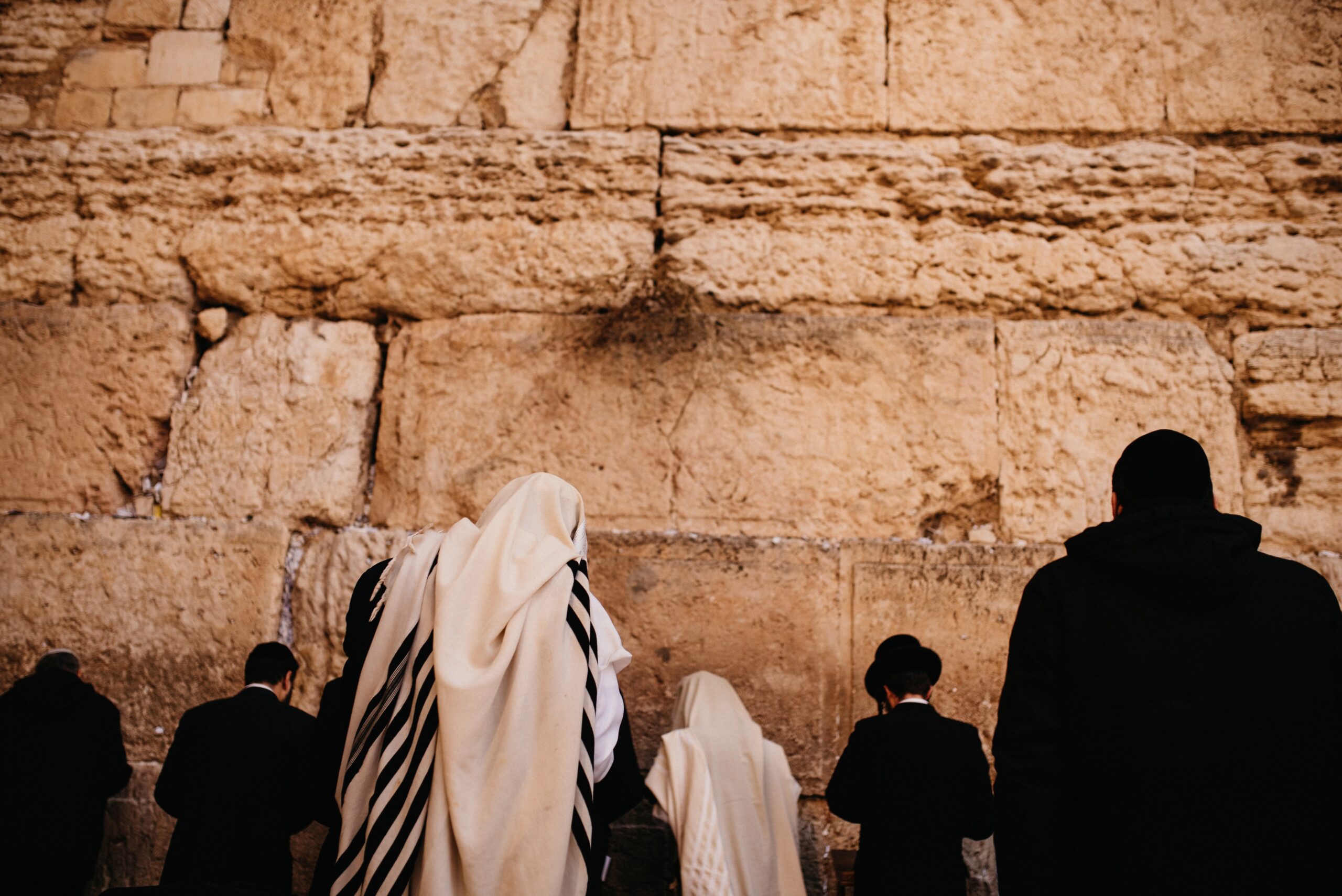
Close by, the Western Wall is one of Judaism’s most important prayer sites. Men and women pray in separate sections, and watching people place notes between the stones and move in prayer made the religious importance of the place very visible to us.
The food and markets
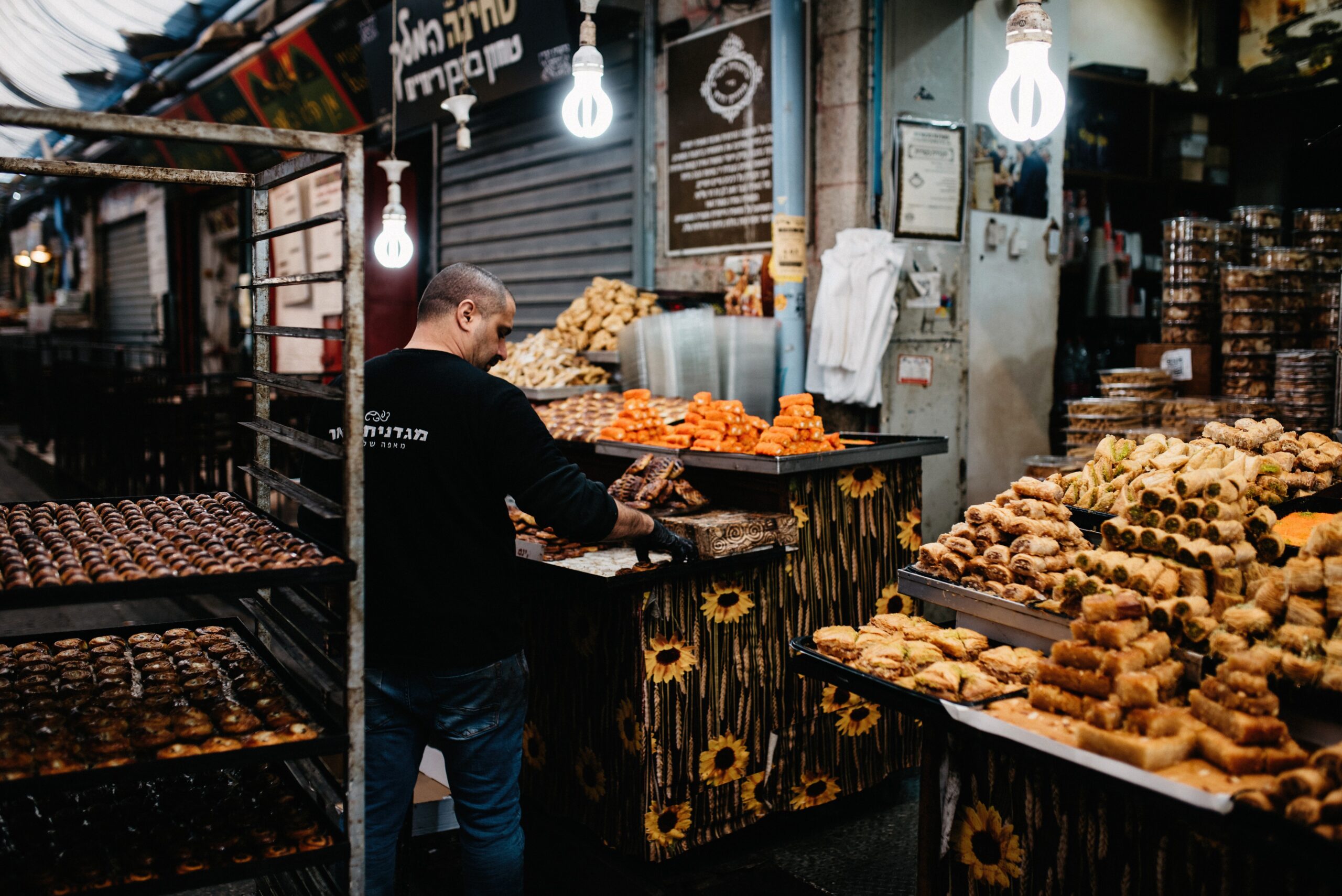
We have travelled a lot and tried many different cuisines, but the food on this trip was something special. Much of what we ate was kosher, colourful and full of spices. Vegetables, rice, potatoes, olives, hummus, freshly baked bread and meat were familiar ingredients, but the way they were combined made almost every plate taste new to us.
Our hotels also made some kosher rules very practical. Meat and dairy were kept separate, so after a meat dinner the desserts were often made without dairy. That sounded like a compromise; luckily, it did not taste like one.
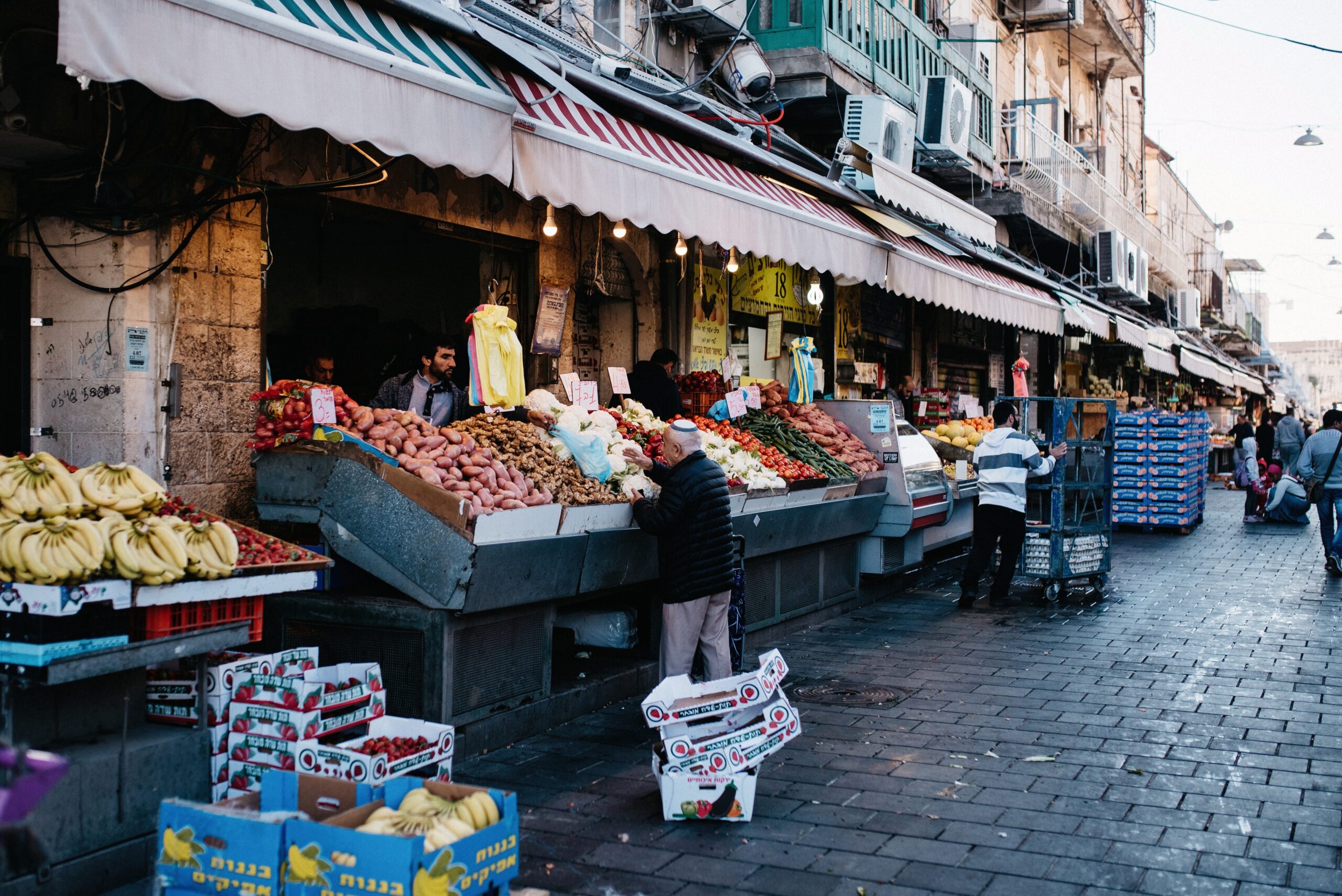
The markets were the easiest place to take a little of the food home. Cinnamon, cardamom, turmeric, saffron, pepper, Dead Sea salt, herbs, tea and star anise were sold in colourful piles. Shopping for spices had never been more fun.
Masada above the Judean Desert
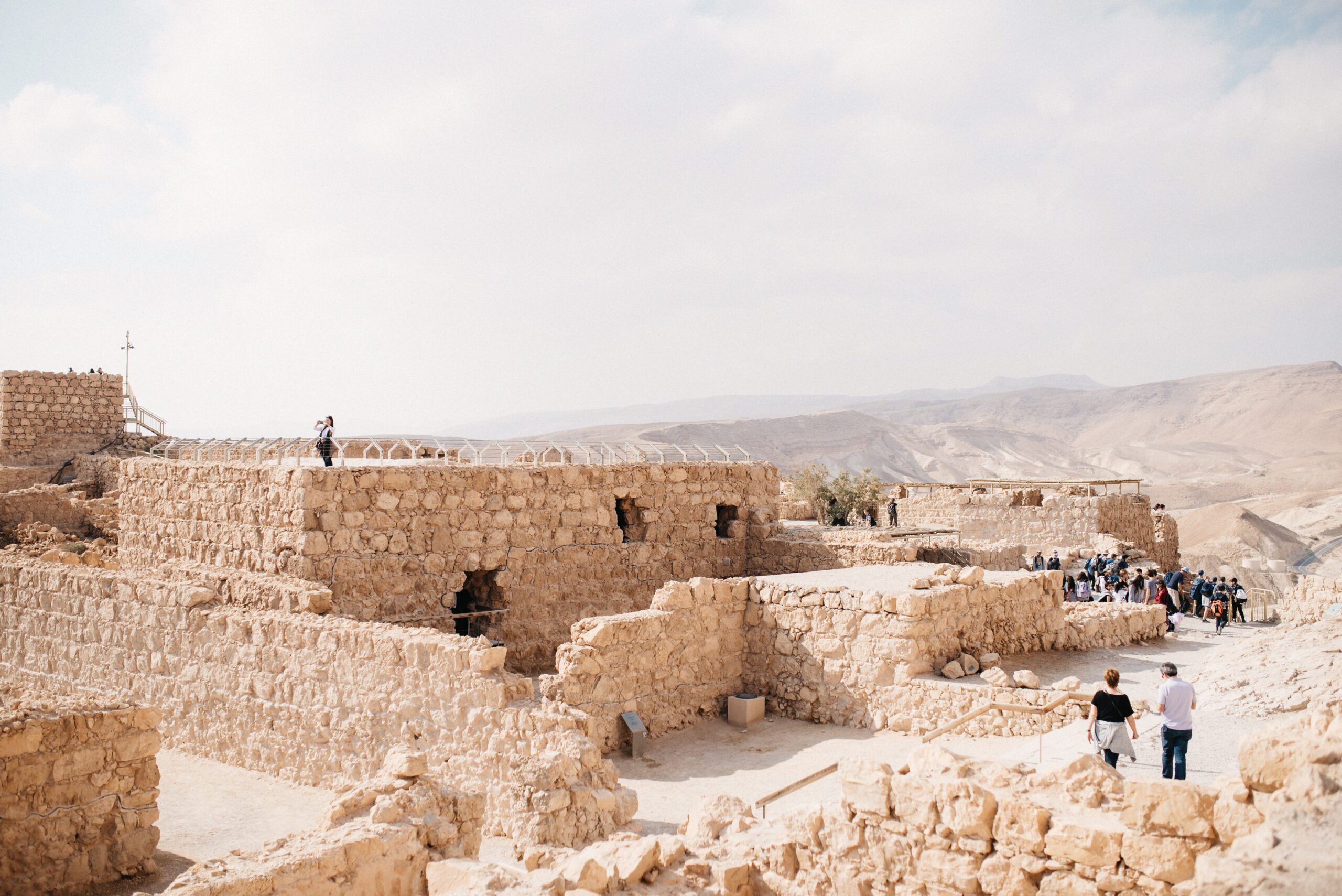
Masada was probably the most impressive archaeological site of our week. The remains of Herod’s palace-fortress sit on an isolated rock plateau above the Judean Desert, with views stretching towards the Dead Sea.
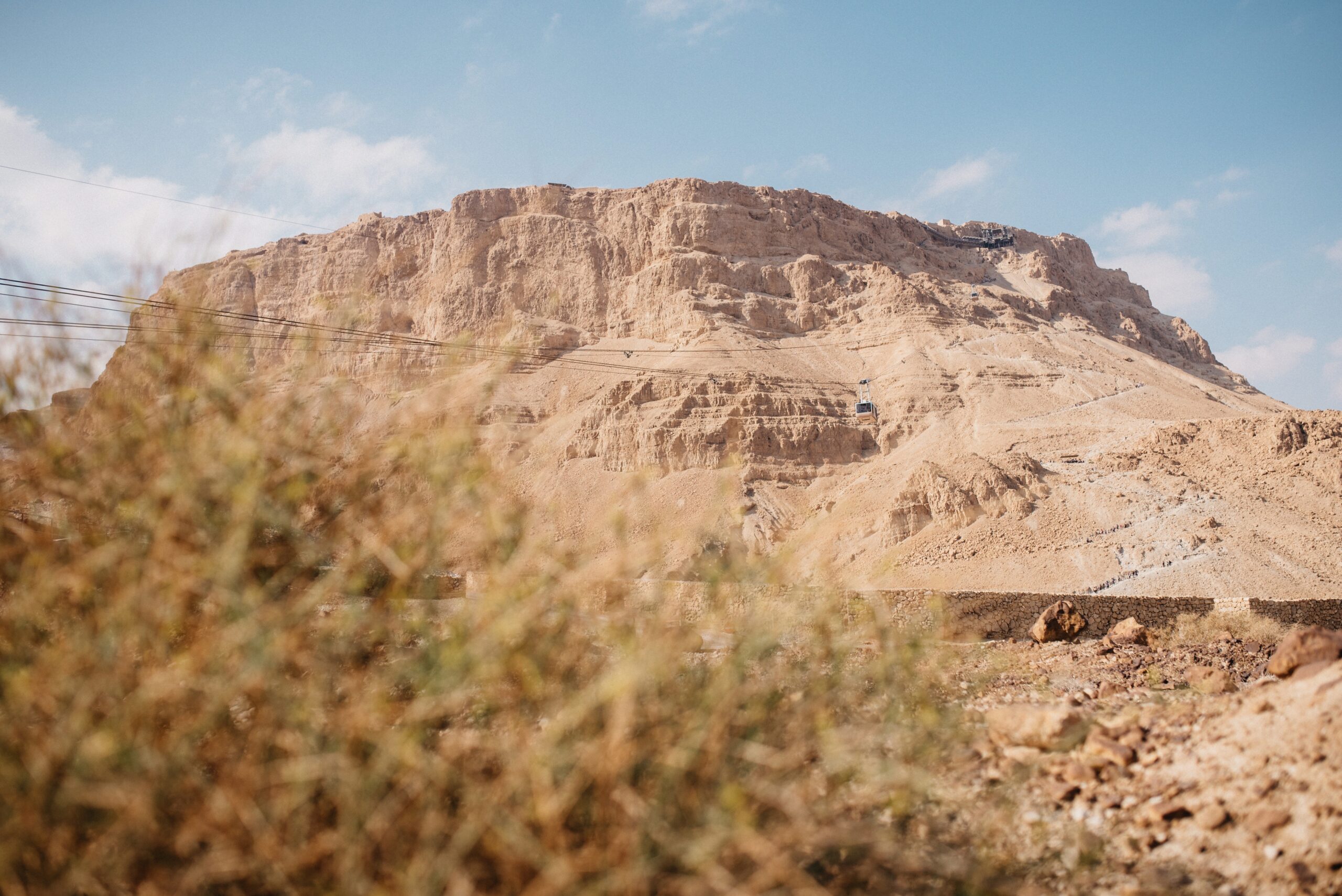
There are two main ways up from the eastern side: the steep Snake Path or the cable car. The hike takes about an hour and includes many steps. We chose the more convenient cable car, which also gave us a very good look at the desert below without arriving at the top completely exhausted.
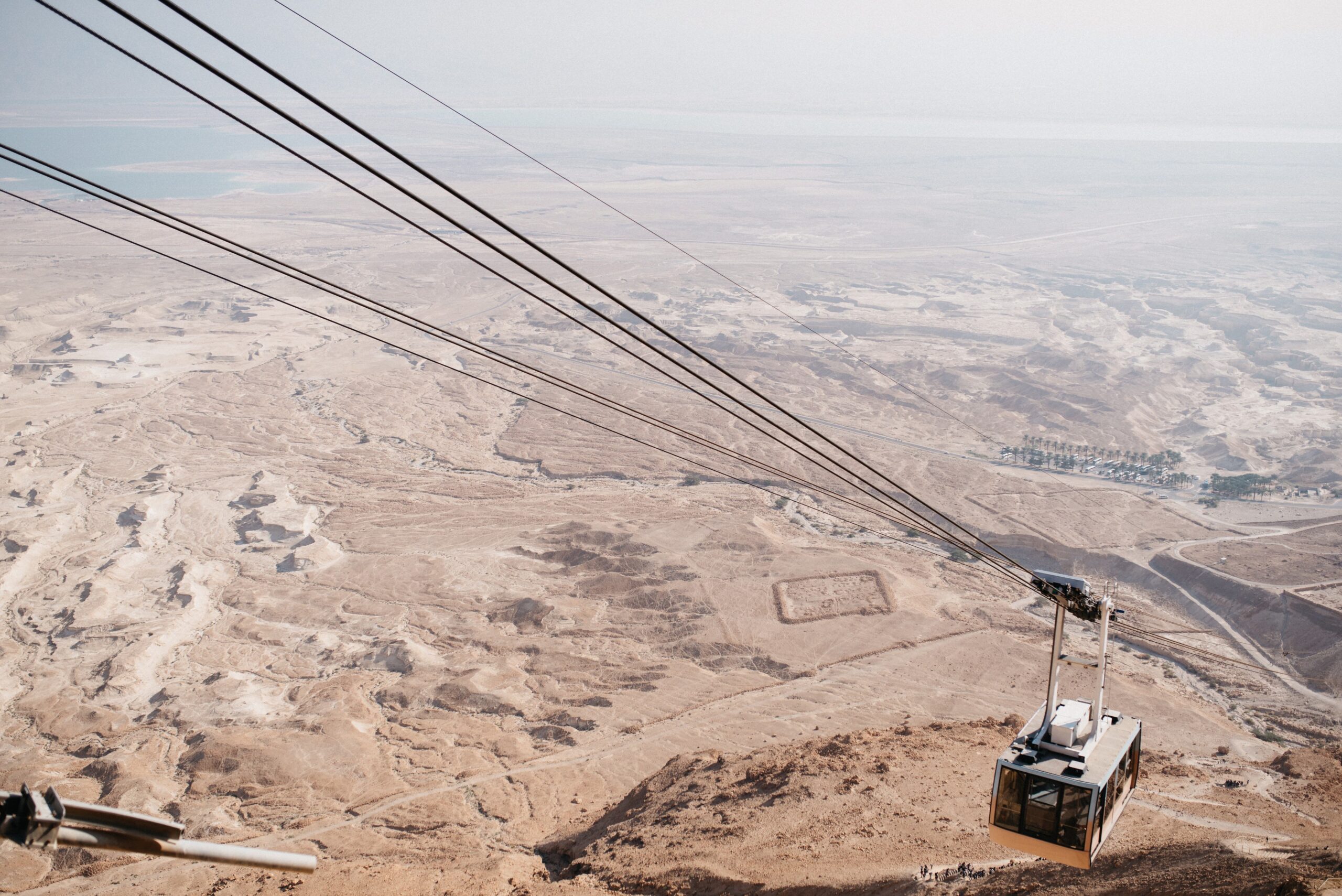
Masada combines an enormous landscape with the remains of rooms, walls and water systems on the plateau. That contrast made it far easier to picture the fortress than we had expected from ruins alone. Because the Dead Sea is close by, both places also fit naturally into the same day.
Floating in the Dead Sea
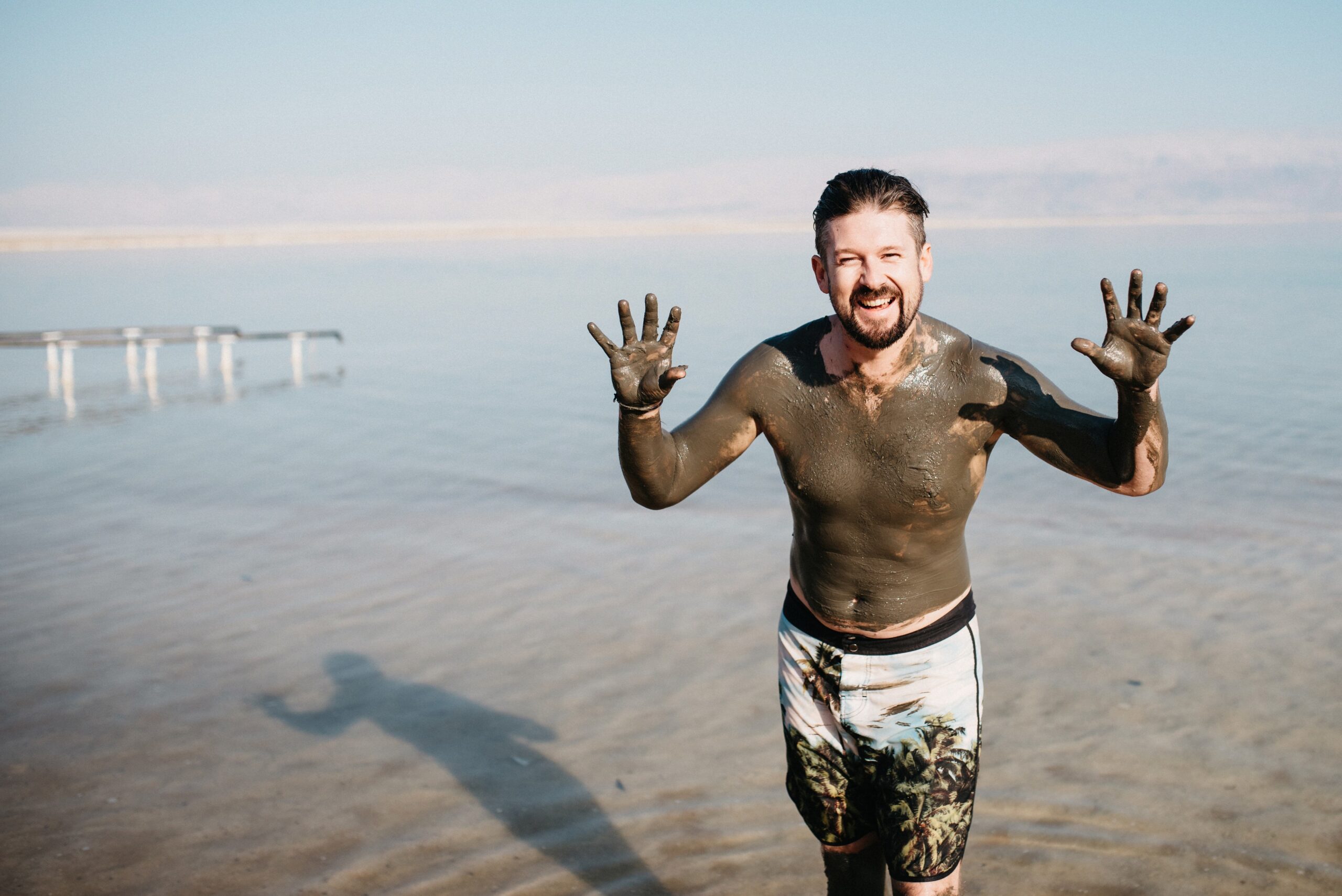
Floating in the Dead Sea was definitely one of our highlights, especially because not everyone in our travel team would describe herself as the world’s best swimmer. The extremely salty water does all the work. You lean back carefully and suddenly you are floating without trying.
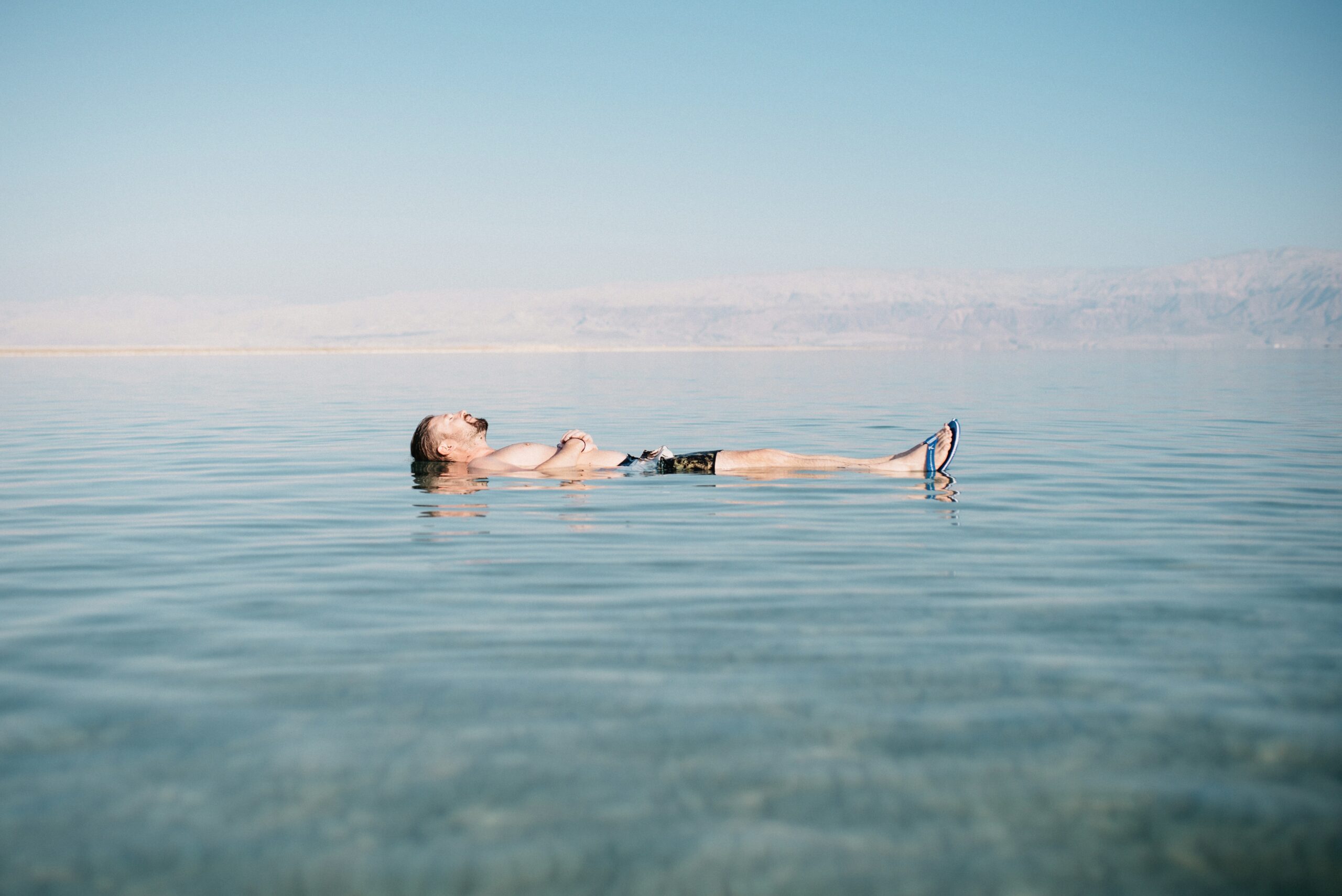
We followed the instructions at the beach, kept the water away from our eyes and used footwear because salt crystals made parts of the ground sharp. A shower afterwards was not optional unless we wanted to take the entire salt crust back to the hotel.
The pale water, desert mountains and almost perfect reflections also made the Dead Sea a fantastic place for photographs. It was a wonderfully strange final contrast to the crowded streets, churches and markets of Jerusalem.