
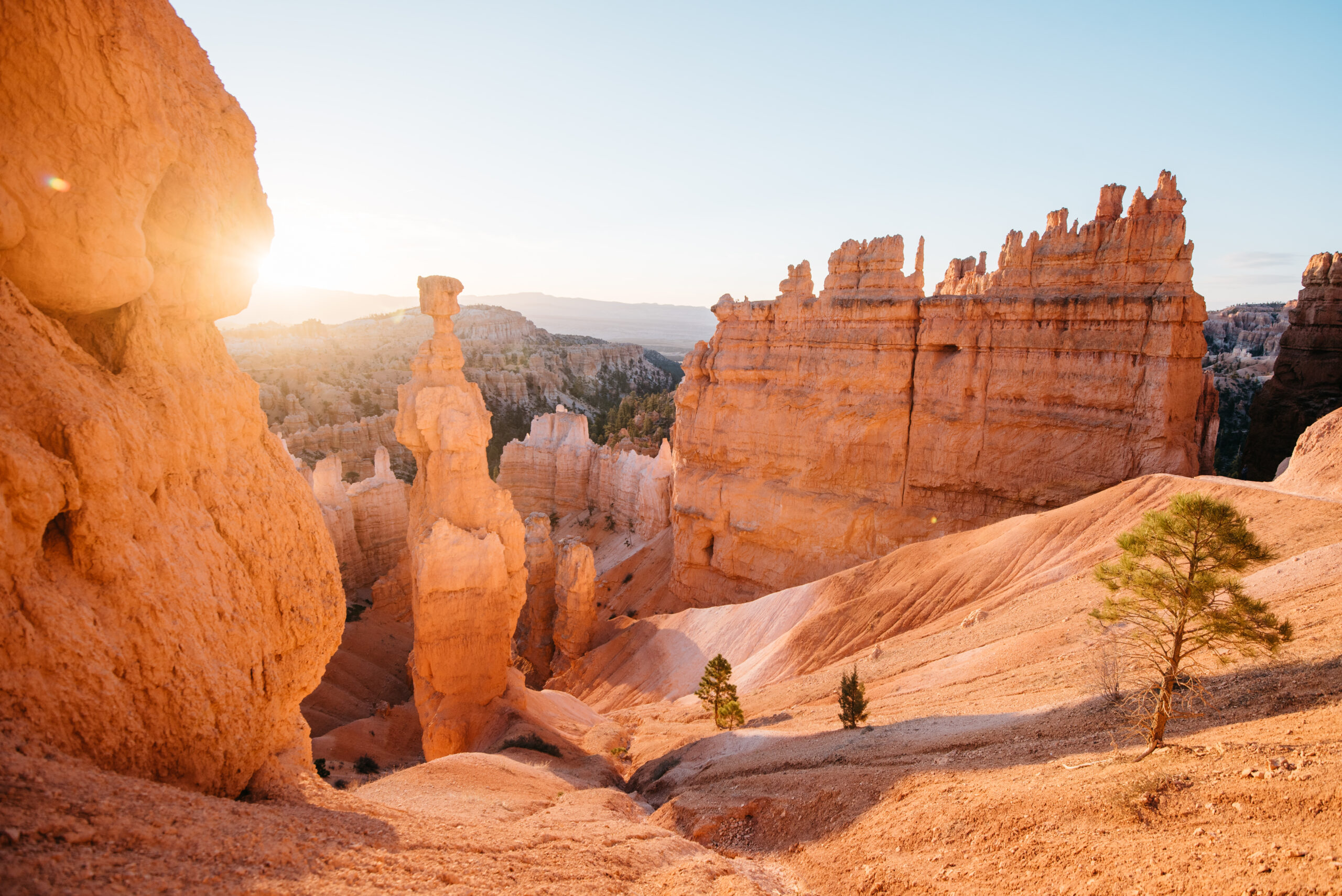
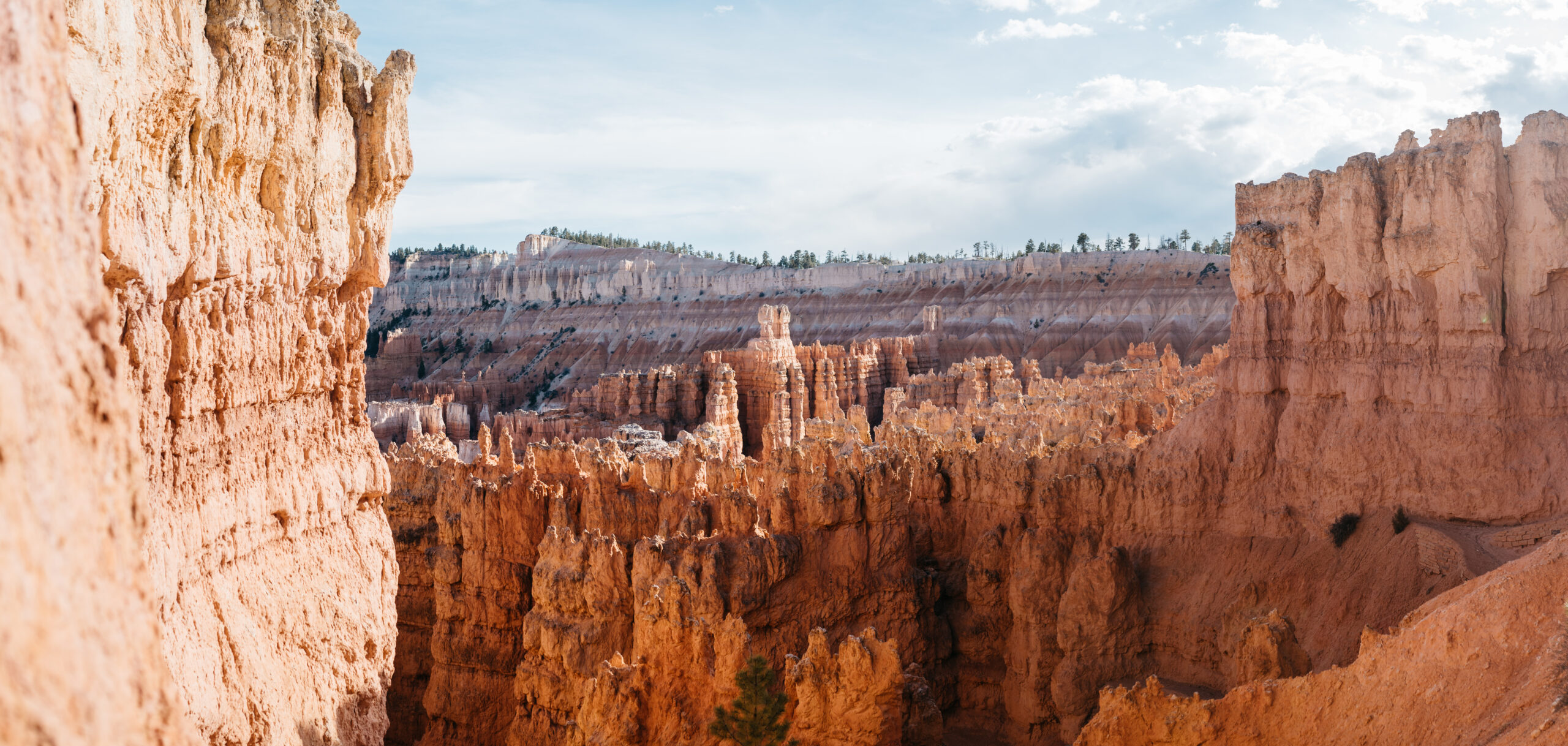
Bryce Canyon is technically not a canyon. It is a high plateau filled with natural amphitheatres such as Bryce, Fairyland and Agua Canyon. Its most distinctive formations are the hoodoos, tall and thin rock spires that stand in enormous groups across the park.
If the travel schedule allows nothing more, Bryce can be visited in one very long day: sunrise, a hike, the panorama drive and sunset. We spent two full days there and thought that was the perfect amount of time to enjoy the park without rushing from one trail to the next.
Bryce Canyon fitted easily between Capitol Reef, Grand Staircase-Escalante, Zion and Antelope Canyon. Depending on the direction, each of those places was roughly one to three hours away. In 2018 the entrance fee was USD 30 per car for seven days, and our America the Beautiful pass was accepted.
Our first stop was the visitor centre, which was open from 8 AM to 6 PM. Apart from having the nicest national-park souvenirs we had seen in the USA, it showed a short film every half and full hour. The film explained the park’s history, geology, plants and animals, and the rangers also offered stargazing and information sessions.
Why Bryce Canyon was a hiking park for us
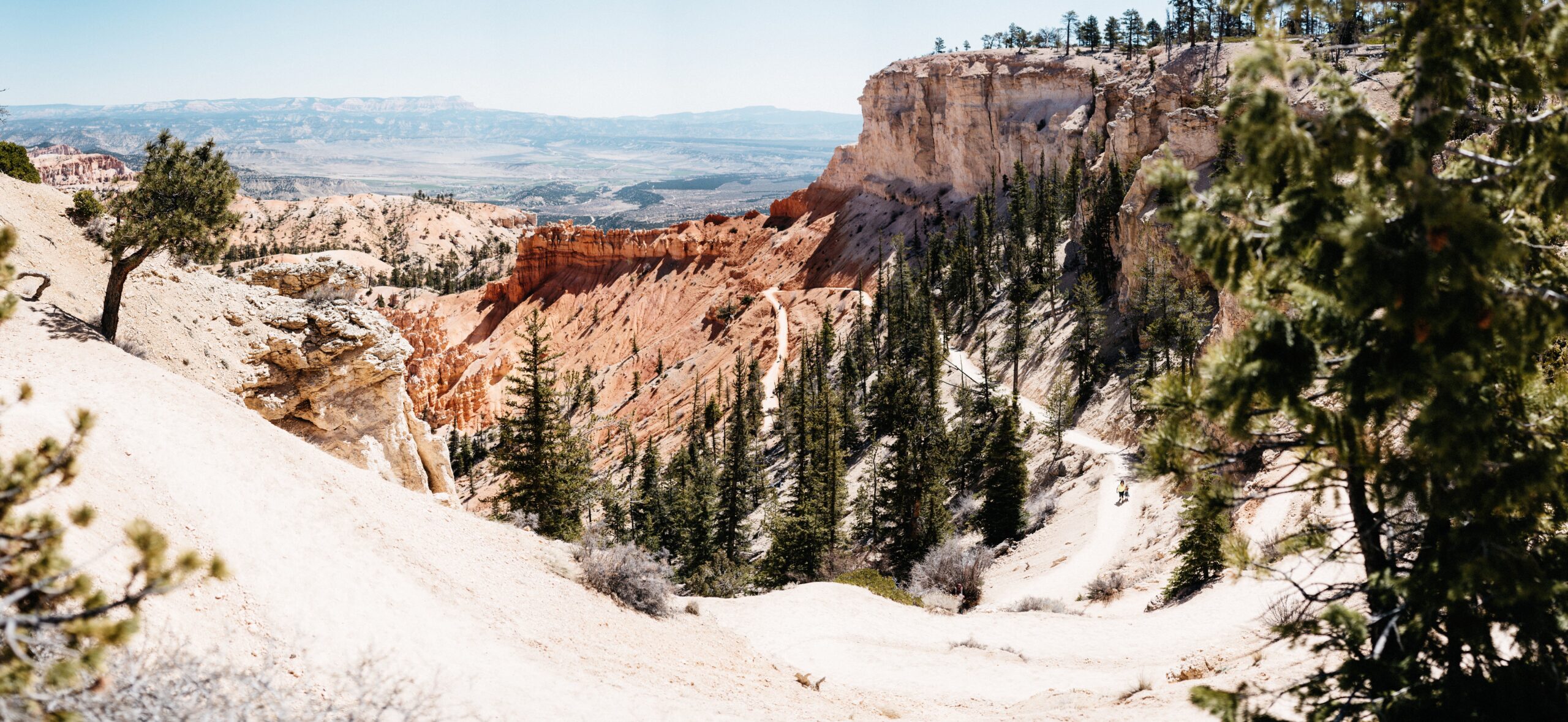
We did not completely fall in love with the viewpoints along the panorama drive. They showed us how different the amphitheatres were, from forested and dark red to pale and almost bare, but none came close to walking below the rim.
The panorama drive was still useful because it connected those different parts of the plateau. Agua Canyon, Bryce Canyon and Fairyland did not all have the same colour or amount of forest, and seeing them one after another made the differences obvious. We simply would not choose the drive instead of a hike.
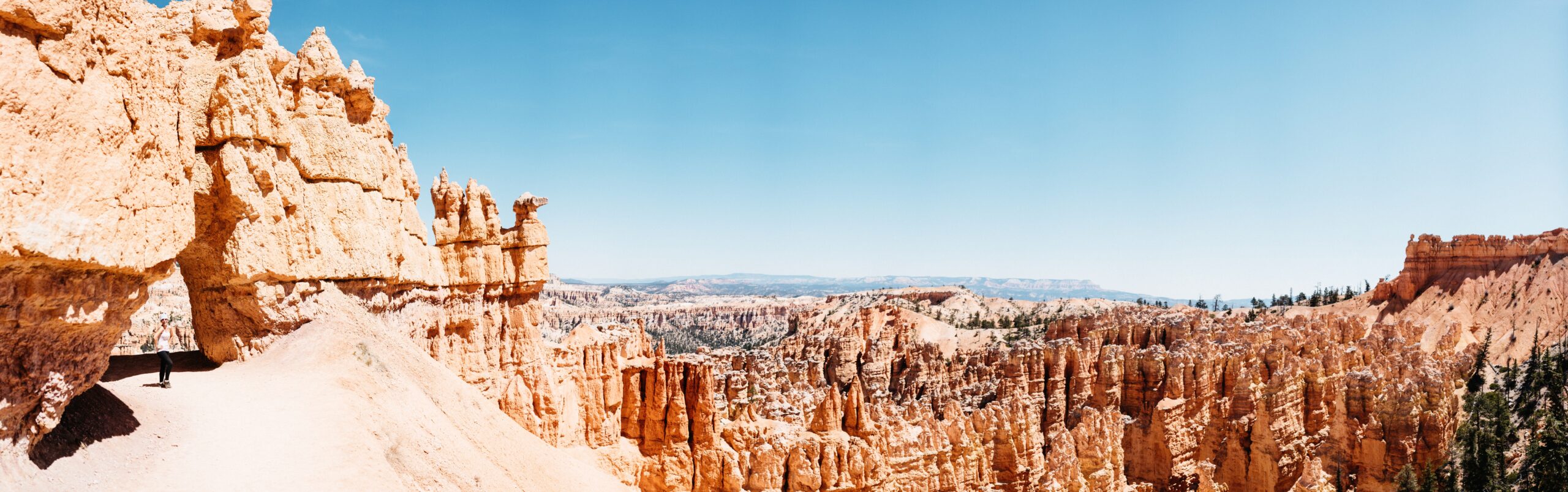
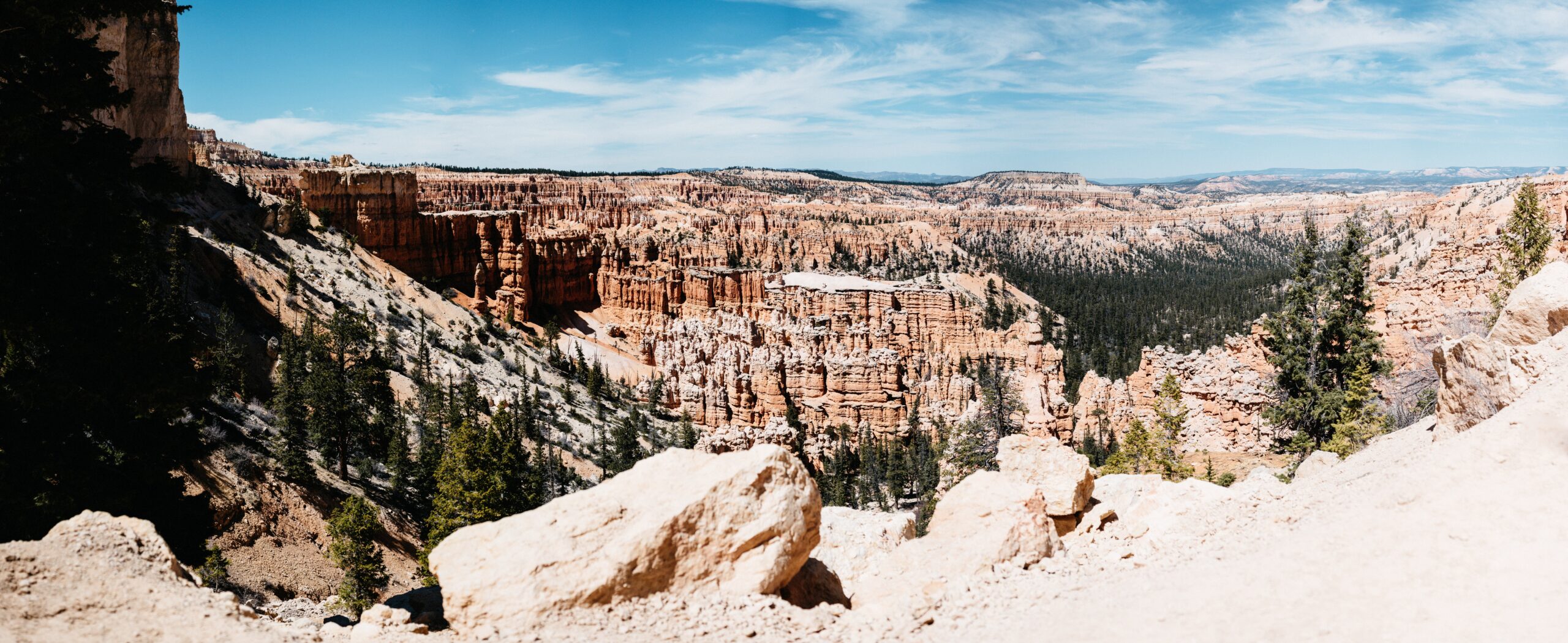
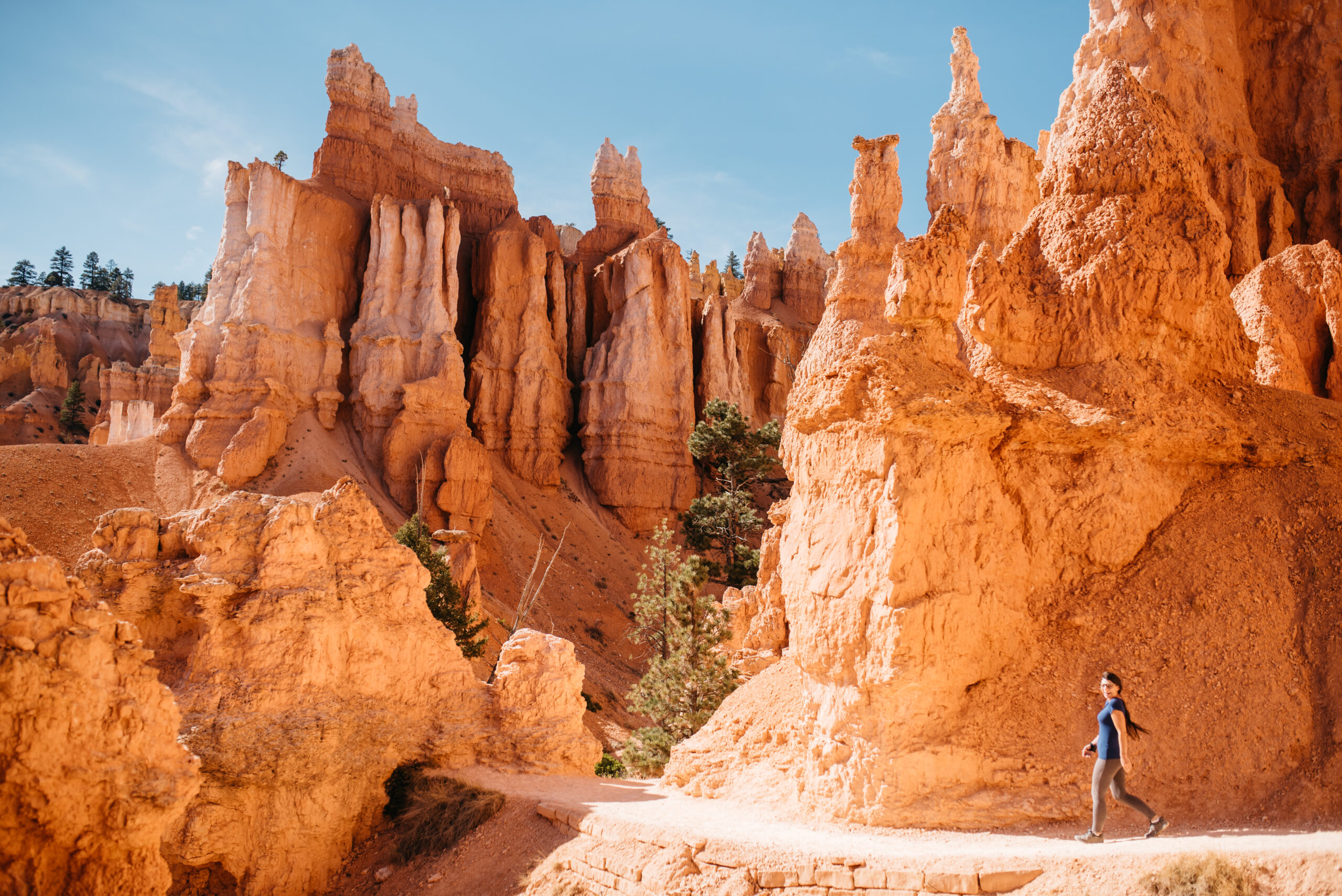
From above, the hoodoos looked like a colourful pattern. Once we descended into the amphitheatre, they surrounded us and became enormous. Bryce Canyon is definitely a place where everybody should do at least one hike.
Queen’s Garden and Navajo Loop
The Queen’s Garden and Navajo Loop combination started at Sunrise or Sunset Point. We connected the two trailheads with the short Rim Trail, turning the walk into a proper loop.
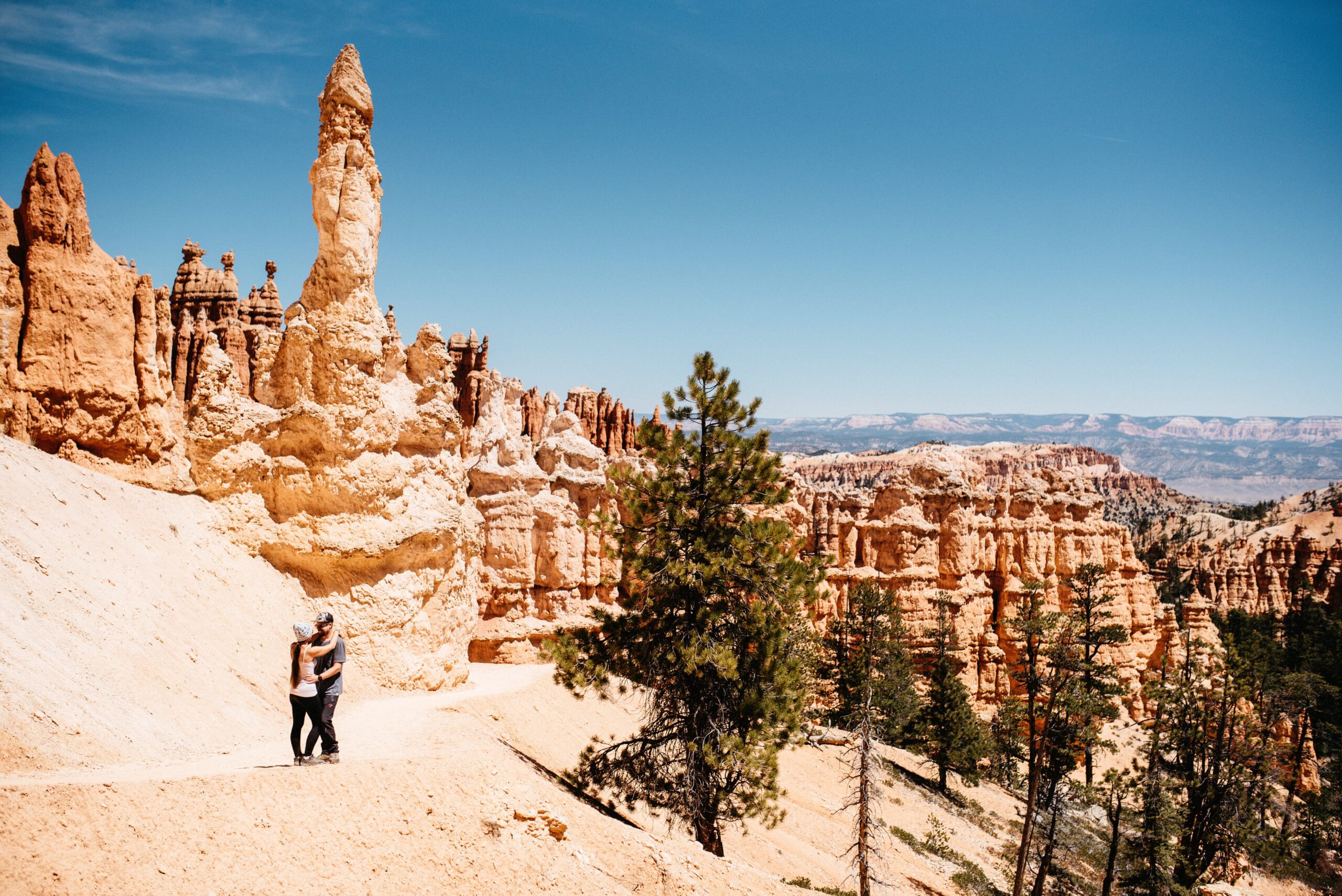
The visitor centre advertised this combination as one of the best three-mile hikes in the world. That is quite a statement, but the trail really did combine almost every typical Bryce Canyon view within a short distance.
Queen’s Garden led us down through the hoodoos, forest and natural windows to the formation called Queen Victoria. If you do not recognise her immediately, there is a sign to help the imagination. It worked for us.
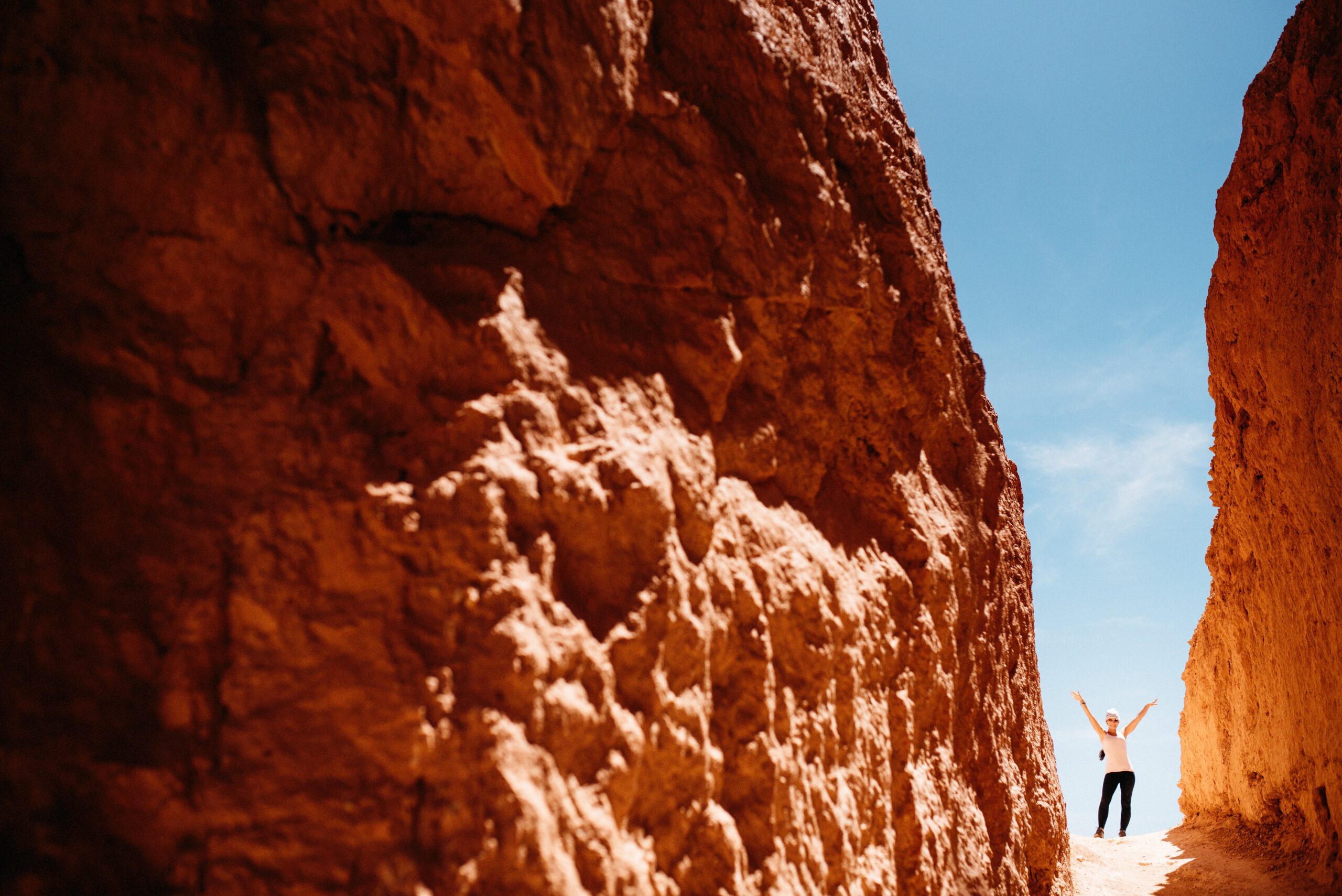
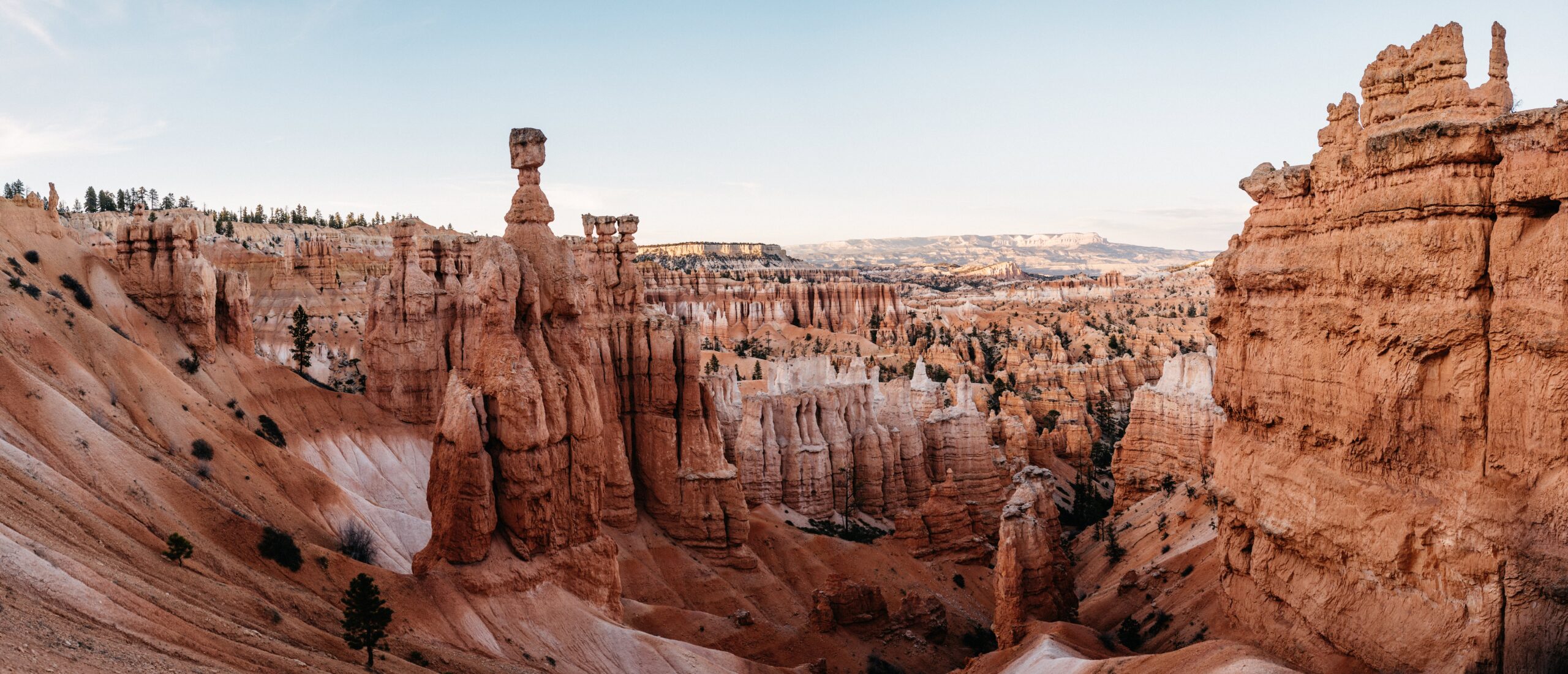
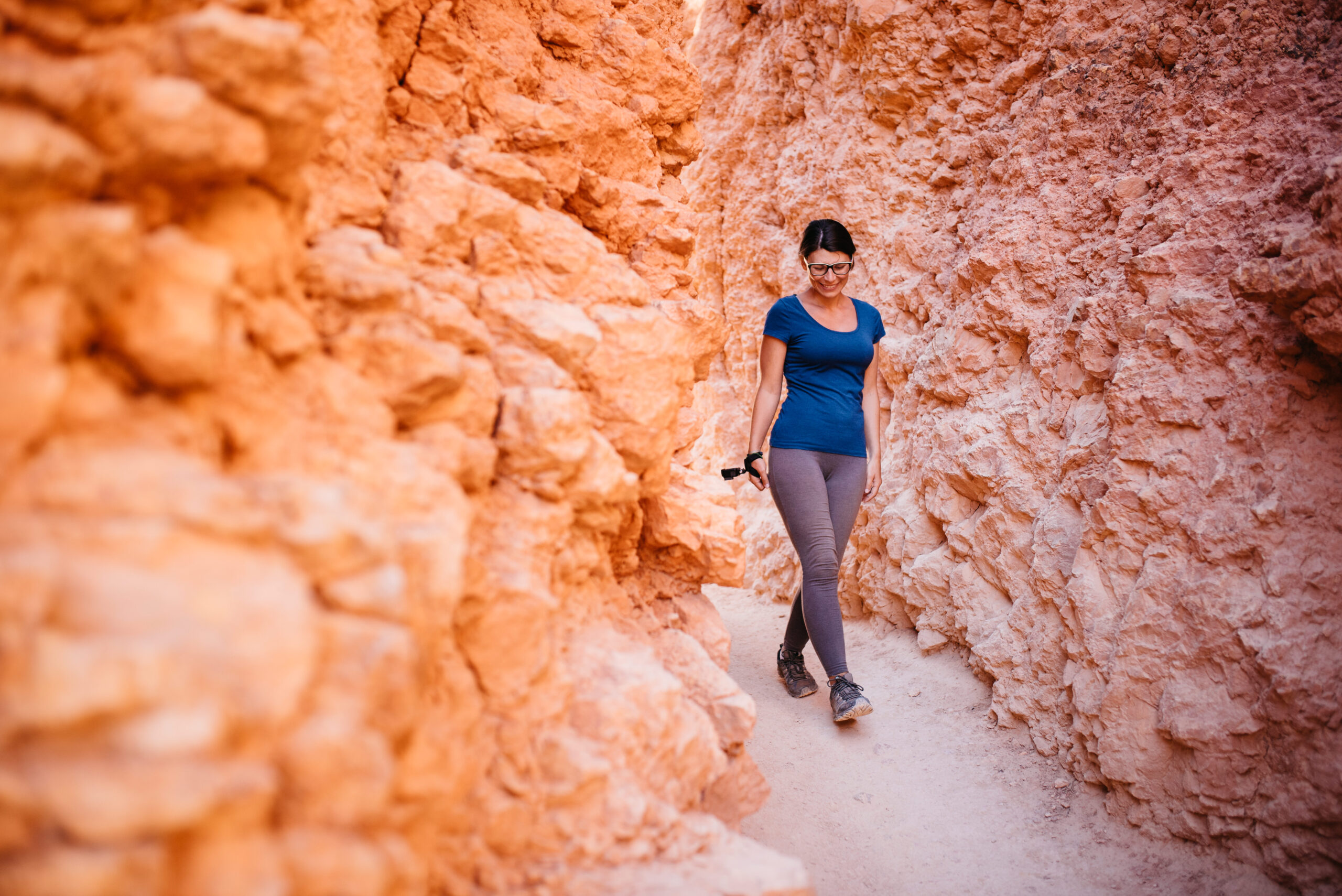
The Navajo Loop continued through narrower sections and climbed steep serpentines back towards the rim. Near the top we passed Thor’s Hammer, one of the park’s best-known hoodoos.
The final kilometre along the Rim Trail returned us to the starting point and kept the canyon in view almost the whole way. The loop could also be walked in the opposite direction; there was no wrong choice, only the question of where we preferred to do the steep climb.
Peek-A-Boo Loop: our favourite hike
Peek-A-Boo Loop started and ended at Bryce Point and took us about four to five hours. To explain the name, we developed our own theory: the trail has so many corners and curves that you never see what comes next. Just like the game. We are pretty sure there is at least a high chance that we were right.

This became our favourite trail. It was moderately difficult and showed us arches, windows, hoodoos, forest and the entire canyon rising above us. Every turn revealed another formation, which made the climbs feel much less repetitive.
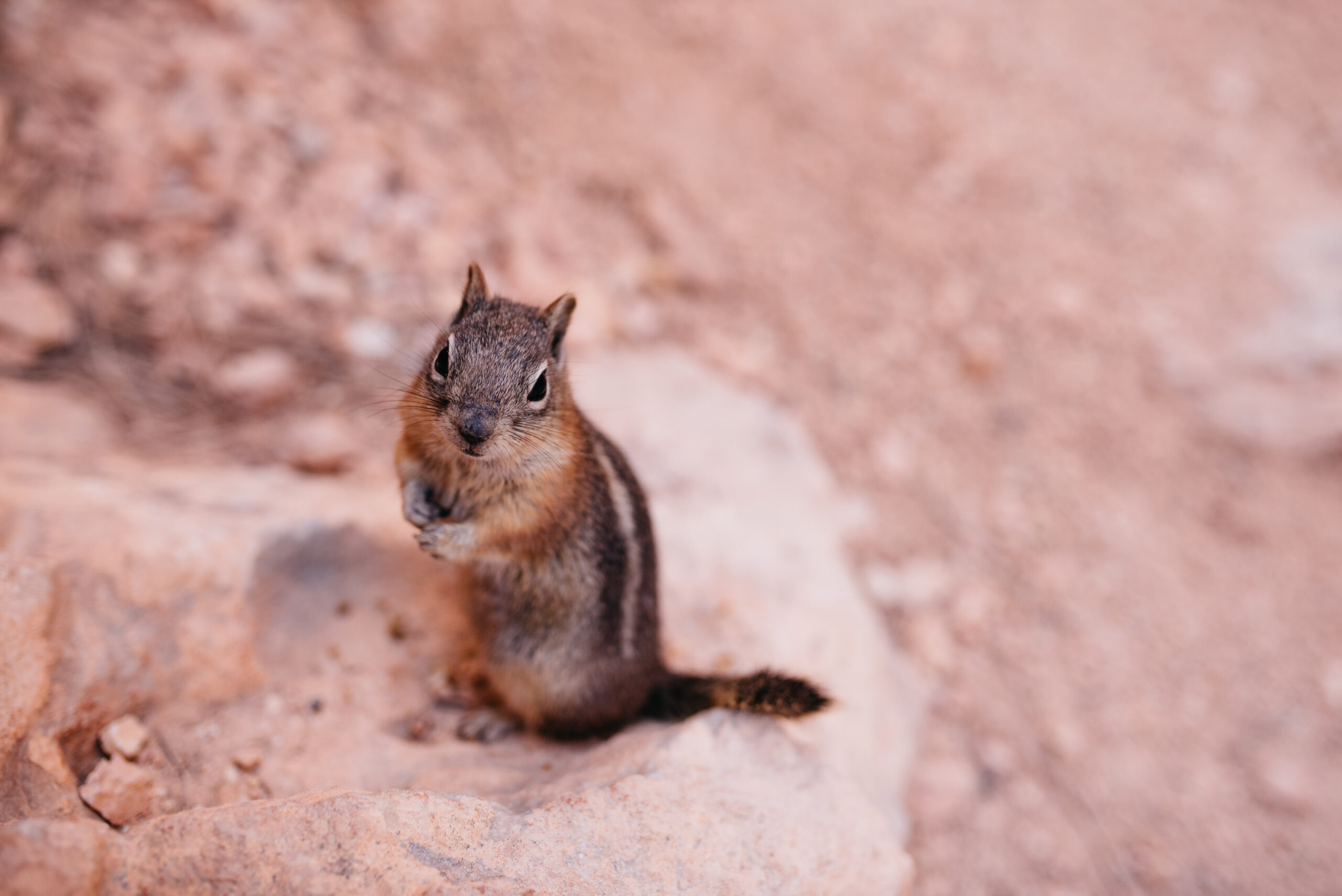
We also passed the plants and animals that belonged to this high landscape. We were happy not to meet a rattlesnake, but there were plenty of small squirrels and chipmunks around the trail. Together with the changing rock, they made Peek-A-Boo feel like the most complete version of Bryce.

The trail could be combined with the Navajo Loop. We kept them separate because we had already connected Navajo with Queen’s Garden and wanted enough time to enjoy both days.
Fairyland Loop: the long and quiet one
Fairyland Loop began outside the main entrance area and was completely different from the other two hikes. The landscape reminded us of a strange mixture of alpine forest, the black trees of Deadvlei in Namibia and the hoodoos of Bryce Canyon.
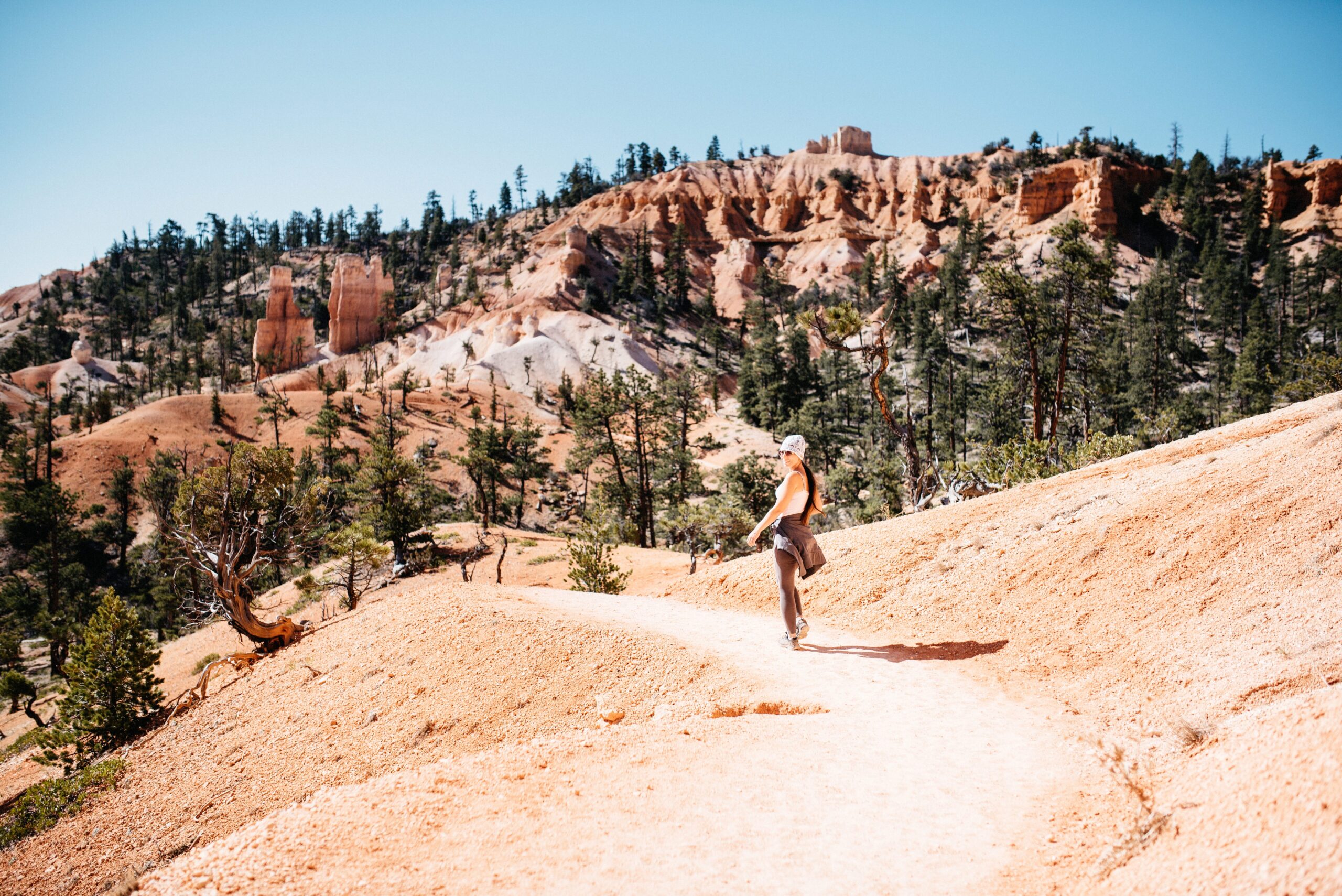
At about 15 kilometres, it was the longest hike we completed in Bryce. The elevation gain was not dramatically higher than on the shorter trails because every walk down into the canyon eventually requires climbing back up. It was also the least crowded route.
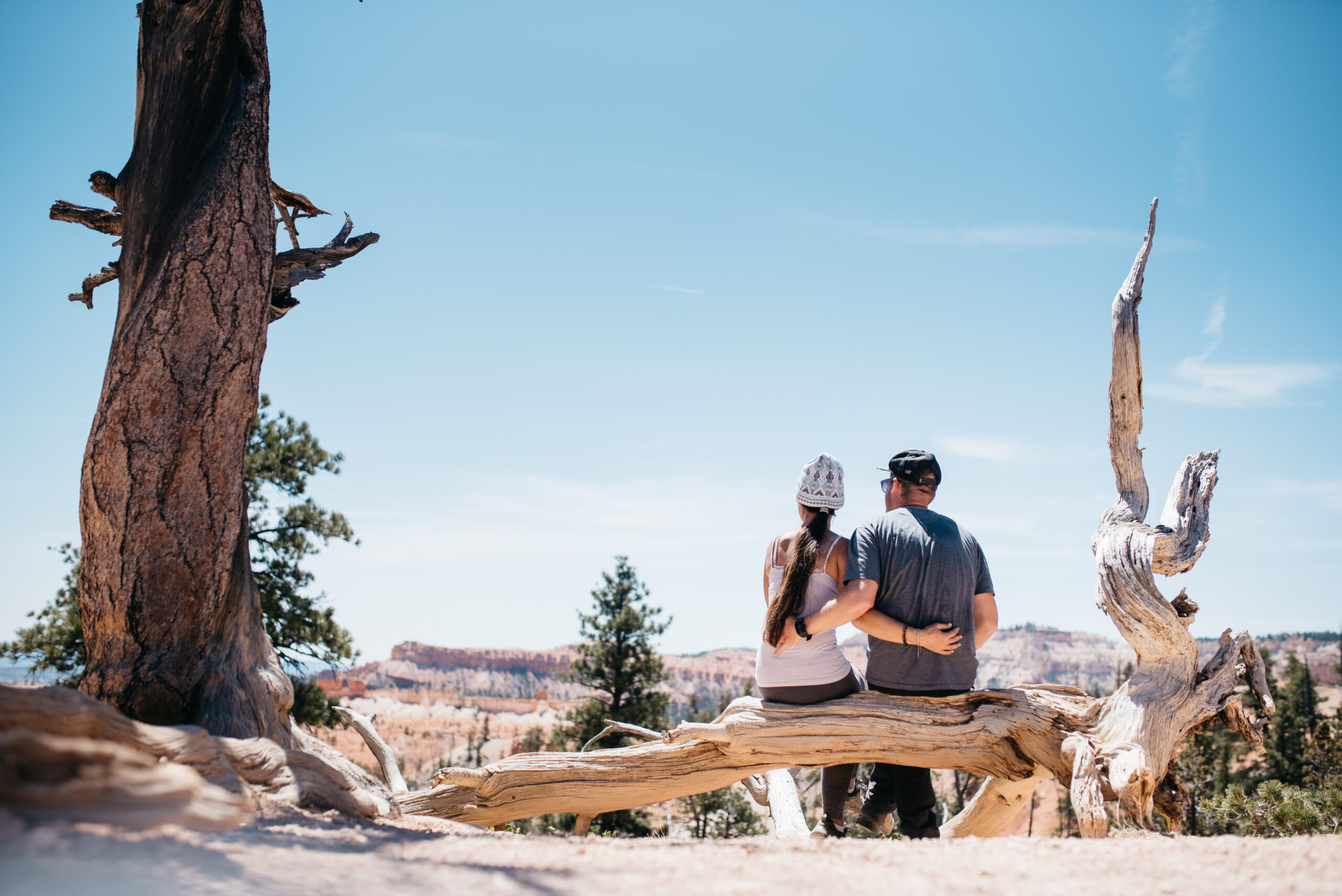
The short detour to Tower Bridge was worth adding. It was only a few hundred metres and led to one of the most distinctive formations on the loop.
Snow, altitude and spring weather
Bryce Canyon sits at roughly 2,500 metres, so late spring did not automatically mean warm weather. There was still snow in the park, mornings were cold and the wind on the rim made the temperature feel even lower.
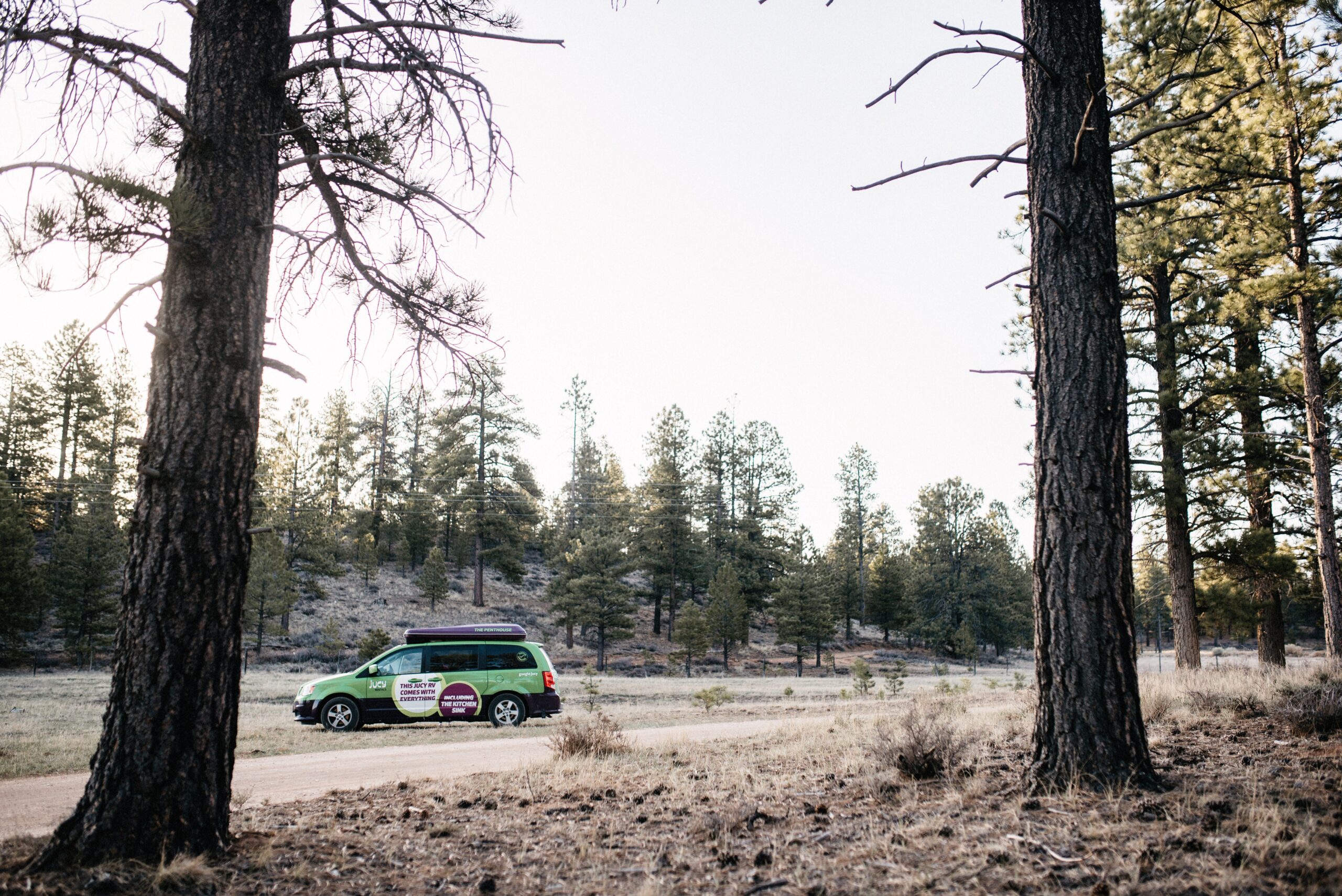
Warm clothes belonged in the backpack together with sunscreen. The sun was strong once we descended below the rim, even if the campervan had been surrounded by snow earlier that morning.
Our Bryce Canyon camping tricks
- The General Store offered showers for USD 3 when we visited in 2018.
- There was a free water refill station, so we kept our bottles and filled them before hiking.
- Free dispersed camping was allowed in nearby Dixie National Forest.
- The Fairyland trailhead sat outside the main entrance area.
- Longer trails included marked benchmark points that could earn a small reward at the visitor centre.
The USD 80 America the Beautiful pass already paid for itself after four national parks at this price level. Without the pass, Fairyland was an especially useful option because its trailhead could be reached without passing the Bryce entrance station.
For the night, there were BLM campgrounds, RV parks, motels and hotels in the wider area. We used free dispersed camping in Dixie National Forest just outside the park, which kept us close enough for an early start without adding another accommodation bill.
Which Bryce Canyon hike would we choose again?
If we only had a few hours, we would combine Queen’s Garden and Navajo Loop. It offers the classic formations and does not require an entire day. With more time, Peek-A-Boo would still be our first choice. Fairyland was longer and quieter, but Peek-A-Boo delivered the best balance of effort, variety and those moments when another section of canyon suddenly appeared around the corner.