
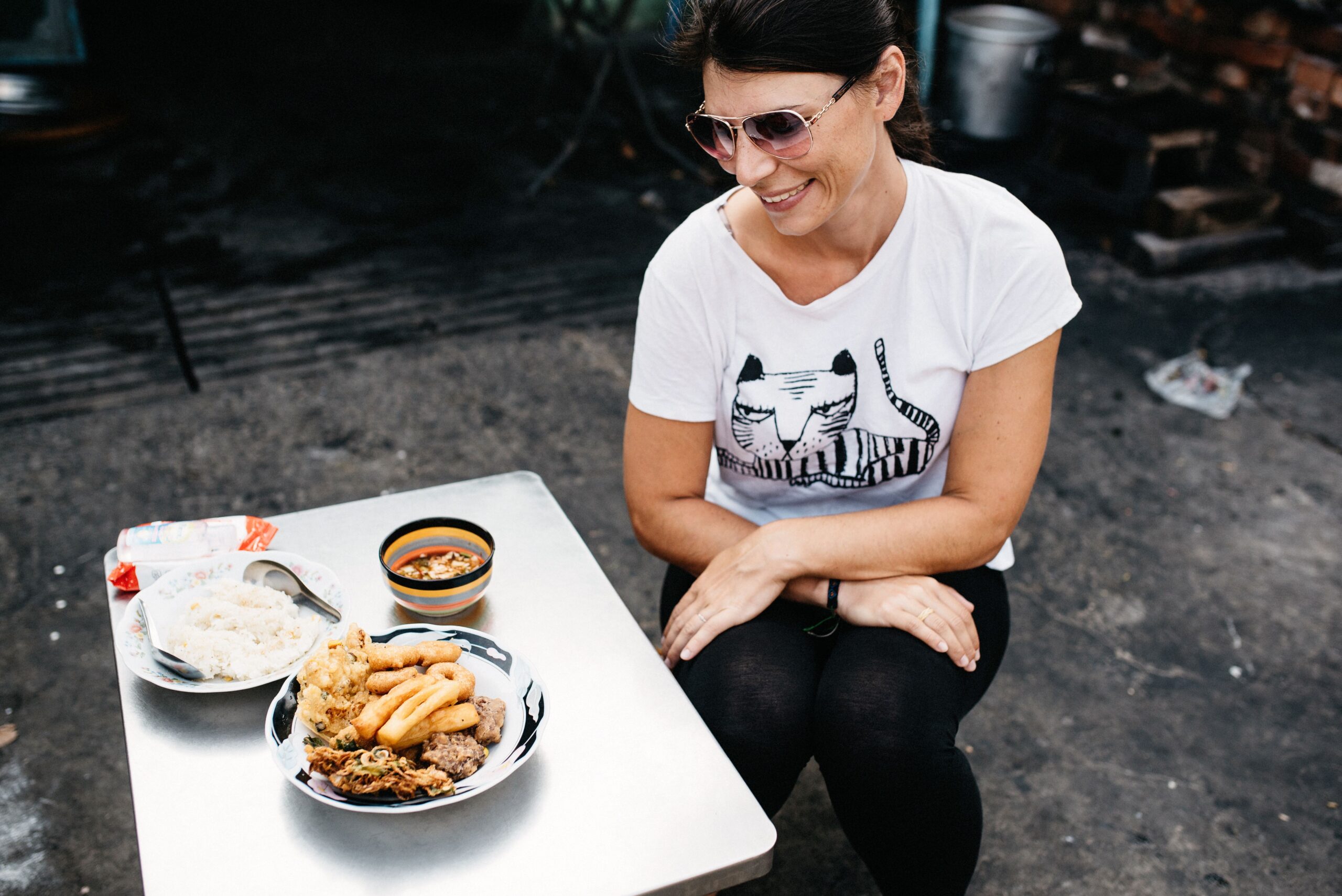
When it comes to food, Myanmar is definitely more on the street-food side than the upscale gourmet-temple side. Myanmar’s food and we, well, it was not what we would call love at first sight. It was not love at second sight either. But as we acclimatised to the country and started to love it, we decided that the food deserved a fair chance too.
By the time we reached our final stop in Mandalay, we had neither properly tried the street food, because it looked gross and not very hygienic to us, nor visited a traditional tea house. So we booked a rickshaw Food and Tea House Tour.
The daily tea-house routine
Visiting a tea house is a big tradition in Mandalay. People go almost every day. The tea houses serve not only tea, coffee and sweet treats, but also a wide selection of salty snacks and small dishes. You could spend hours working your way through the menu.
Our tour with Grasshopper Adventures
We booked with Grasshopper Adventures because it had good reviews and a proper website. The company specialised in bicycle tours across South East and South Asia but also offered this food tour.
- Cost: USD 35 per person, including all food and drinks.
- Duration: About four hours, from 8:00 AM until noon.
- Transport: Bicycle rickshaw.
- Finish: The tour ended at the final restaurant.
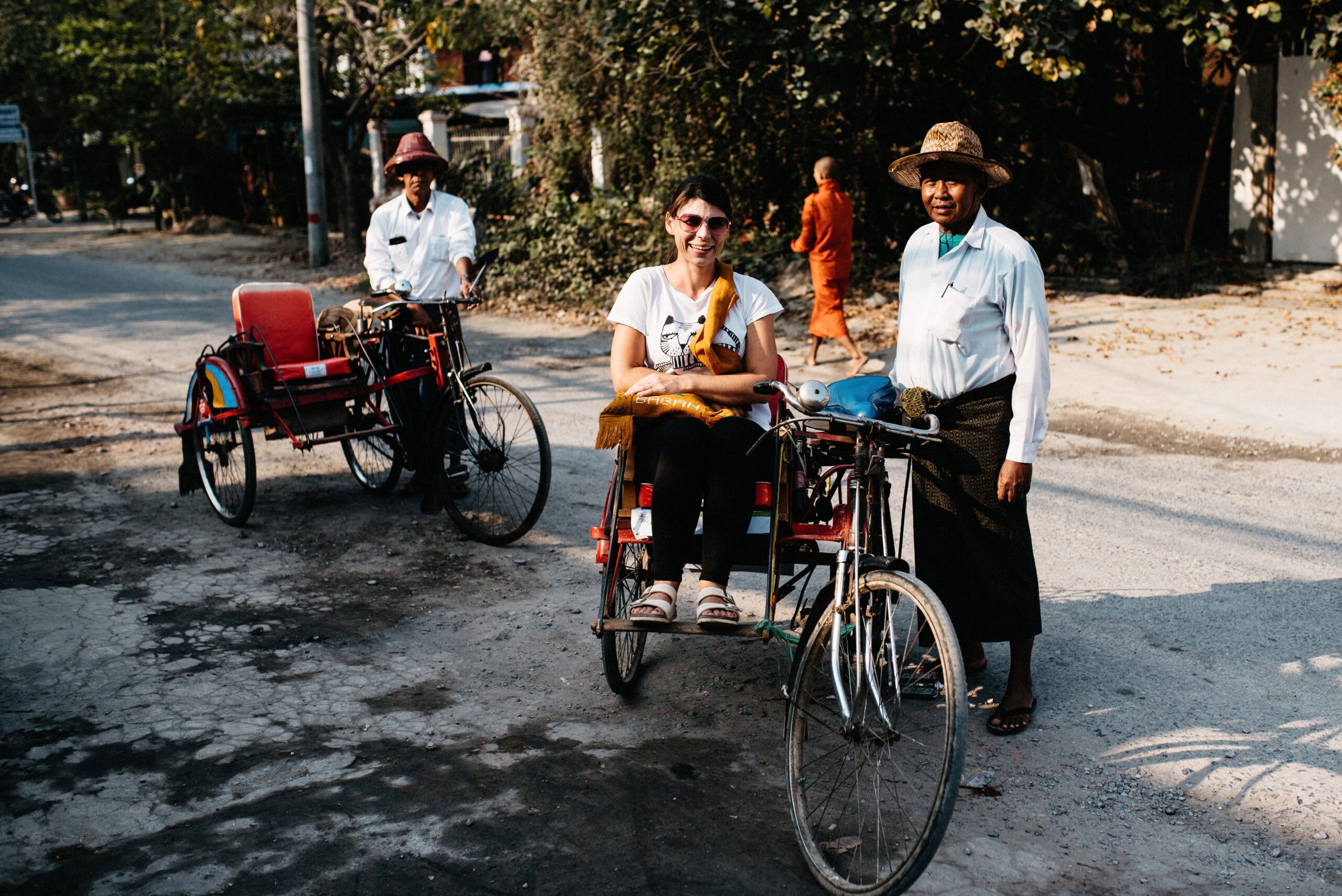
The route had six very different stops:
- A typical breakfast with tempura and white and black sticky rice.
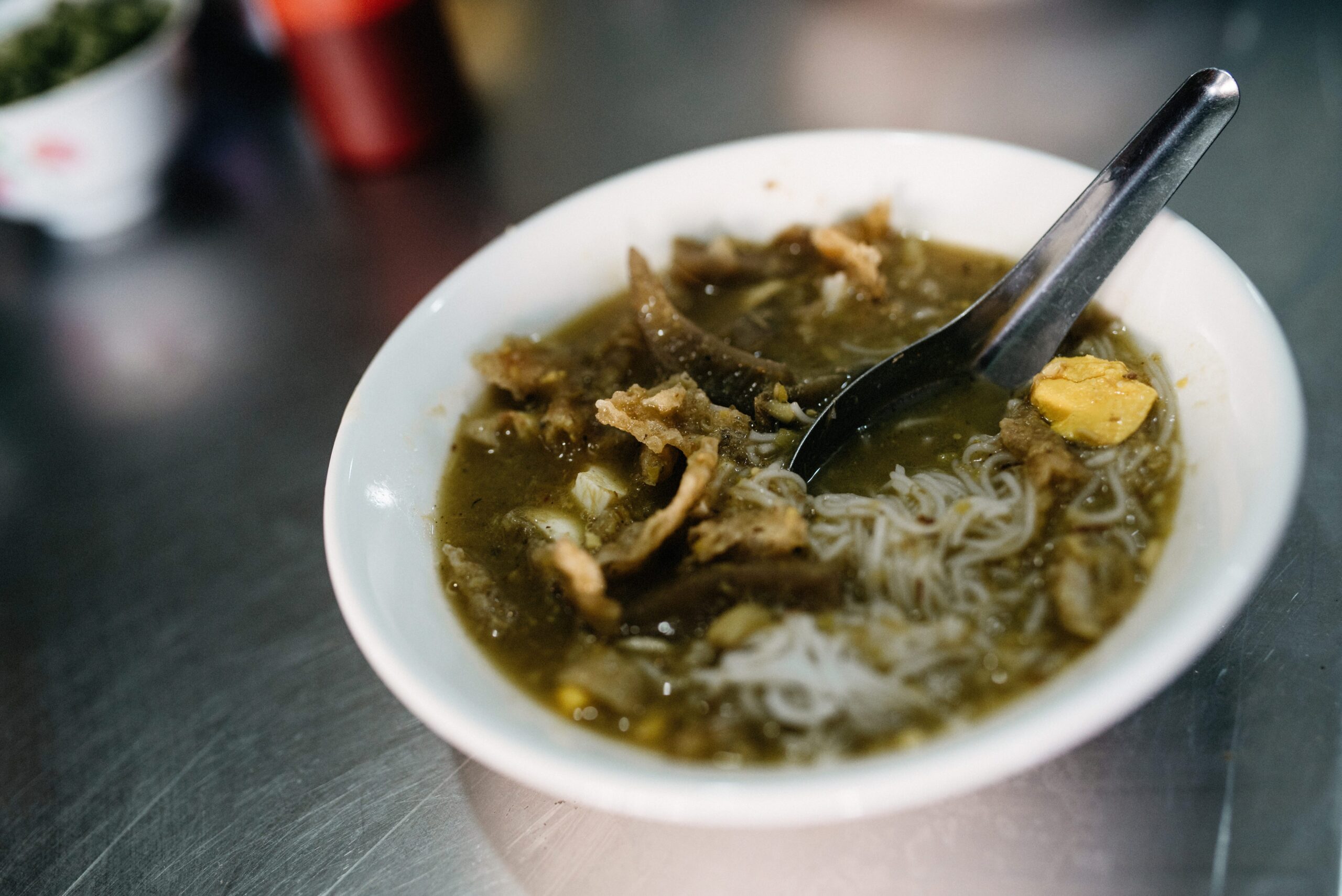
- Mohinga fish soup with rice noodles, banana stem and egg.
- A local market with fruit, vegetables, fresh meat and fish.
- A tea house with sticky-rice cake, banana cake, semolina cake, tea and coffee.
- A fresh fruit-shake stand.
- Chilli salad for lunch.
Very important: If you do this tour, do not eat beforehand. The most important thing is an empty stomach. They will fill it, do not worry.
Starting the day with a Burmese breakfast
Starting the day with a Burmese breakfast means beginning with more calories than we would usually eat at home in a week. Afterwards we felt like we do after Christmas Eve, as if we would not need food again for at least a week.
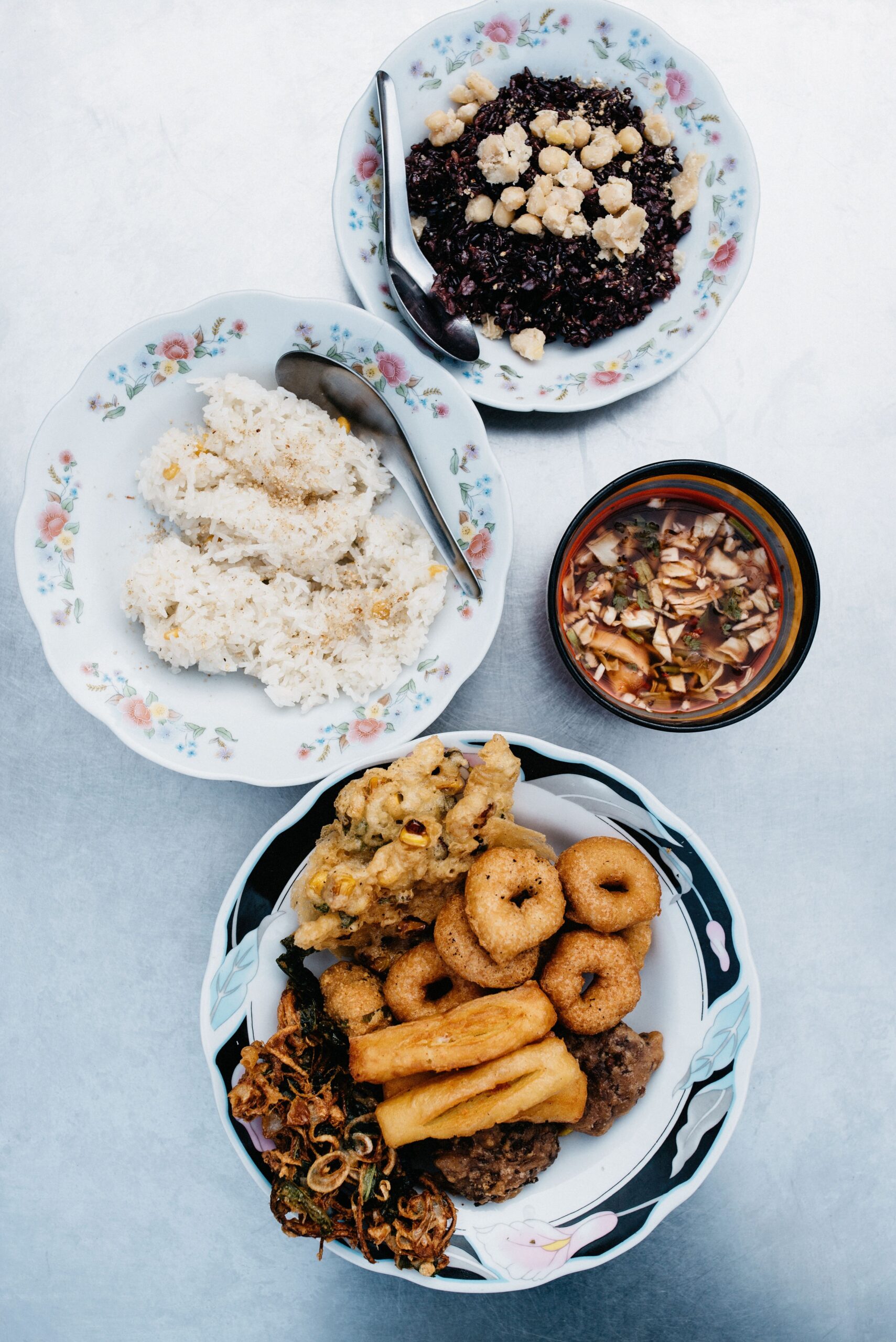
We tried corn in tempura, beans in tempura, chicken and many other fried treats, all served with white and black sticky rice. Locals either sat down to eat or picked up breakfast on their way to work in small plastic bags.
Mohinga fish soup
Our next stop was known for Mohinga, a fish soup eaten for breakfast or as a snack between meals. People ate it there when they had time, but takeaway was just as popular: soup in one plastic bag, the remaining ingredients in another.
The soup came with noodles, a whole cooked egg, banana stem and different herbs. It did not look especially appealing, but it genuinely tasted better than it looked.
The local market
Before our first proper Mandalay tea-house visit, it was time for the obligatory local market. We had already passed countless markets during our time in Asia. You rarely had to look for one intentionally because walking from A to B usually took you through one.
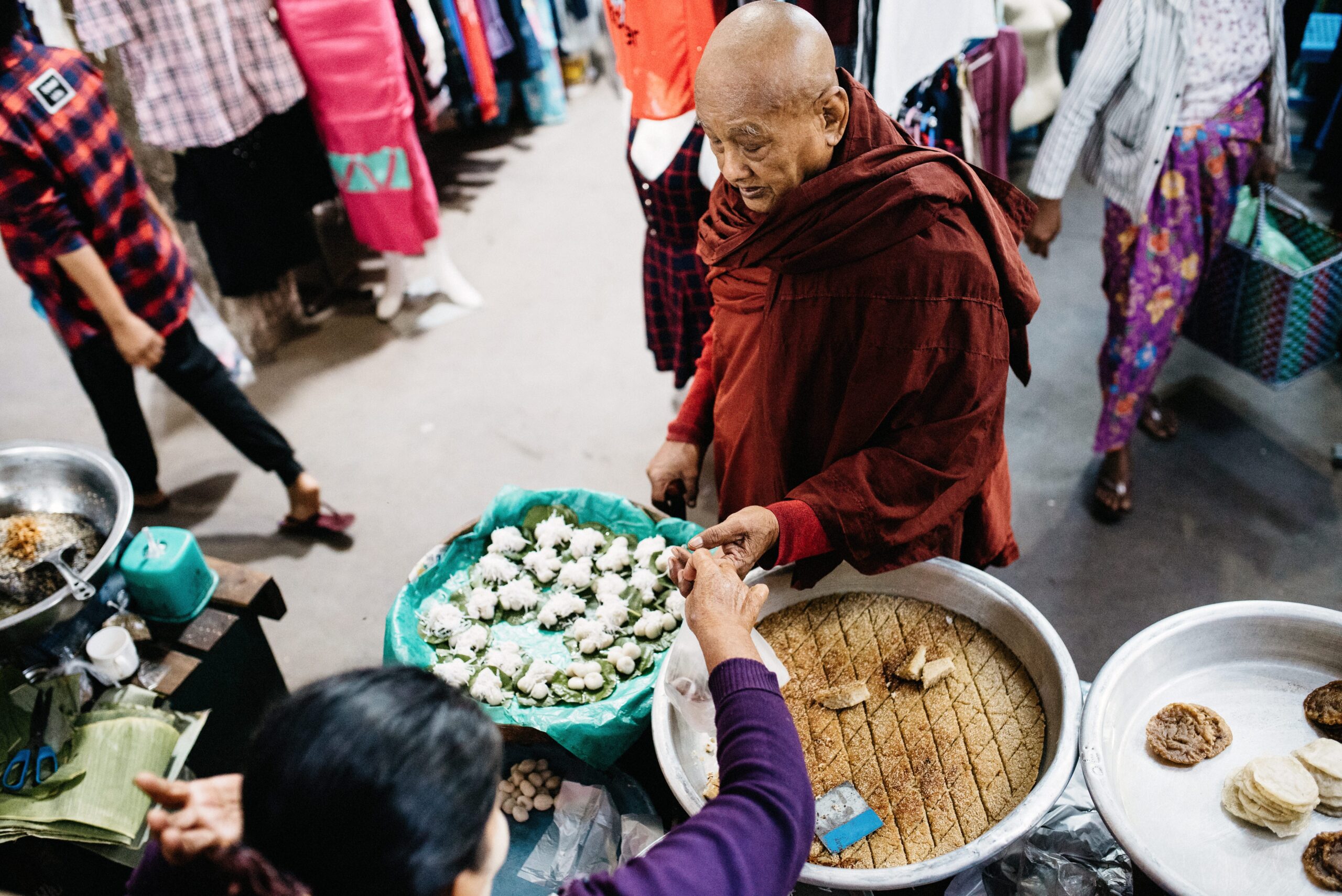
We had seen delicious and not-so-delicious things: pink eggs, unrefrigerated meat and fish, colourful flowers that added a pleasant smell to all the less pleasant ones, and mountains of herbs, fruit and vegetables.
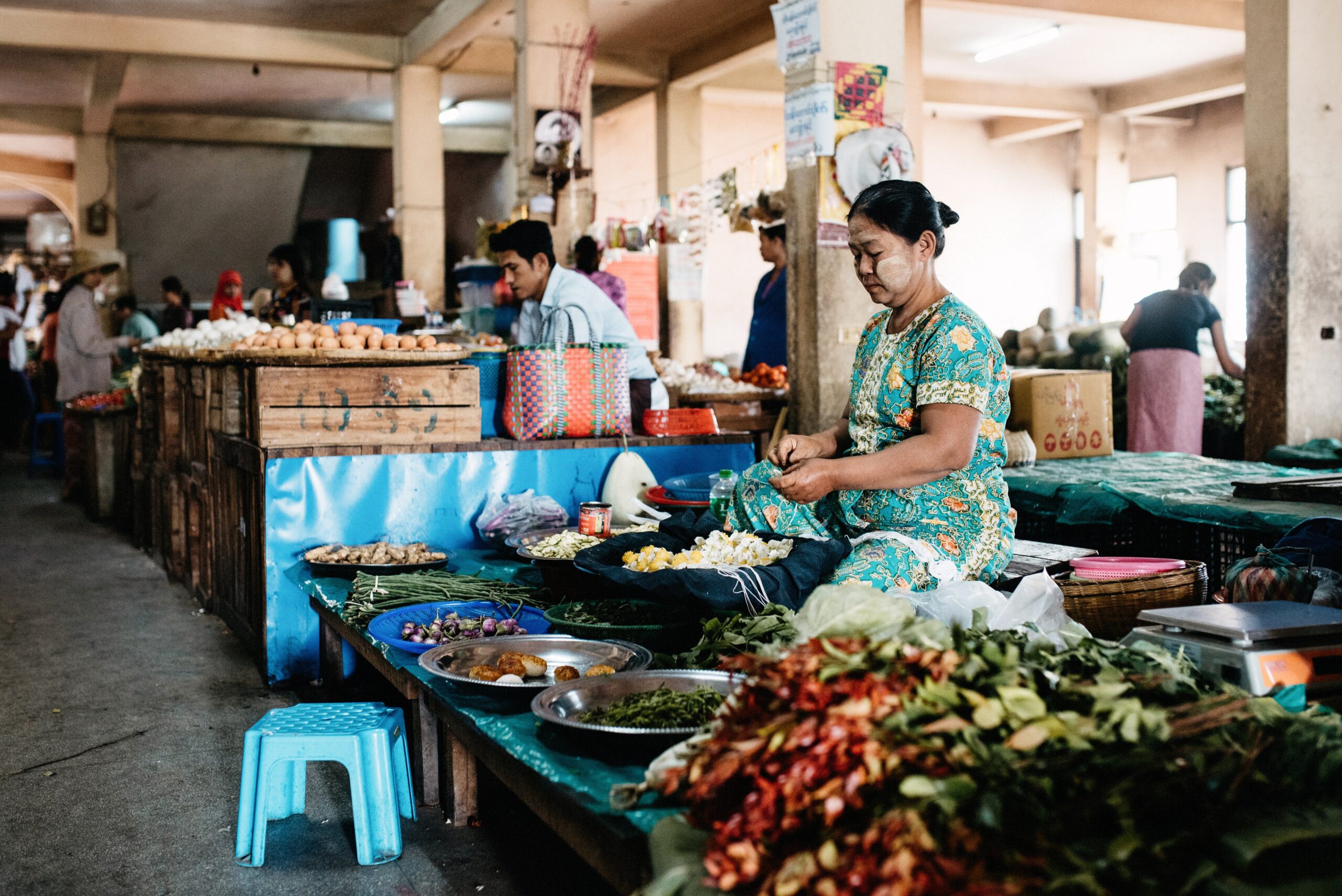
This market visit was different because we had a guide. He explained what people cooked with everything around us and identified things that had left us completely clueless on previous visits.
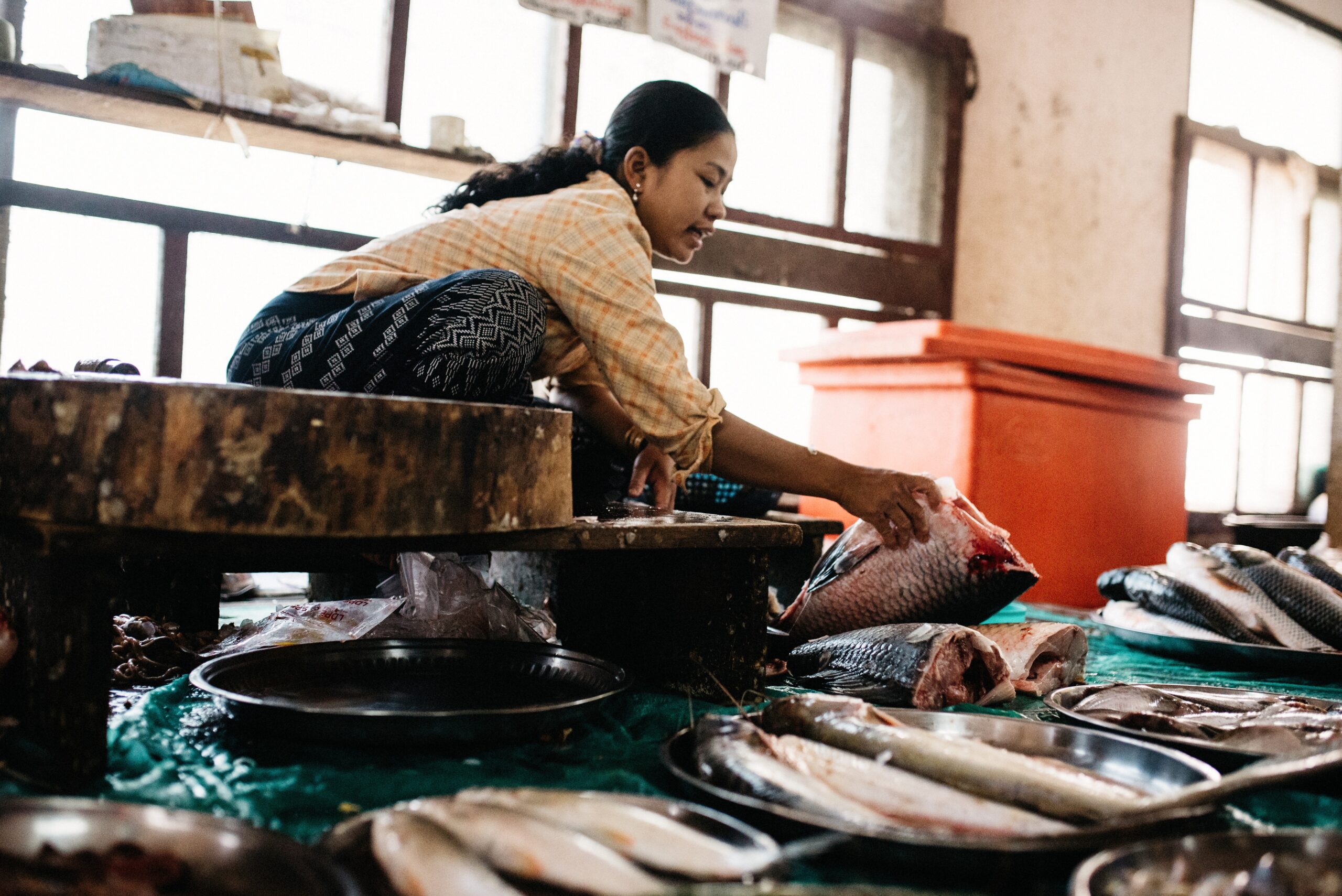
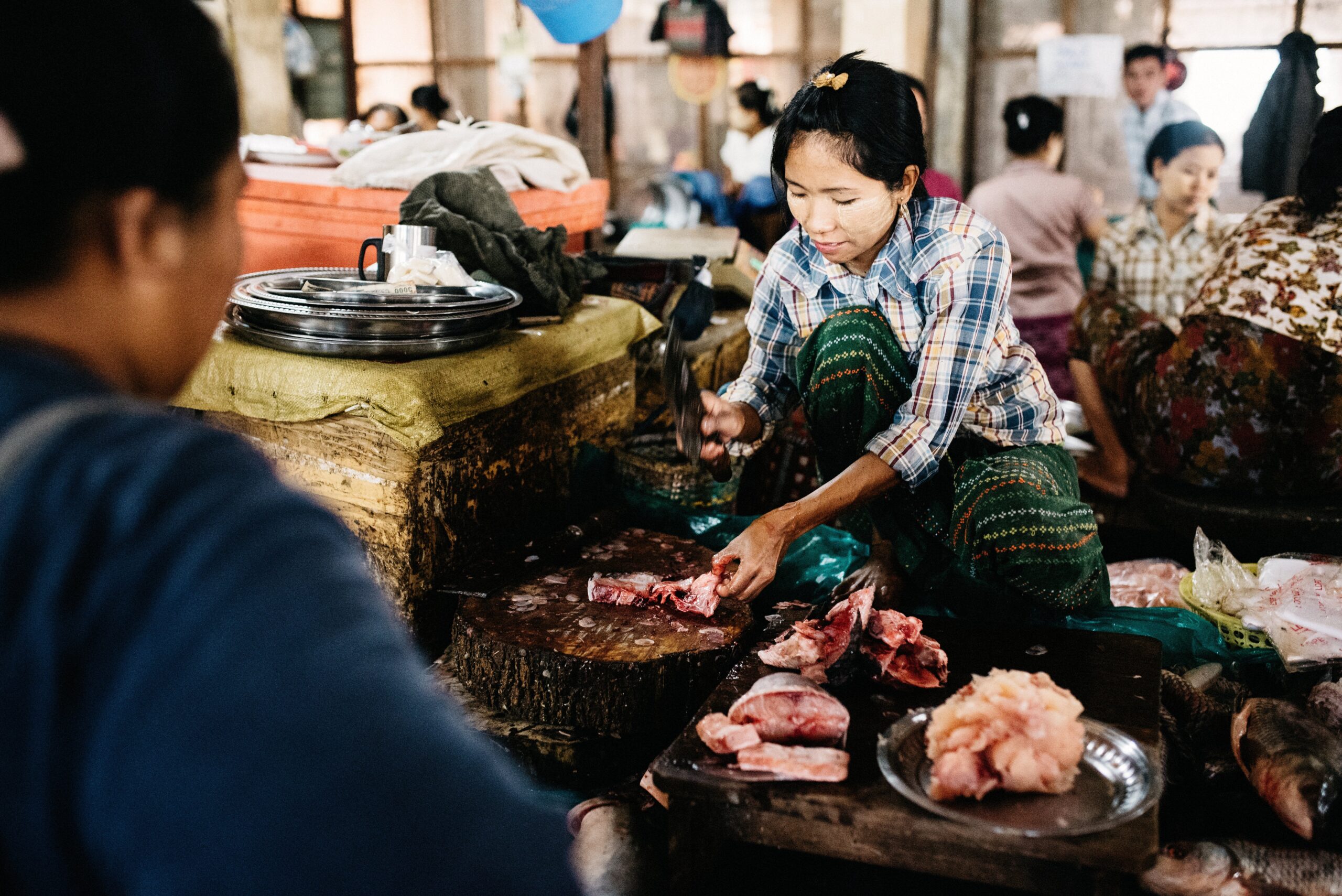
We learnt that chicken feet were cooked for a very long time until soft enough for a salad. Birds were sold with their feathers still attached and prepared when somebody bought one. The spice section included a mysterious green fish paste sold in small pieces that apparently improved almost every dish and kept for at least a year.
Eggs were everywhere. One specialty, our guide told us, involved wrapping a cooked egg in sandstone, waiting until it became sour and then enjoying its very particular taste.
The tea house
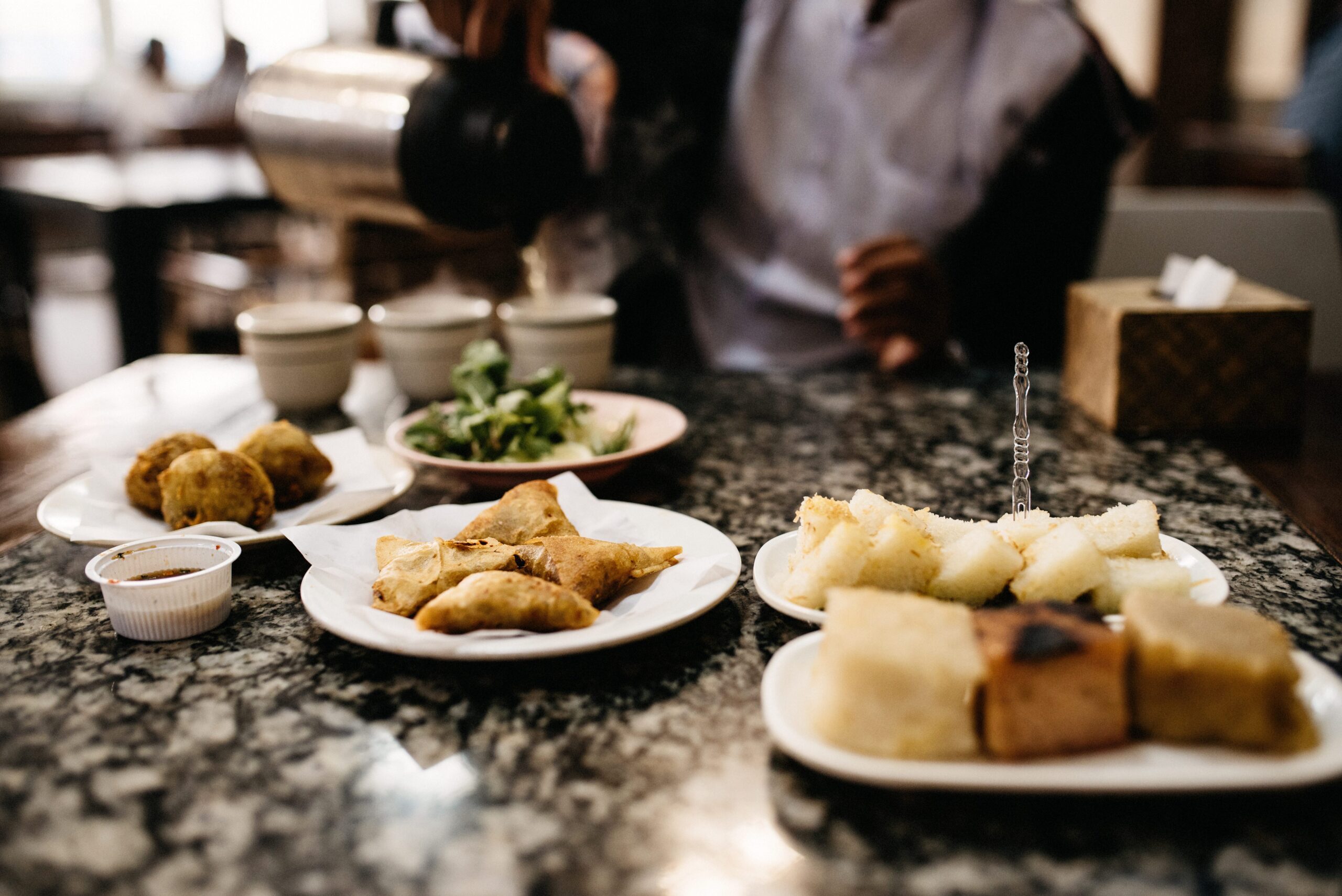
The tea house was our personal highlight. We tried sweet and spicy snacks and cakes and loved almost everything. The tea and coffee were also very good.
First came a selection of Indian and Burmese savoury snacks with different dips. Then it was time for sweets: sticky-rice cake, banana cake and semolina cake. They tasted very different from cakes at home but were delicious. If you visit Mandalay, make sure you spend some time in one of its tea houses.
Chilli salad for lunch
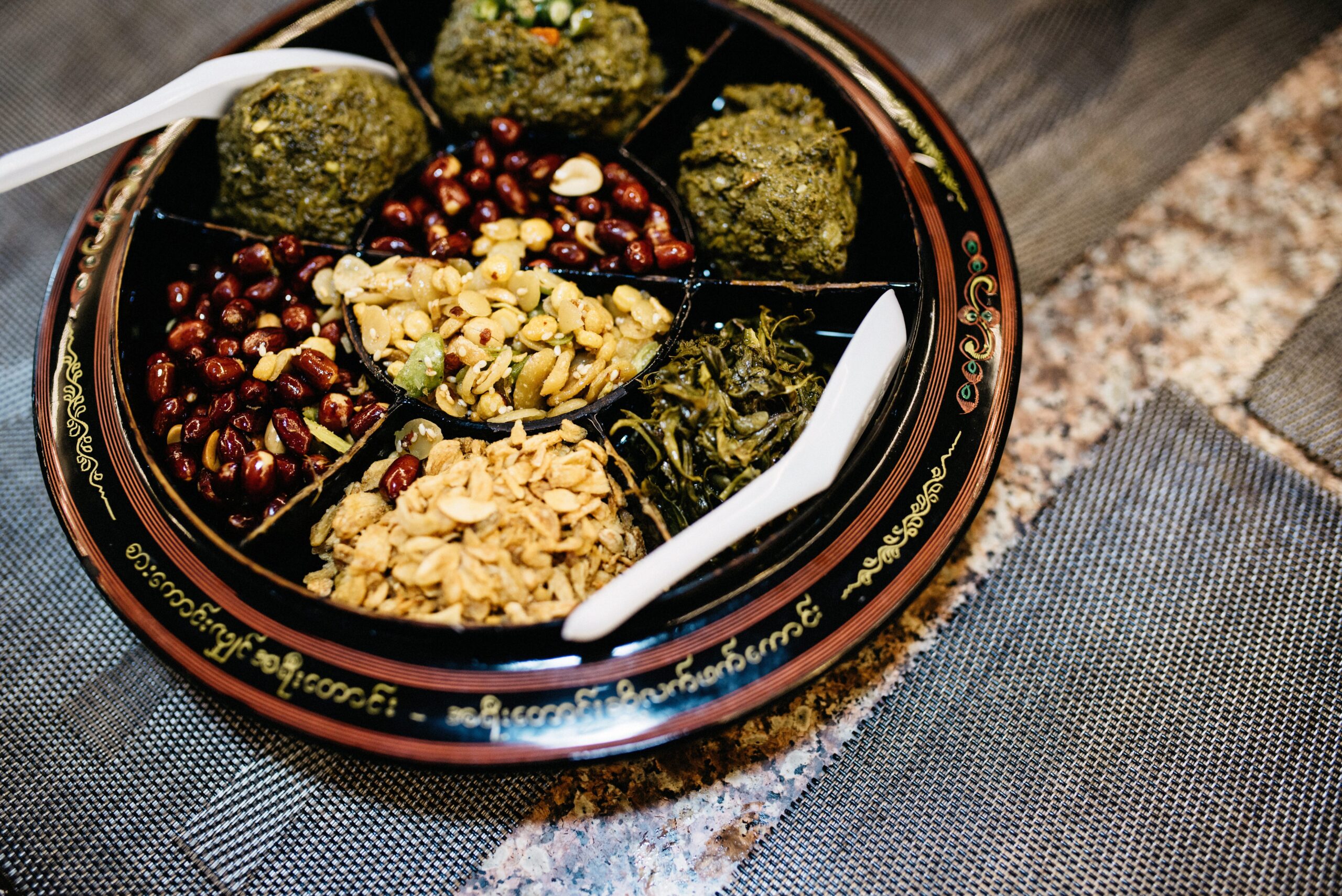
After a fresh fruit juice, we reached our last stop: a restaurant said to serve one of the best chilli salads in town. We could order it European spicy, spicy or super spicy. Before choosing, we received a platter with all three versions to try.
The salad consisted of different beans, nuts, chillies and other local ingredients. It was not bad, but we did not enjoy the amount of oil. We watched the preparation: the cook mixed everything together, collected what looked like a five-litre container of vegetable oil and poured a very generous amount over the salad. That was the one part we could have done without.
The tour became one of the most memorable parts of our 2.5 days in Mandalay, even if our stomachs needed some time to recover.