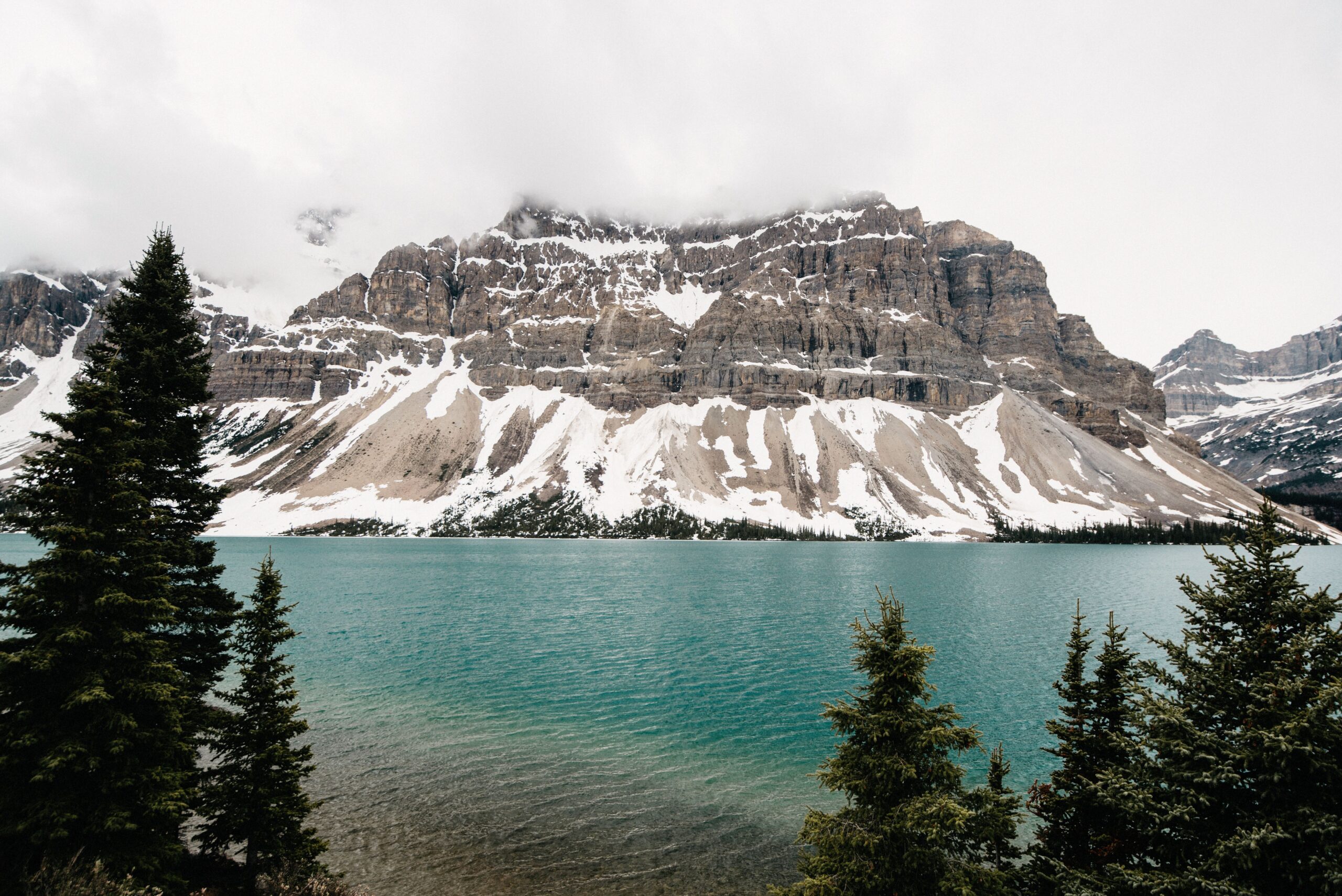
Jasper formed the northern end of the Icefields Parkway and the next major stop on our route through western Canada. We stayed in town for three nights, used the visitor centre to check conditions and chose two hikes that showed very different sides of the park.
The Valley of the Five Lakes stayed low and moved between forest and water. Bald Hills climbed above Maligne Lake into snow and open mountain views. Then the Icefields Parkway connected Jasper with Lake Louise through an entire day of waterfalls, glaciers and roadside stops.
Arriving in Jasper
We reached Jasper after the long drive from Clearwater and Wells Gray. The town was compact and practical, with accommodation, food and a visitor centre that also supplied the useful luxury of free Wi-Fi. More importantly, it gave us current information about snow and trail conditions at the end of May.
Staying in Jasper also meant we could separate the hikes instead of squeezing both into one long day. We slept in the same place for two nights, left the luggage alone and only carried what we needed for the trail. After weeks of moving almost every morning, that already felt restful.
Valley of the Five Lakes
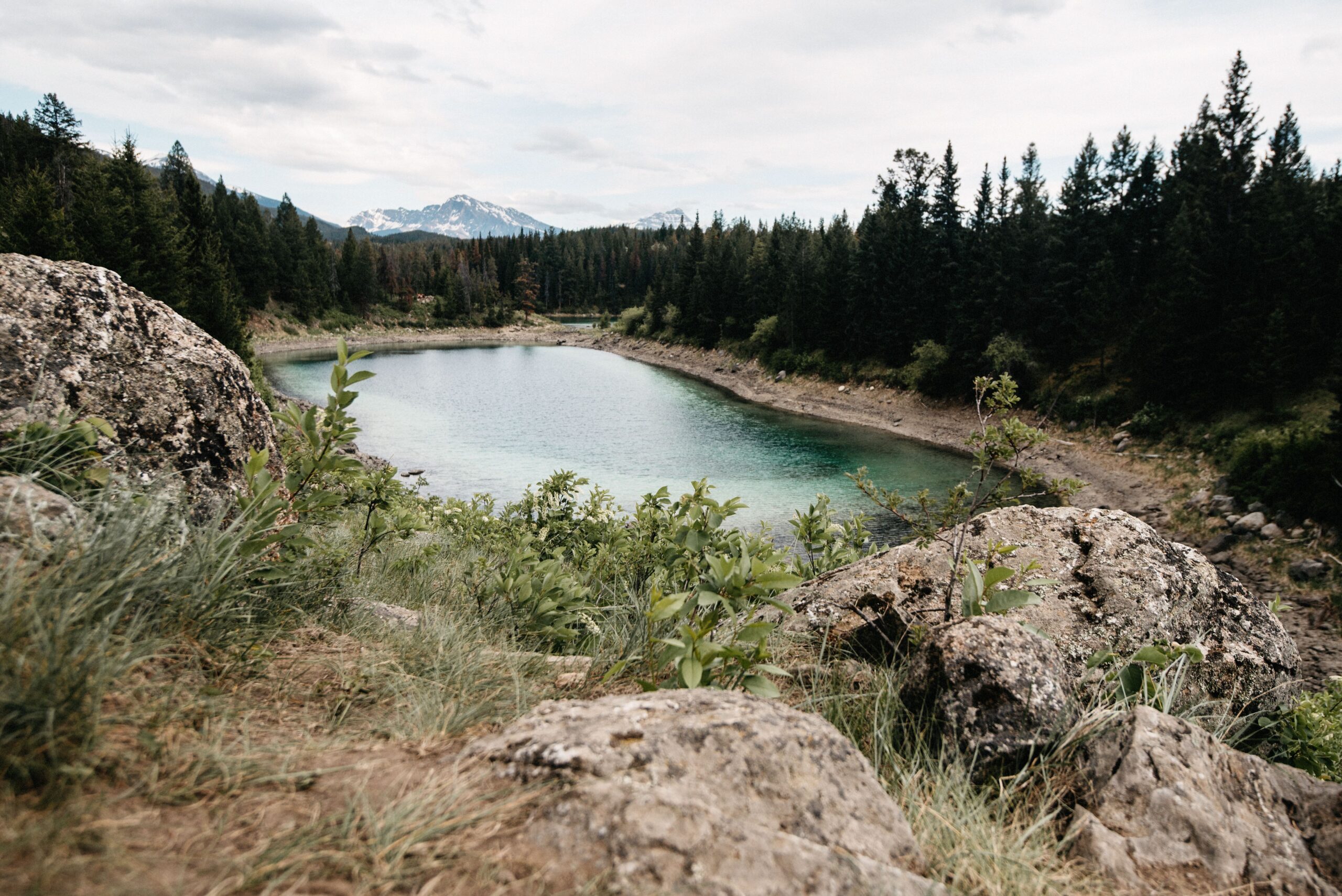
Our first hike followed the Valley of the Five Lakes. The trail began in the forest, crossed open ground and linked a series of small lakes instead of building towards one final viewpoint. That made it easy to walk at our own pace and stop whenever the colour of the water changed again.
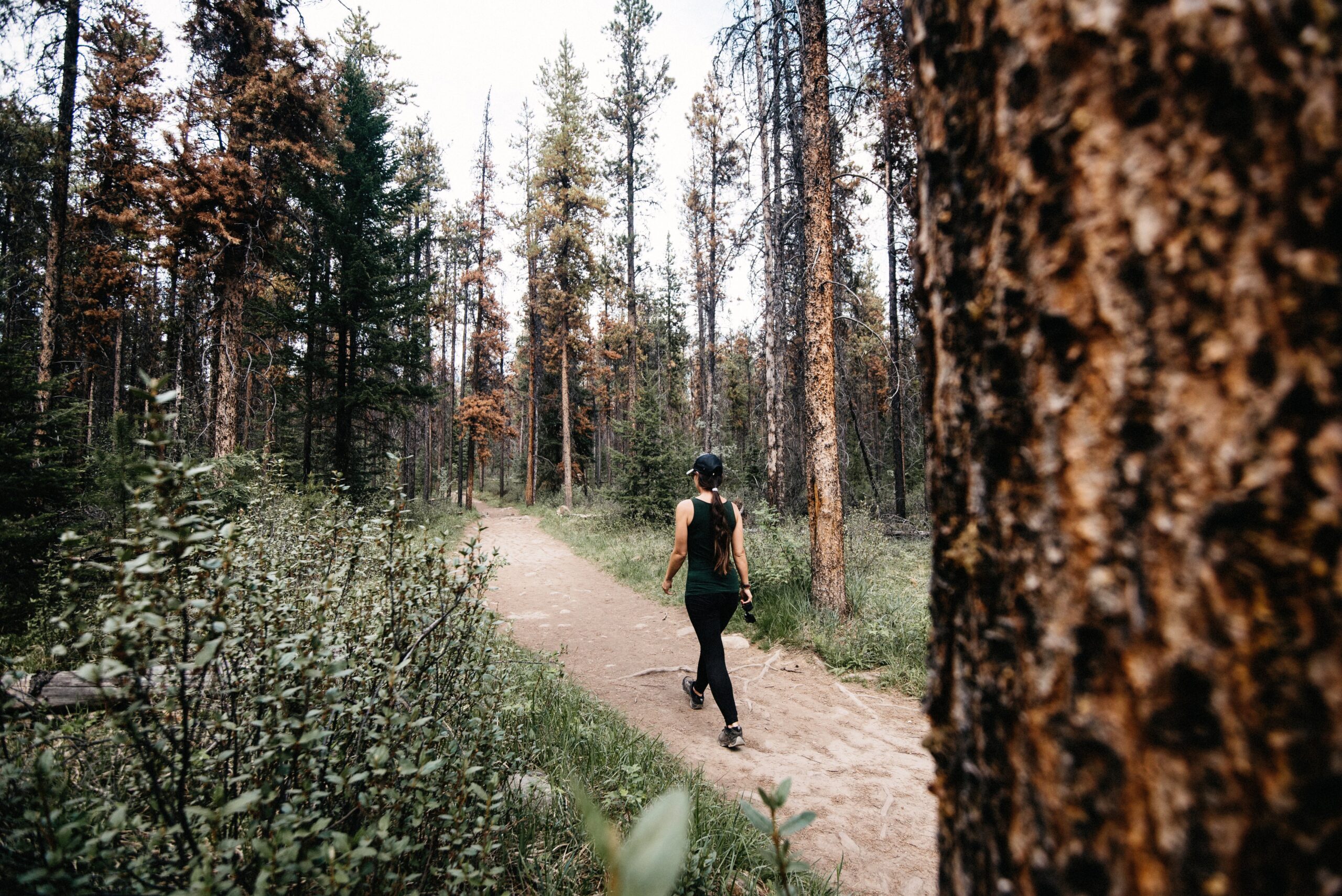
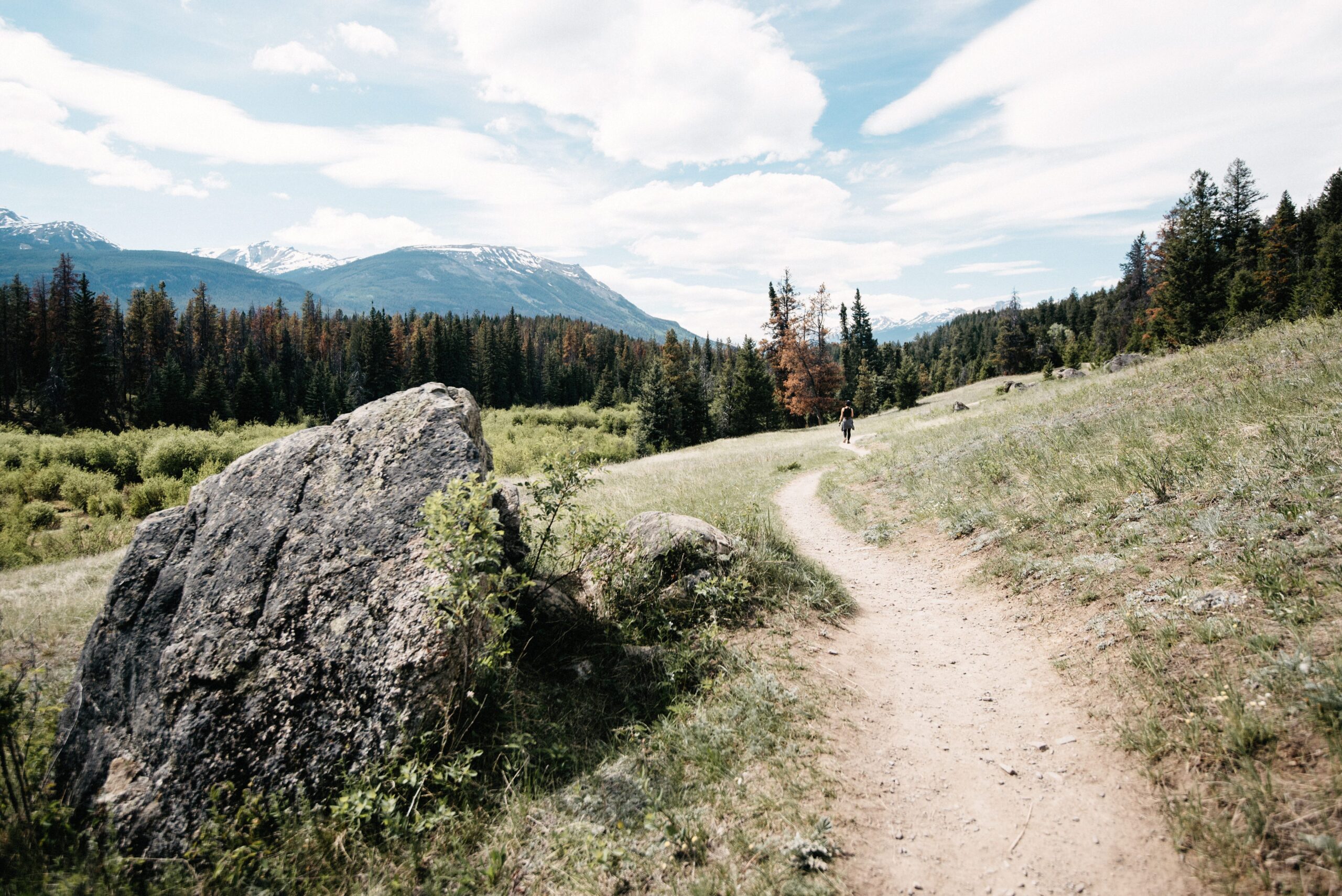
Some lakes appeared pale and silty, others clear turquoise or dark green beneath the trees. The scenery was less dramatic than the high mountains around Maligne Lake, but the route had its own quiet rhythm. We did not need to wait until the final kilometre to understand why the hike had been recommended.
The trail also suited the uncertain weather. We moved in and out of the trees, never climbed far above the valley and could have shortened the route if the clouds had changed. Nothing dramatic happened, which was part of why the day worked so well.
Following the road towards Maligne Lake
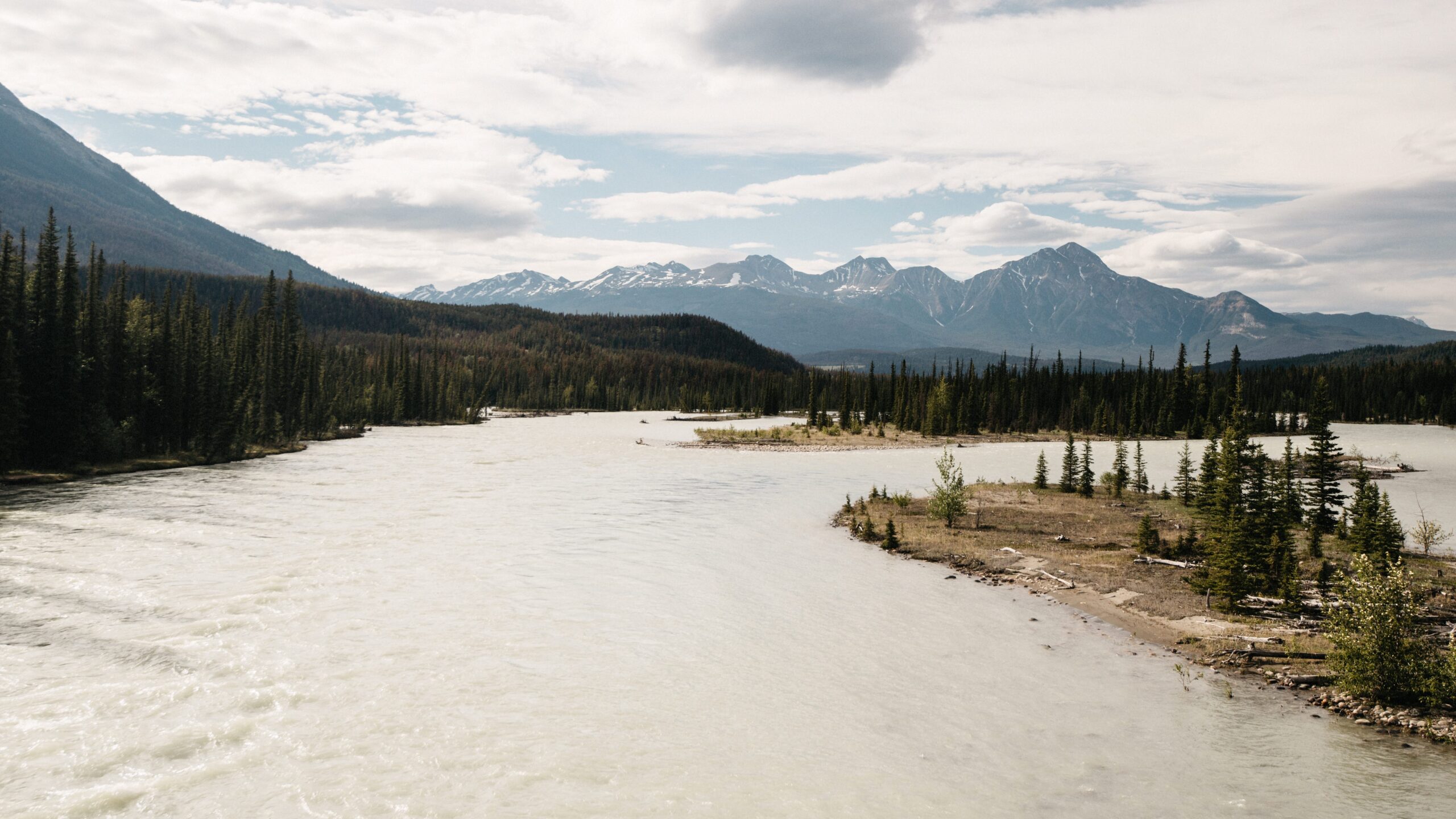
The next day we drove towards Maligne Lake. Rivers and open mountain views repeatedly interrupted the route, so reaching the trailhead took longer than the distance alone suggested. This became normal in Canada: a drive could be short on paper and still fill half a day with stops.
Snow on the Bald Hills Trail
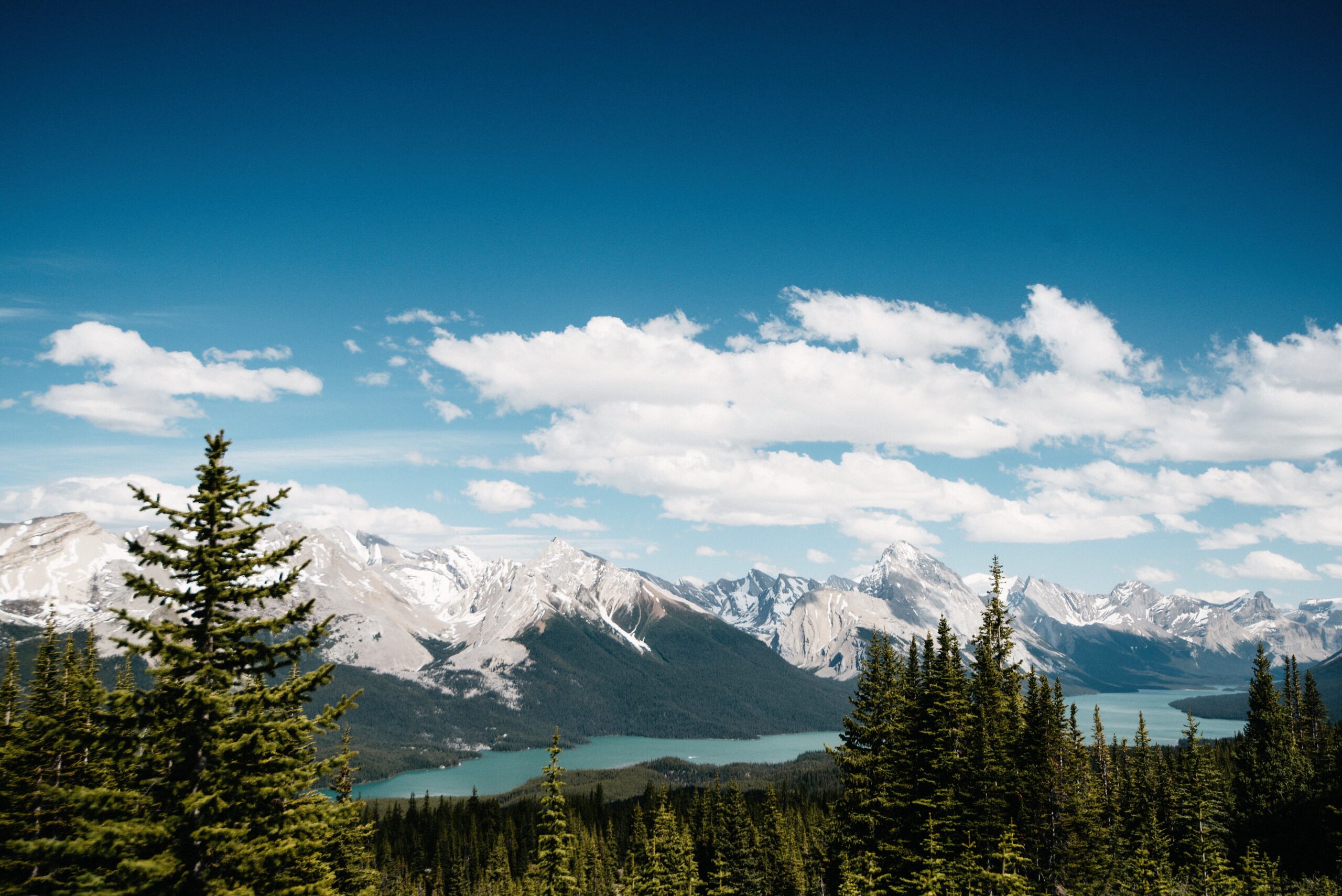
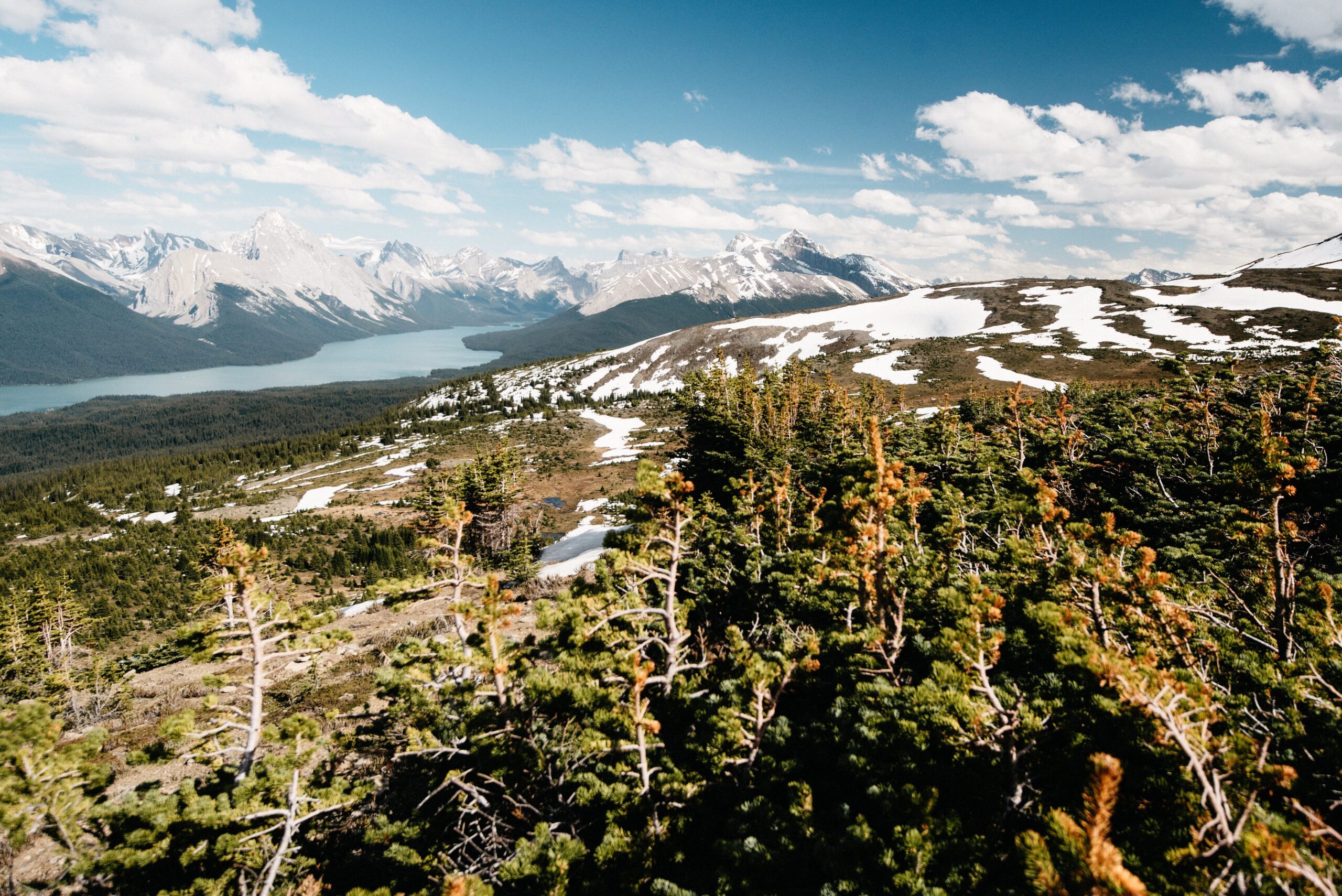
Bald Hills climbed through forest before opening above Maligne Lake. Snow still covered parts of the higher trail. It was not deep enough to turn us around, but it slowed the walk and reminded us that late May in the Rockies was not the same thing as summer.
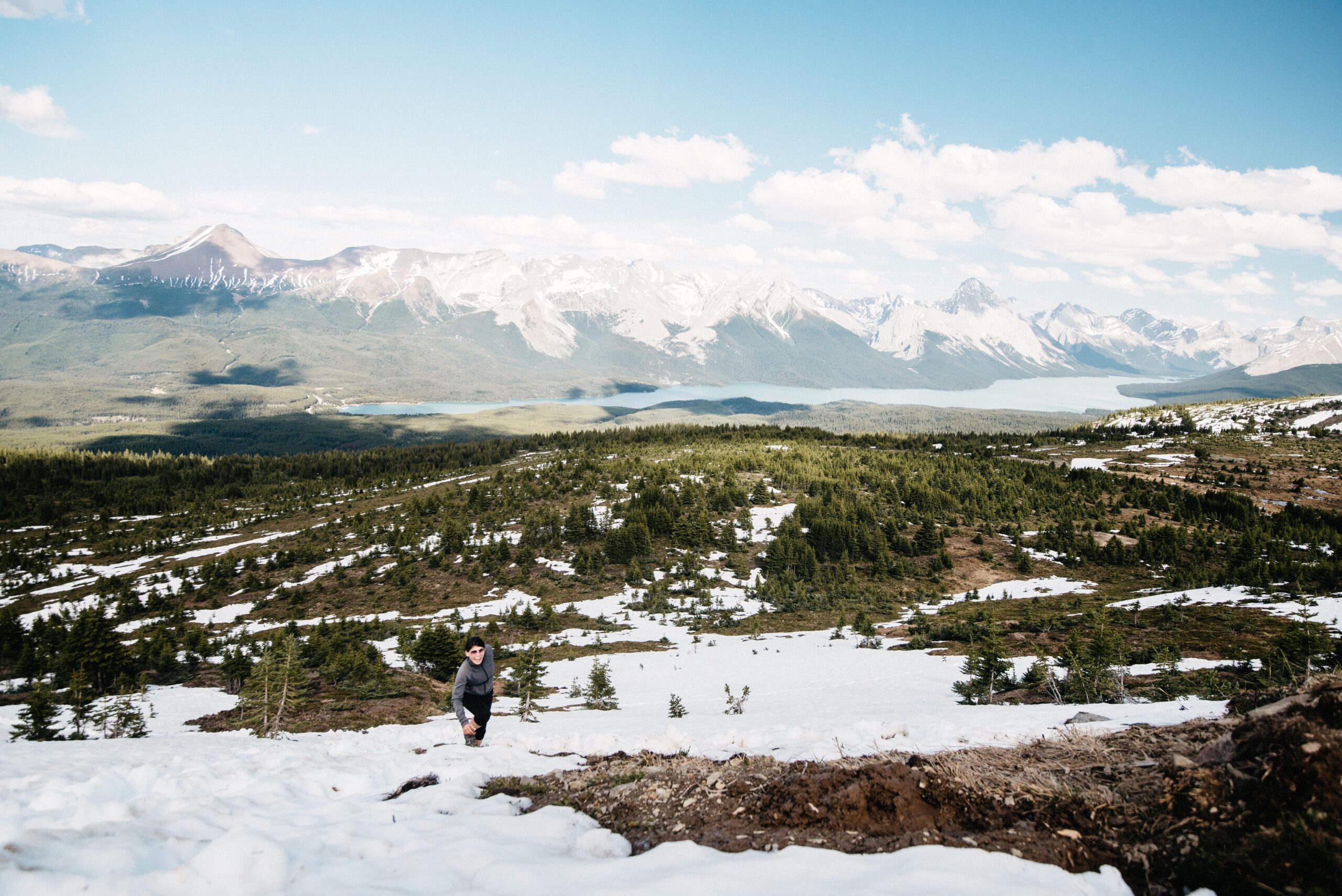
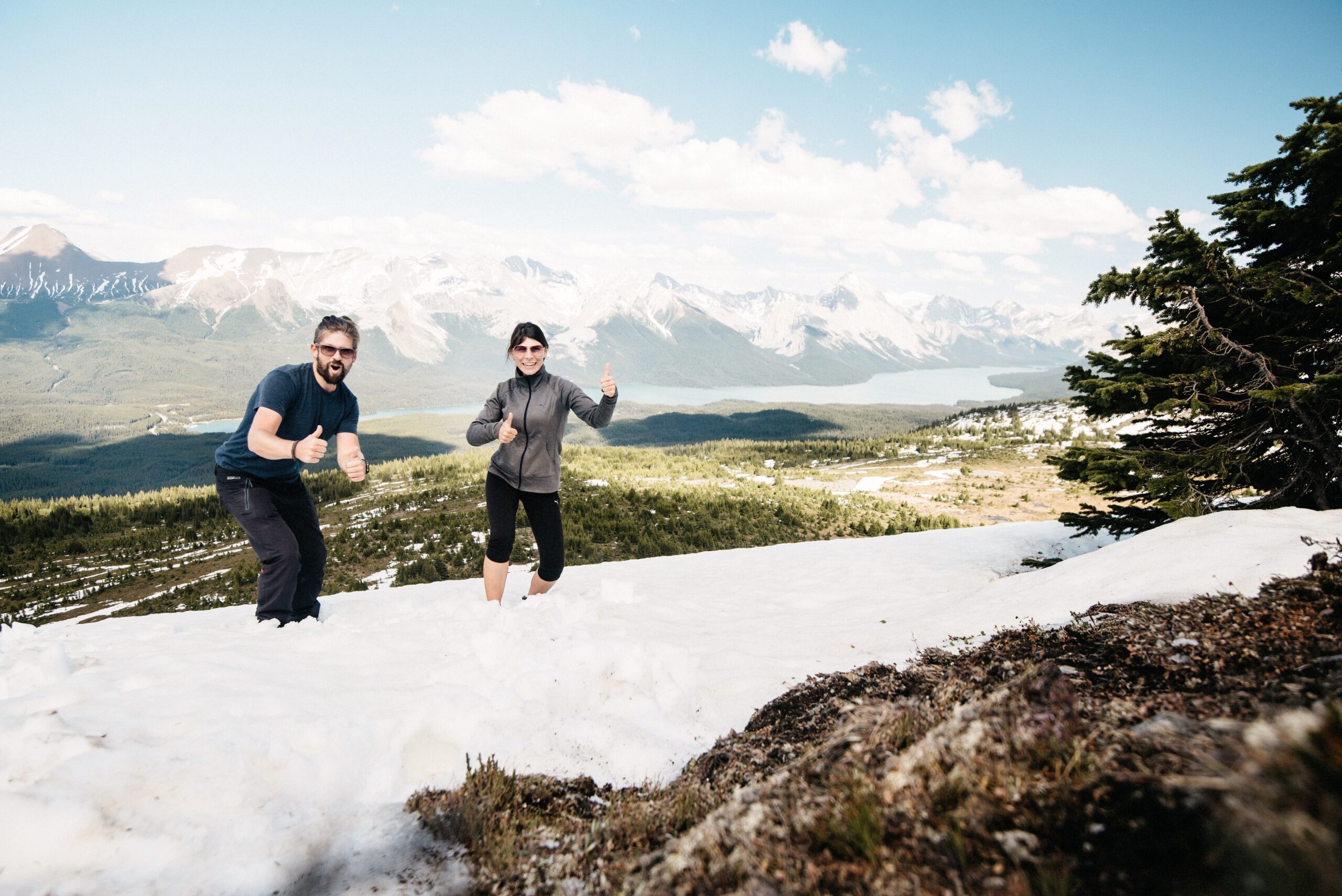
Once we reached the open hills, the reward stretched in every direction. Maligne Lake lay below us, with snowy ranges continuing far beyond it. The view was larger and rougher than the forest lakes from the previous day, exactly the contrast we had wanted.
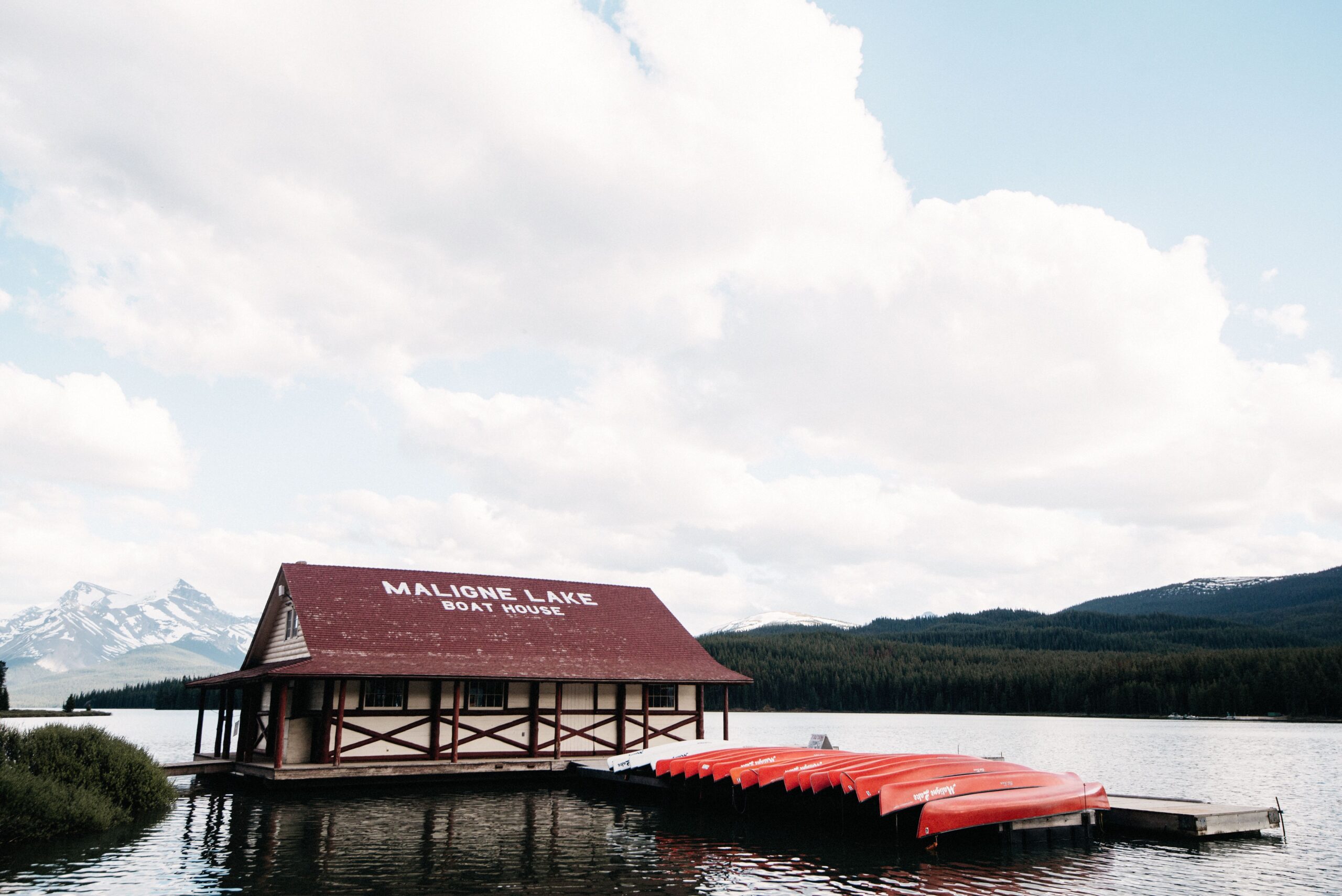
Maligne Lake after the hike
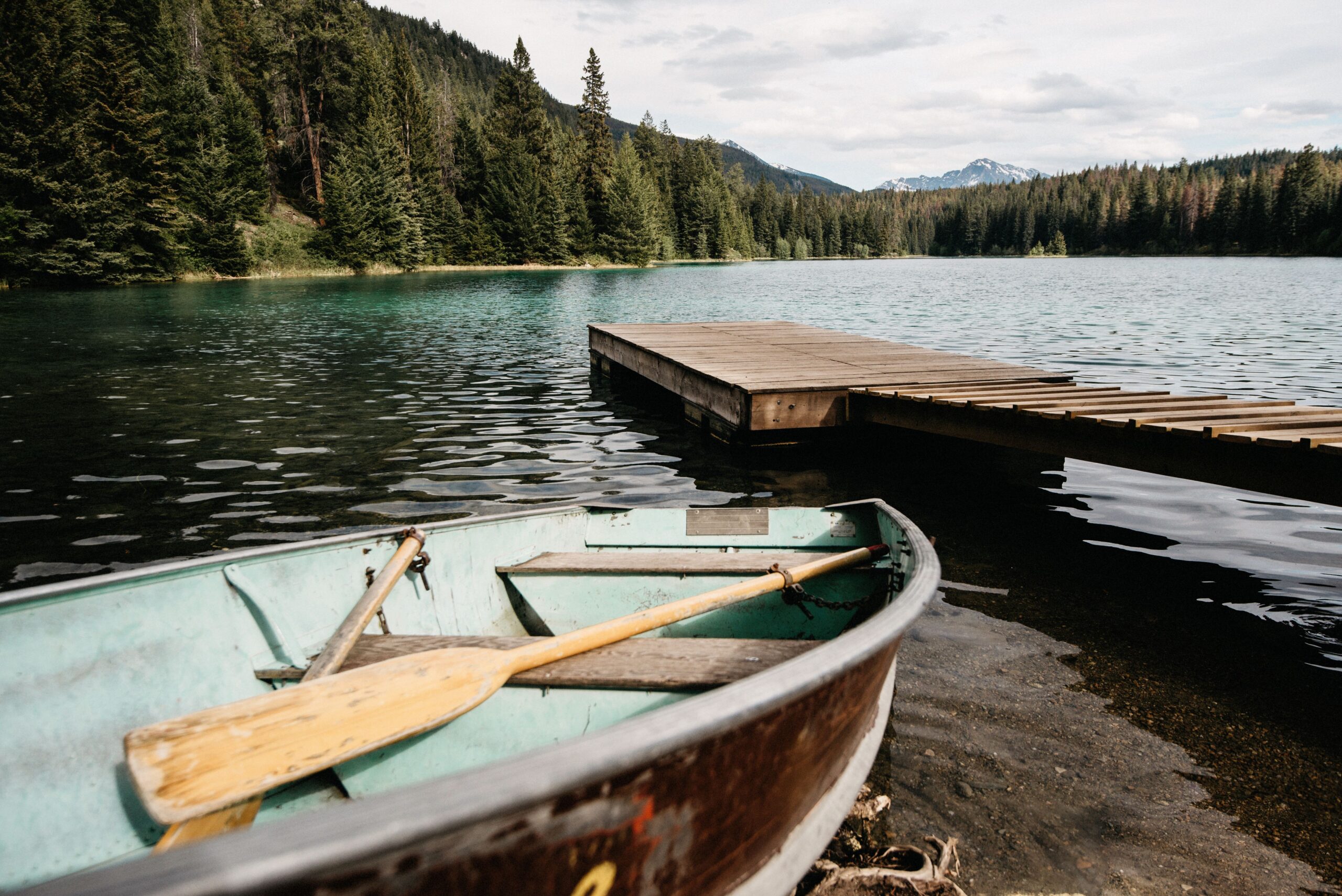
Back at the water, the red canoes beside the boathouse added the familiar Canadian colour to the lake. We did not need another long activity after the hike. Sitting near the shore and looking back towards the mountains was enough.
South on the Icefields Parkway
We left Jasper on the Icefields Parkway towards Lake Louise. Calling it a transfer day would have been misleading. The road itself was one of the reasons to be there, with waterfalls, rivers, canyons and glaciers appearing one after another.
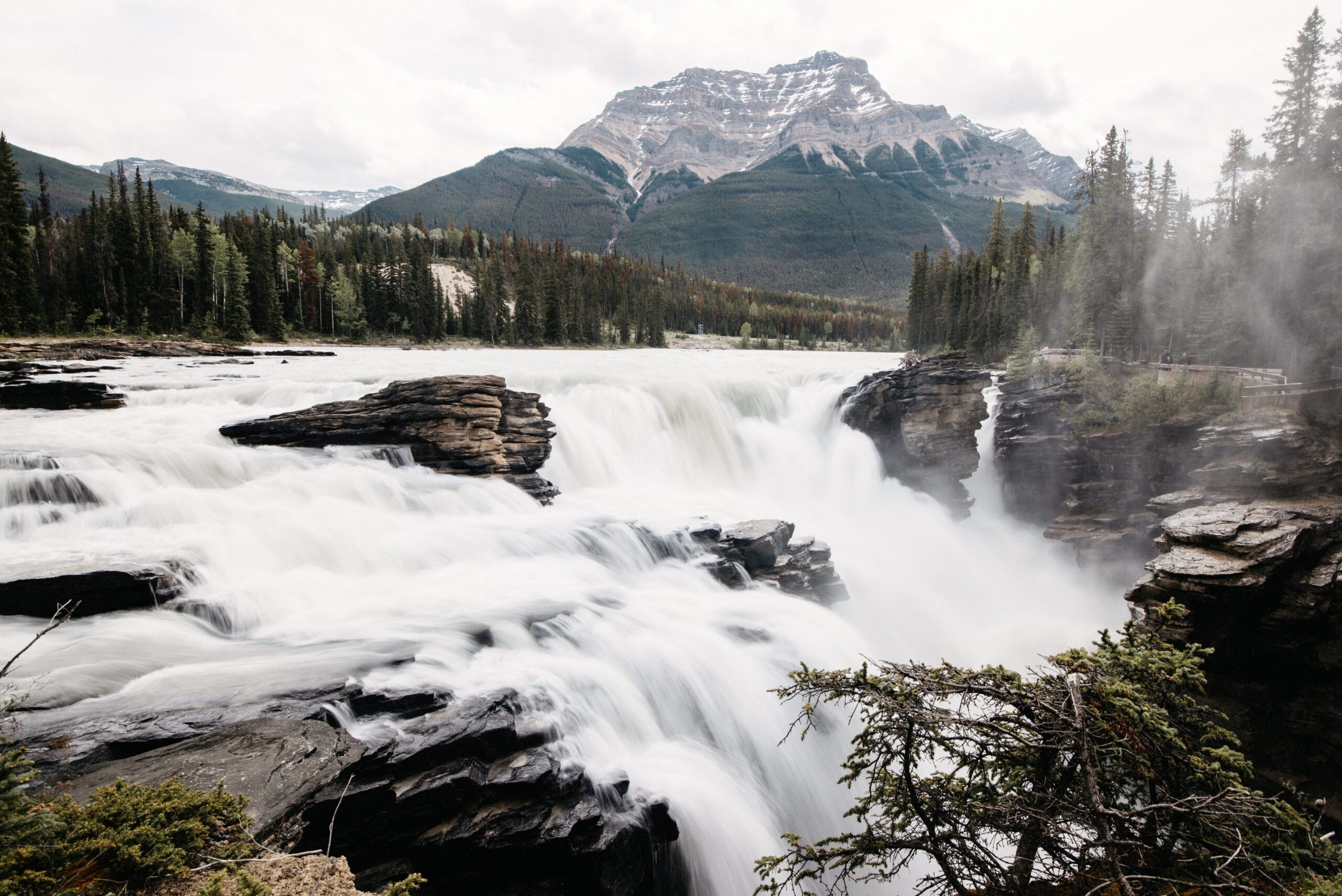
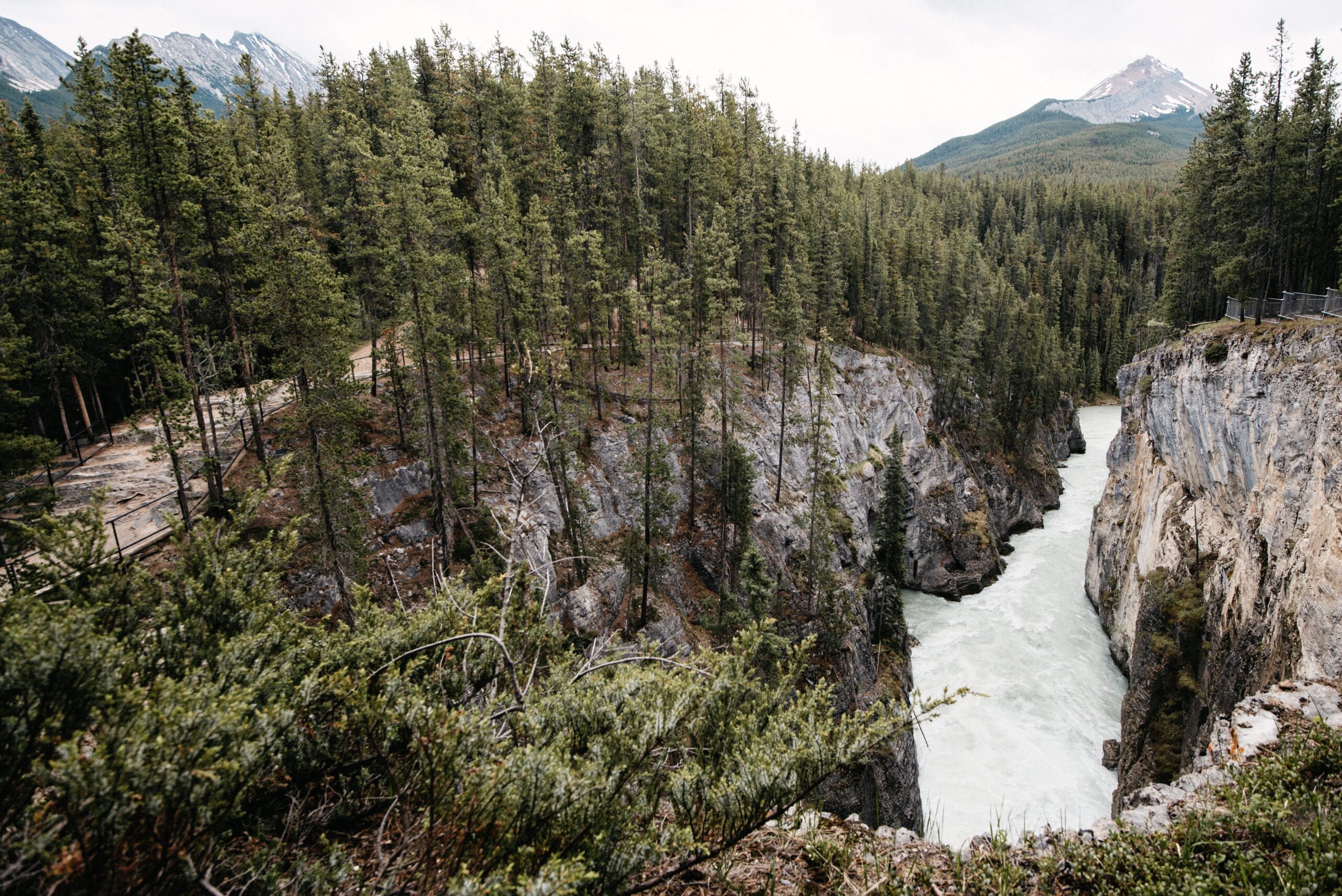
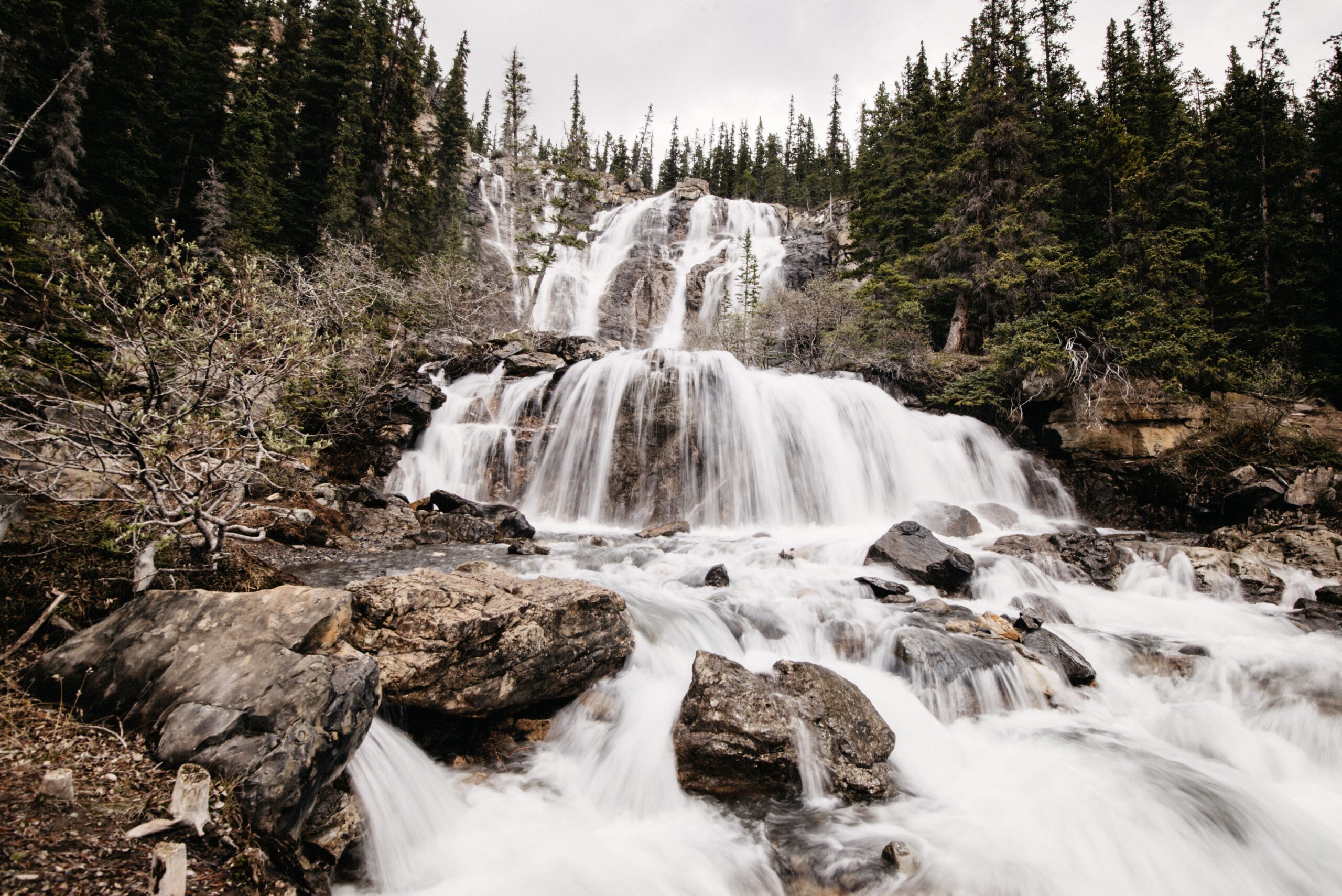
Athabasca Falls pushed an enormous amount of water through dark rock near the road. Further south, the river narrowed into steep canyons, while smaller waterfalls such as Tangle Creek fell almost directly beside the parkway.
Glaciers and the final lakes
At the Columbia Icefield, the scale changed again. The glacier sat beyond a wide moraine, visibly retreating into the mountains. We stayed on the accessible areas rather than turning the stop into a guided ice excursion and continued towards the lakes closer to Lake Louise.

The final section brought back turquoise water below snow-covered peaks. By the time we reached our hostel at Mosquito Creek, we had spent most of the day on a road that could technically have been driven much faster. Driving it quickly would have missed the entire point.
Fuel, food and open accommodation mattered on this route because services were spread out. We did not treat every stop as a shopping opportunity, but we also did not leave Jasper assuming that another town would appear around the next bend. The parkway looked wild because large parts of it genuinely were.