
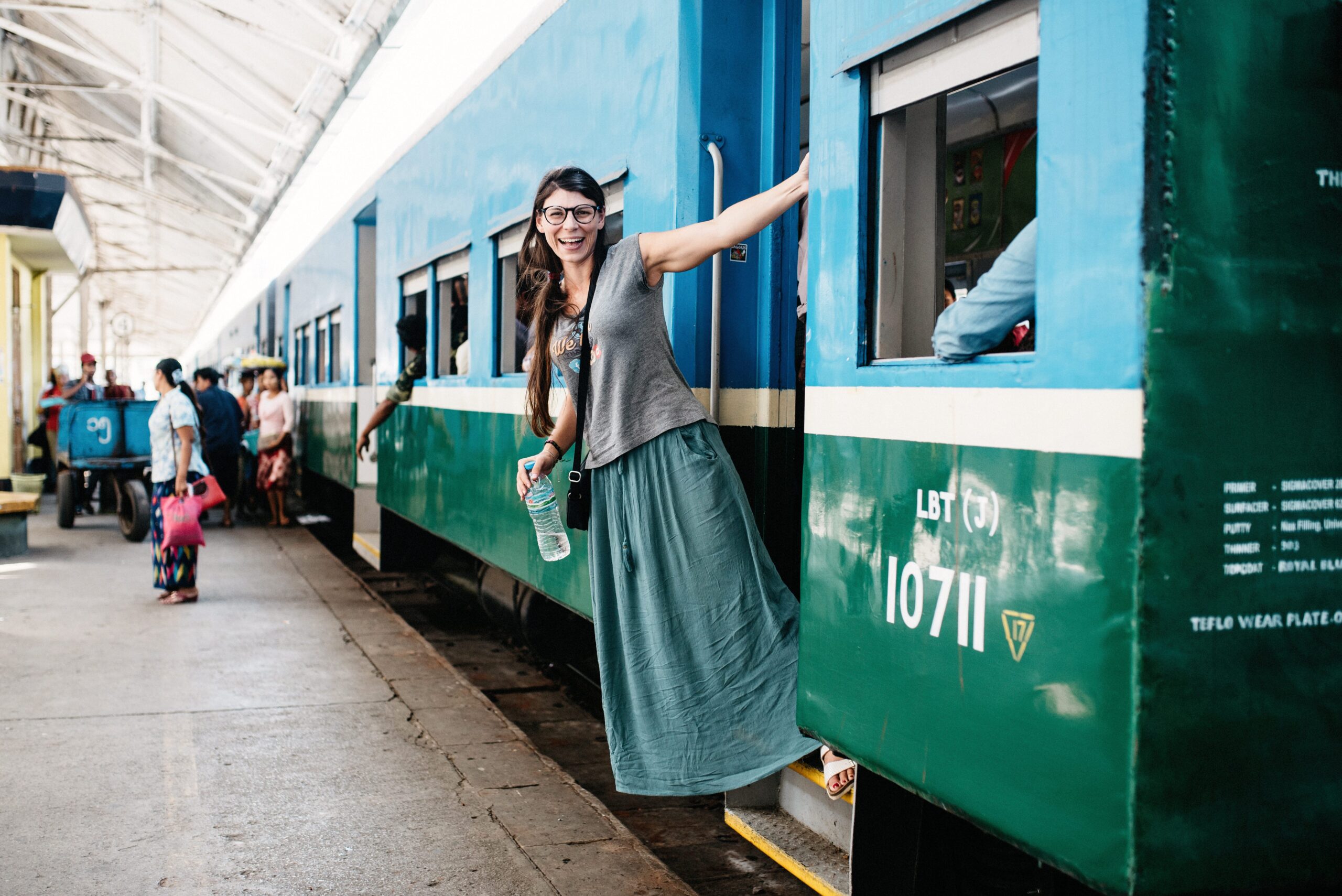
Yangon, formerly known as Rangoon, is the biggest city in Myanmar, with more than five million inhabitants. It used to be the capital until 2005, before the planned capital Naypyidaw was constructed. The city still features lots of architecture from colonial times, Buddhist pagodas like Shwedagon Pagoda, Myanmar’s major seaport and various parks. It is one of the country’s most important economic, educational, touristic and cultural centres.

Arriving in Yangon
Flight
The easiest way to arrive in Yangon is by plane. Yangon has an international airport and can be reached from various destinations. The low-cost airline AirAsia flies to Yangon from Bangkok and Kuala Lumpur, definitely one of the cheapest options. Via these two cities, it connects to many other cities in Asia. Yangon is also a good starting point for a tour through Myanmar as it is perfectly located along the south-to-north route.
Bus
Yangon can also be reached by bus from Bagan, Mandalay and other destinations in Myanmar. Taking a bus is definitely the cheaper option, but most bus rides are very long. Still, within Myanmar, we mainly took buses to get from A to B.
Yangon in one day
Yangon is a pretty big city, but it is a city, so we did not want to spend too much time there. We decided to spend two days there before heading north to Bagan. In the end, we found that one day is enough for Yangon, unless you like the city and want to deep dive into it.
When we arrived, we were pretty shocked and also relieved that we had not planned more time there. Yangon and us were not really what you would call love at first sight. Bianca has been to India and Bangladesh, and somehow the streets and their smells, trash, unrefrigerated meat and fish, exhaust fumes and urine, reminded her of those two countries, just with fewer people. A lot fewer. We gave it a chance to convince us and, at second sight, we discovered the city’s very distinctive charm and found a real highlight.
The Circular Train: Best of Yangon
Our personal highlight was the three-hour train ride on the Circular Line. We are loyal fans of The Big Bang Theory and have always asked ourselves why Sheldon Cooper is so obsessed with trains and what is so attractive about them. Since our time in Southeast Asia and several encounters with vehicles on tracks, we have also been affected by the magic of trains.
We already enjoyed our 15-hour night train ride from Ho Chi Minh City to Da Nang in Vietnam and had a lot of fun on the famous train tracks of Hanoi, which lead through a street where people live. And since our ride in Myanmar, we are totally sure that instead of trying the local food, which looks pretty disgusting in Myanmar, we would rather sit on a train for three hours to have the maximum intercultural encounter.
Finding the Circular Train
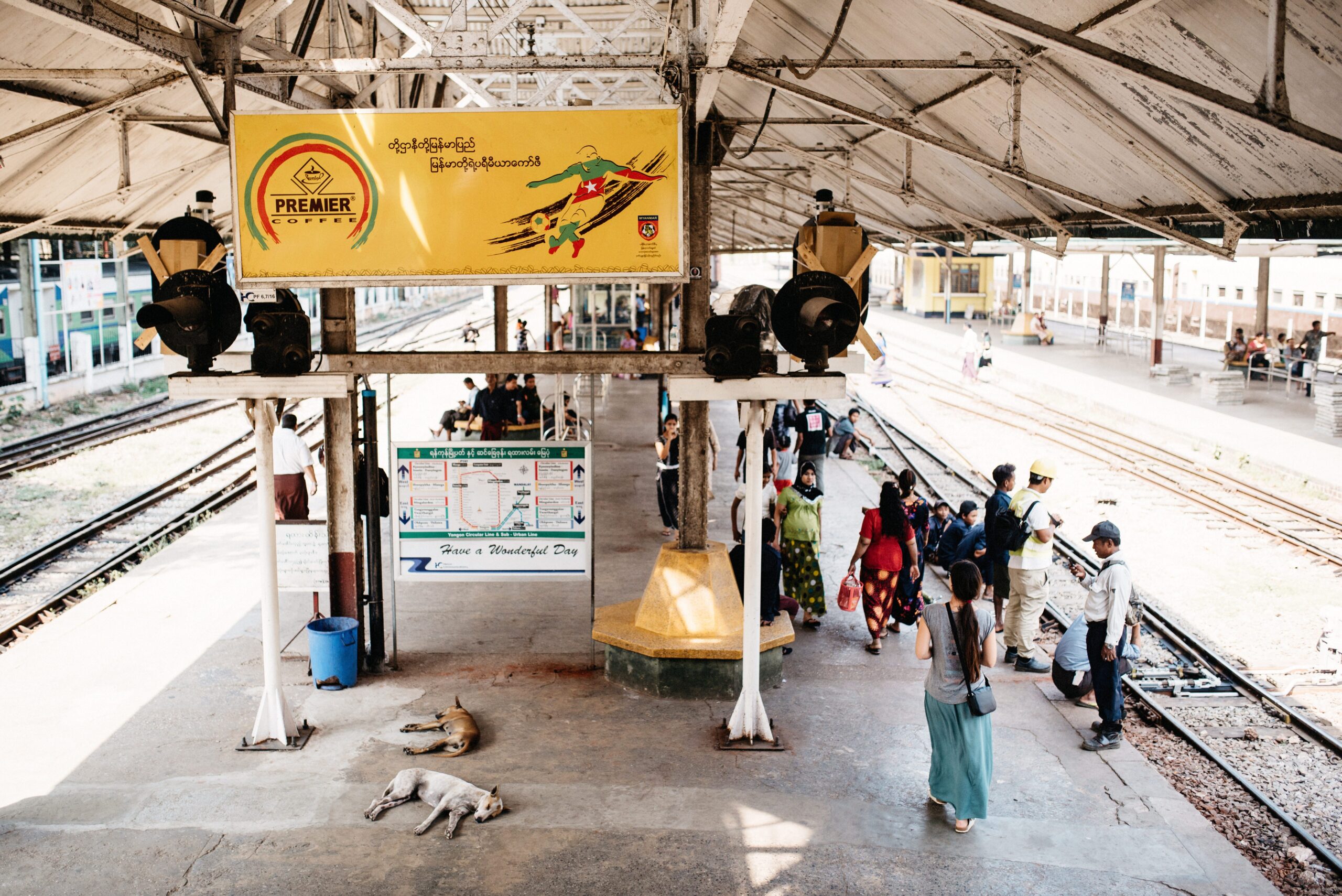
The train leaves from Yangon Central Railway Station. As Myanmar is still a lot less touristy than other places, people do not really speak English. However, this does not matter because everybody understands “Circular Train”. When we arrived at the huge railway station, where everything was written in Burmese, using signs we could neither read nor interpret, we were lost right away.
We asked a few people for the train and they all said: “Circular Train, platform 7, buy ticket there.” When we arrived at platform 7, a young woman approached us and guided us through the ticket-purchasing process in pretty good English. We bought two tickets and a bottle of water, which you can also buy on the train, and were good to go.
- Cost: 200 kyat per person
- Train times: We do not really know, but approximately every 30 minutes
- Best time: After 10 AM, when the trains are no longer so packed with people
- Route: About 50 kilometres or 31 miles around Yangon, through the suburbs and surrounding villages
Entering a new world: the train from the inside
We just caught the train, which was already about to leave the station. We jumped into the pretty old and shabby carriage, which was so full that we could not get a seat right away. Over the next few stations, more and more people got off and we were able to get a window seat. This is very important because what happens outside the train is just as interesting as what happens inside.
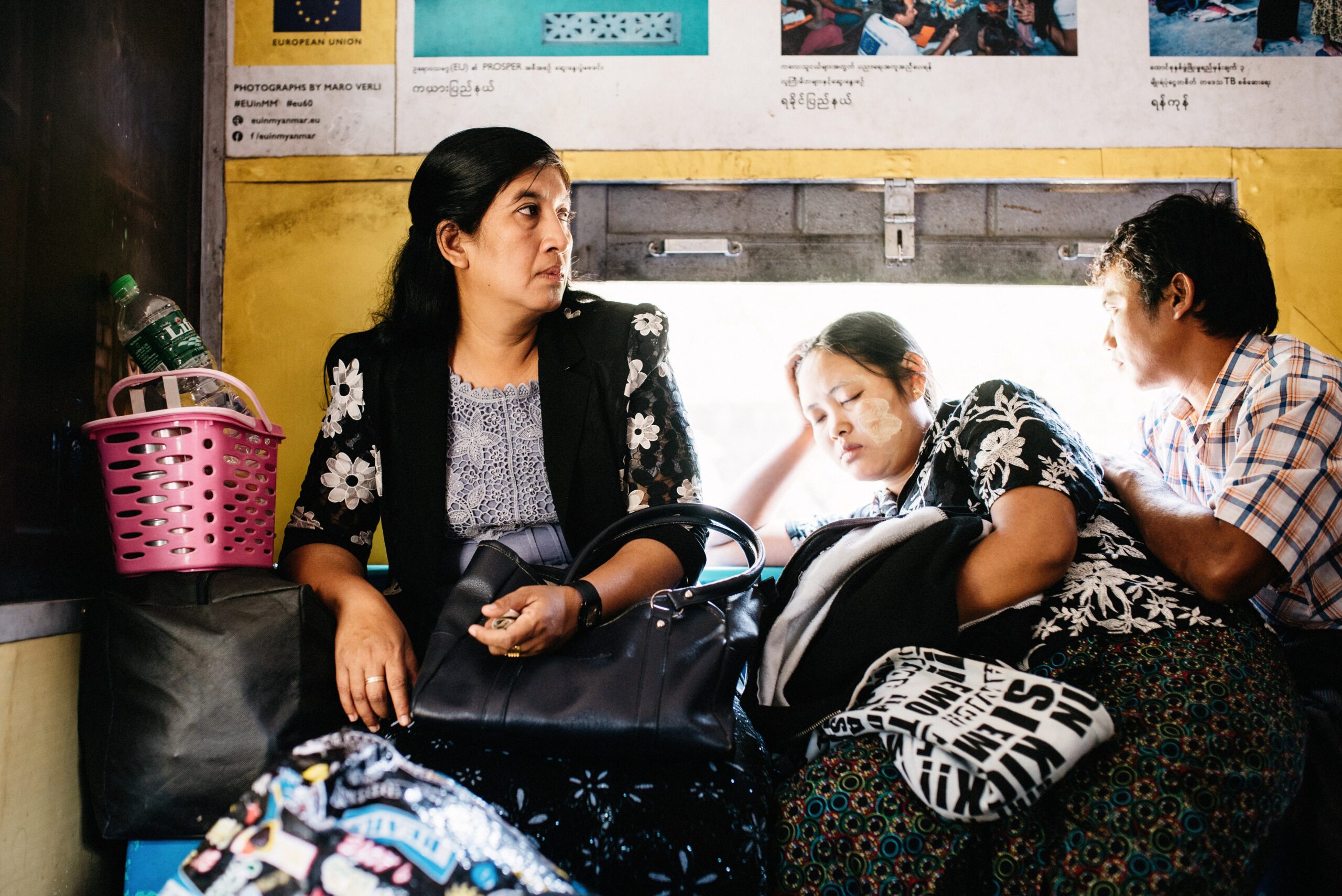
The train ride was unbelievable. We did not move or leave our place, yet the world around us was continuously changing. Every minute something happened, and life was so vibrant in this little train carriage. People did not just get on and off. The train was a marketplace, a workplace and a dining room. For us, it was a cinema and we were part of the movie.
Inside a changing world
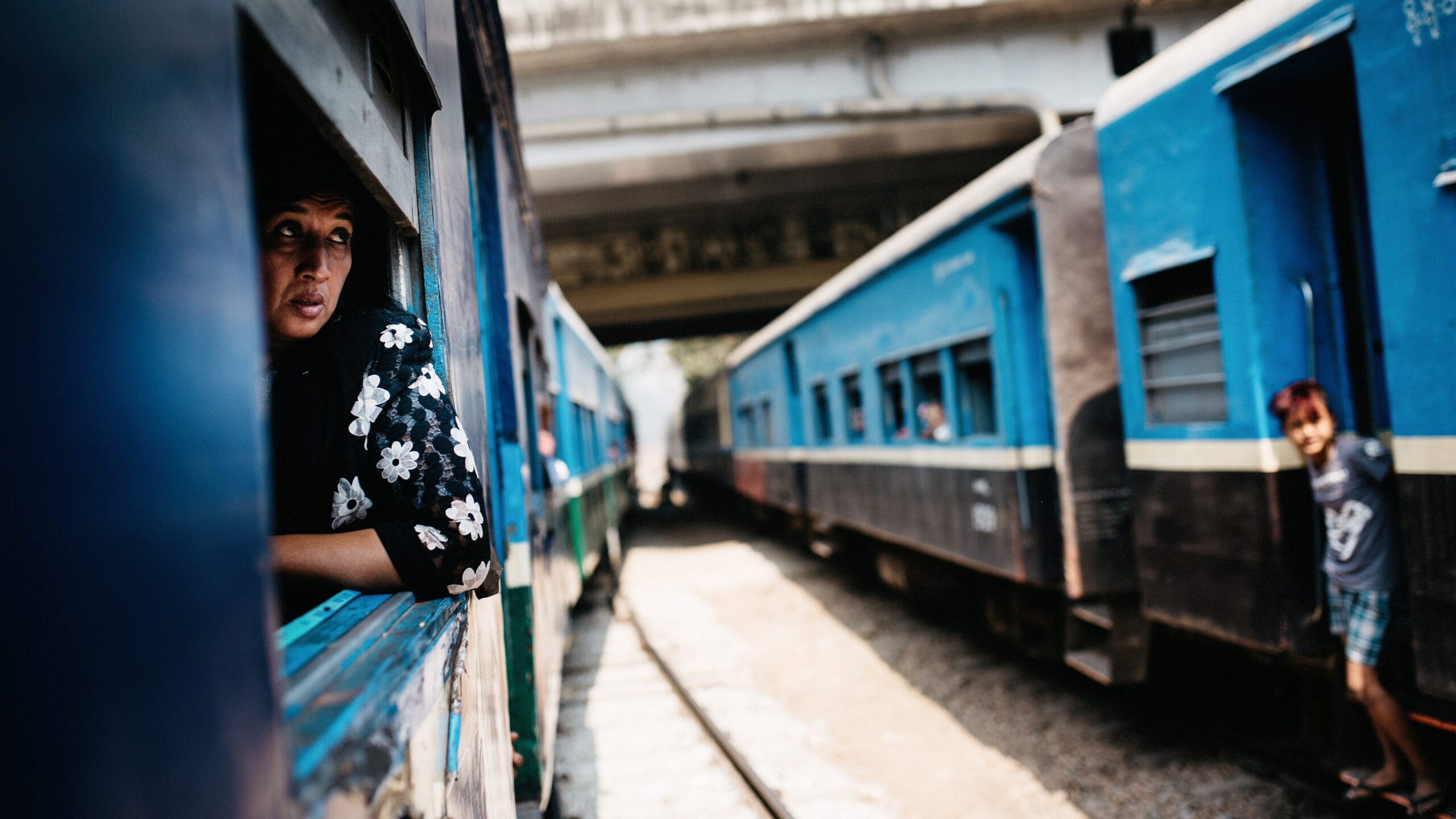
When we left Yangon, the train was full of commuters and the events inside were not so interesting, but this was about to change. We stuck our heads out of the window to see what was going on outside. As the train moves at a speed of about 30 km/h, you do not see the outside like a fast-forward movie. You can really take in the view.
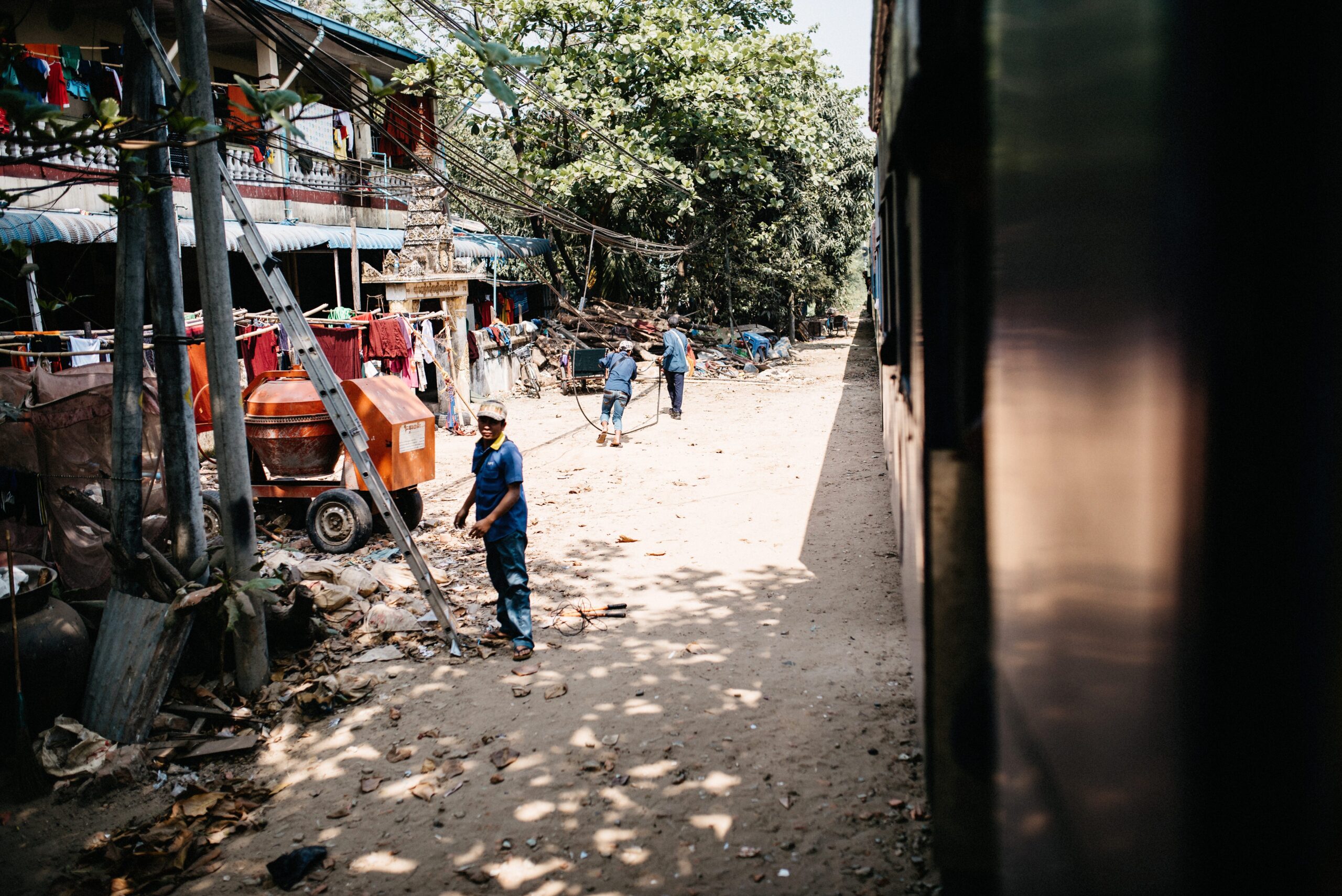
Well, “enjoy” is maybe the wrong word. What you see is basically tons of trash that is simply thrown away by people. There are no bins, and things are dumped everywhere, on the streets, out of the train and into the rivers. The picture this creates is as disgusting and awful as it is shocking. However, it is a cultural and educational issue. People simply do not have the awareness of the importance of reducing pollution in favour of a healthy and prospering natural environment. There is no established rubbish collection, removal and disposal system.

The outside-inside perspective: trash, trading and trains
We passed many stations where people live right next to the tracks, have their shops and run markets. Meat, fish and vegetables are placed in the burning heat, and the passing train does not interrupt the business. It just appears briefly every 30 minutes to bring new customers.
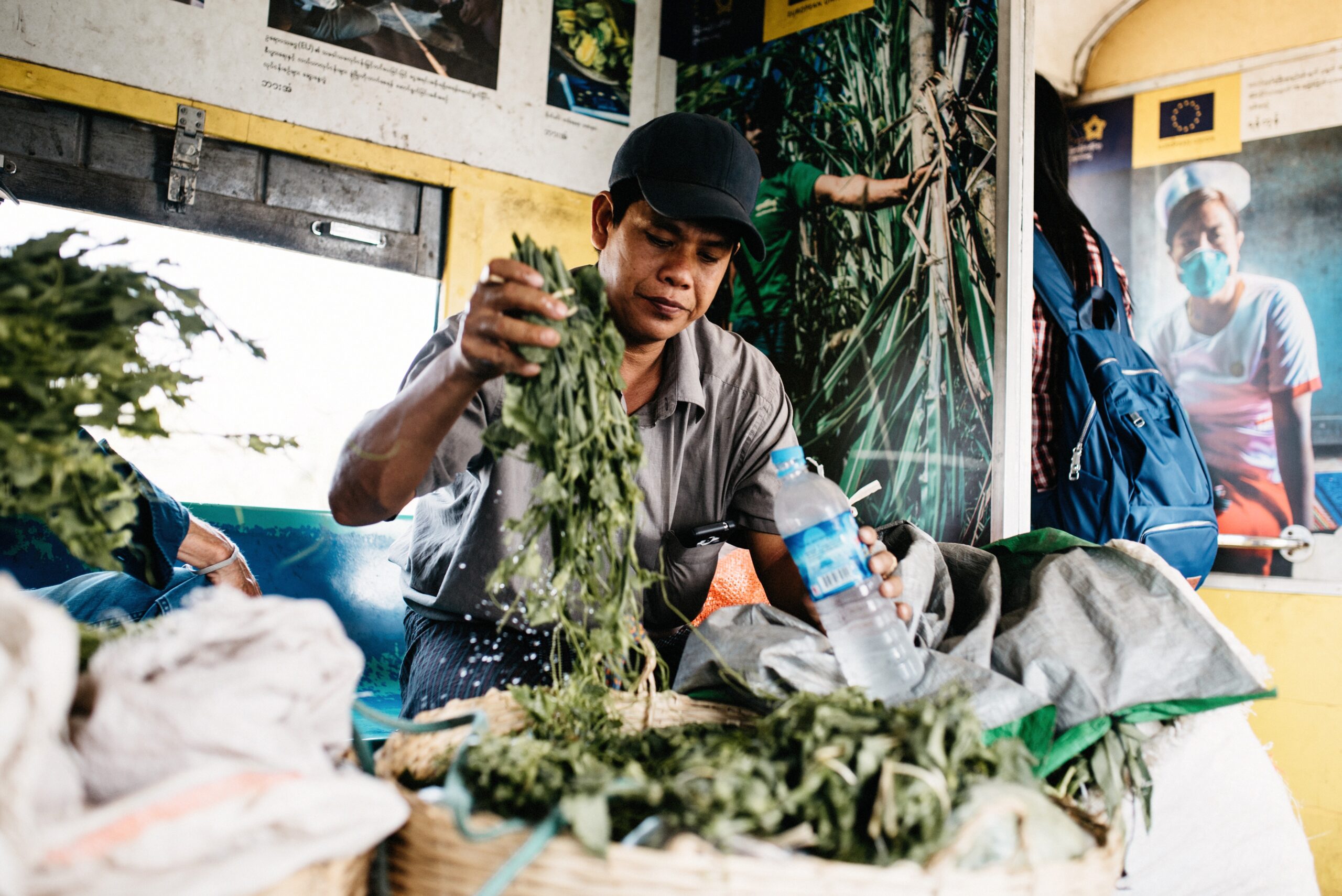
Meanwhile, life inside the train moved quickly and changed every few minutes. Traders got on and sold all kinds of different things. You could basically do your entire grocery shopping on the train without ever going to a store. At first, people walked through the carriage with baskets selling eggs, fruit, water, sweets and cigarettes. As lunchtime approached, more and more people entered with entire stands selling salads and other typical foods, carrying the goods either on their shoulders or even on their heads.
It got very tight when two men entered the train with five huge baskets of herbs and vegetables. They had just bought the goods at a local market and used the remaining hour and a half to Yangon Central Railway Station to prepare everything for sale. They set up a workplace on the train bench and started sorting, watering, cutting and binding the newly acquired goods into units. The cuttings were simply thrown out of the window. Very practical.
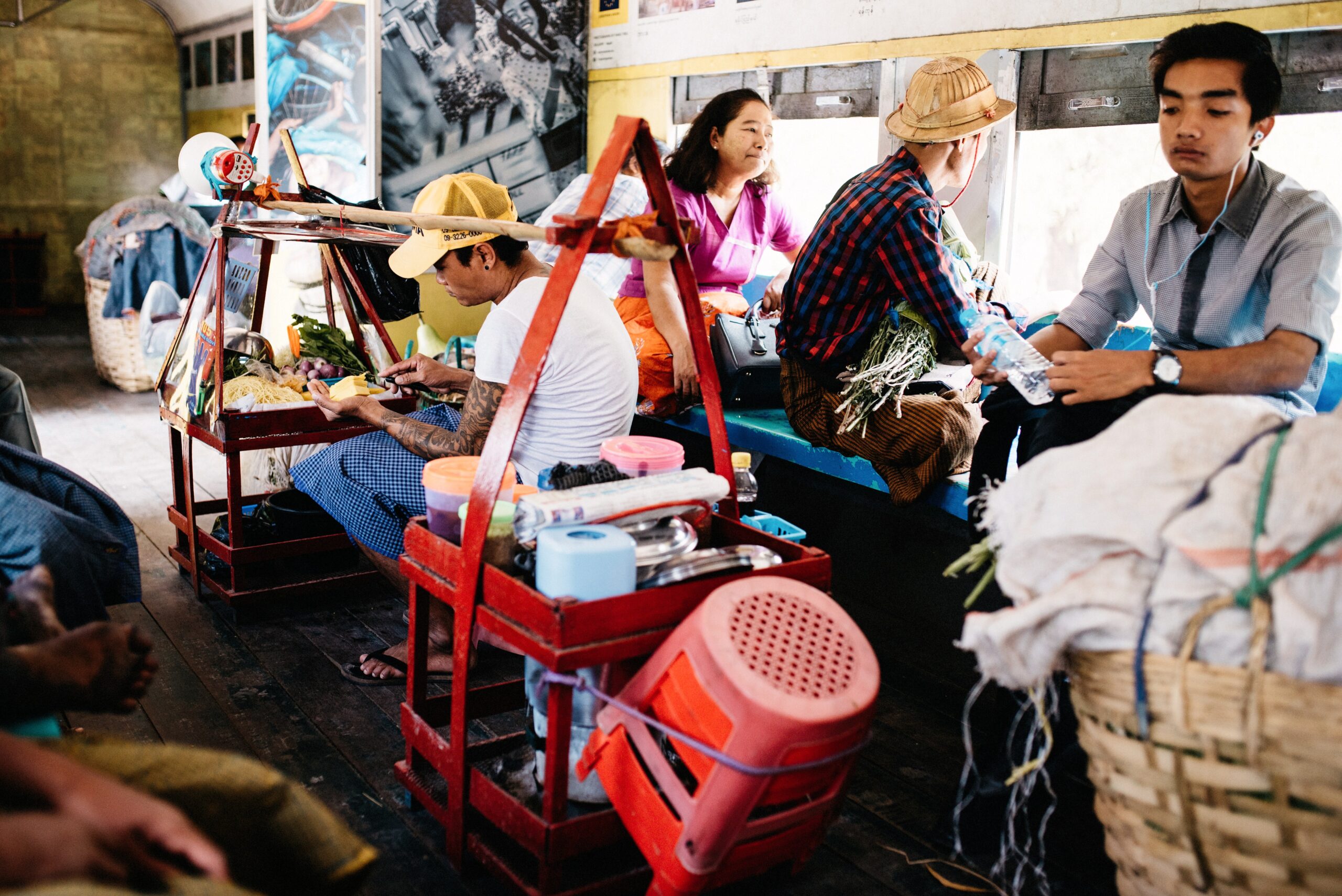
A woman entered the train and sold steamed corn. Another appeared right after her, preparing apparently delicious salads, which were the bestseller. Once everyone had finished, the Styrofoam bowls and spoons got to enjoy a special journey: a direct flight out of the window. Together with the gnawed corn cobs, eggshells and plastic bottles, they will rot, or not, in the burning heat of Myanmar.
After lunch, tangerines made it to the top of the bestseller list. Sold in little plastic bags, the tiniest tangerines we have ever seen are an important and probably sole source of income for the trader, who even carries a scale with him.

The three hours passed rather quickly, although we had gained so many impressions that we felt we had spent a whole day on the train. It was an indescribable feeling. Everything was fast-paced, but the world still felt like slow motion from the train. To know what we mean, you have to spend three hours on the Circular Train. Definitely worth it!

Why the Circular Train is the best way to explore Yangon
- It is almost free.
- It is pretty convenient.
- It shows life as it really takes place.
- You are allowed to stand at an open door while the train is moving, something you could never do at home.
Our top tip: Get a seat in one of the last carriages. If you take pictures, you can capture the whole train, which looks really cool. And grab a window seat because the outside is just as interesting as the inside.
Other highlights in Yangon
Shwedagon Pagoda
Although it is the most touristy sight in Yangon, we decided to visit Shwedagon Pagoda, which is the biggest and most famous pagoda in Yangon, and escape the city for the rest of the time. Shwedagon Pagoda is a grand architectural masterpiece that stands in the middle of the city in its golden glory and can be seen from almost everywhere. It is, without a doubt, the most touristy monument in Yangon. Of course it is, because it is pretty clean, it does not stink and it is still a cultural experience to go there.
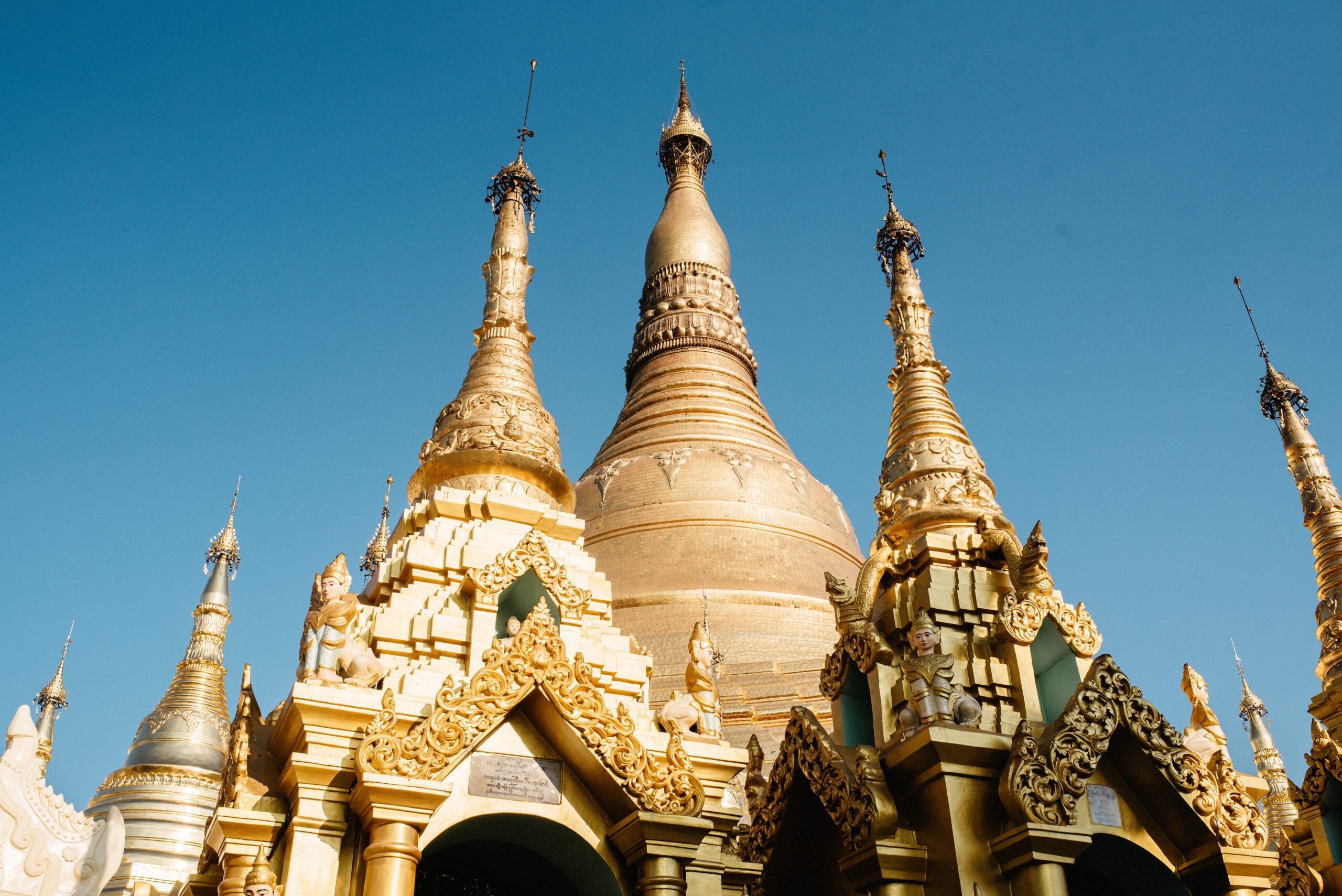
- Entrance fee: 10,000 kyat per person
- Dress code: Knees and shoulders must be covered
- Longyis: Can be borrowed for a refundable deposit of 5,000 kyat
- Shoes: Must be taken off at the entrance; you receive a plastic bag for them
Exploring Shwedagon Pagoda
The pagoda has four entrances, one in every direction. You get the most rewarding view when you approach it from the western side, where People’s Park is located and the pagoda looks most glorious in its surroundings. Especially at sunset or at night, you can get a really cool picture from that side.
Shwedagon Pagoda is not just one building. It is a complex of pagodas, buildings and places of prayer. It is not a monument you visit in ten minutes, take a few pictures of and leave again. We spent about one and a half hours there, exploring the entire place clockwise. At the entrance, you receive a map of the complex that helps you find your way around.
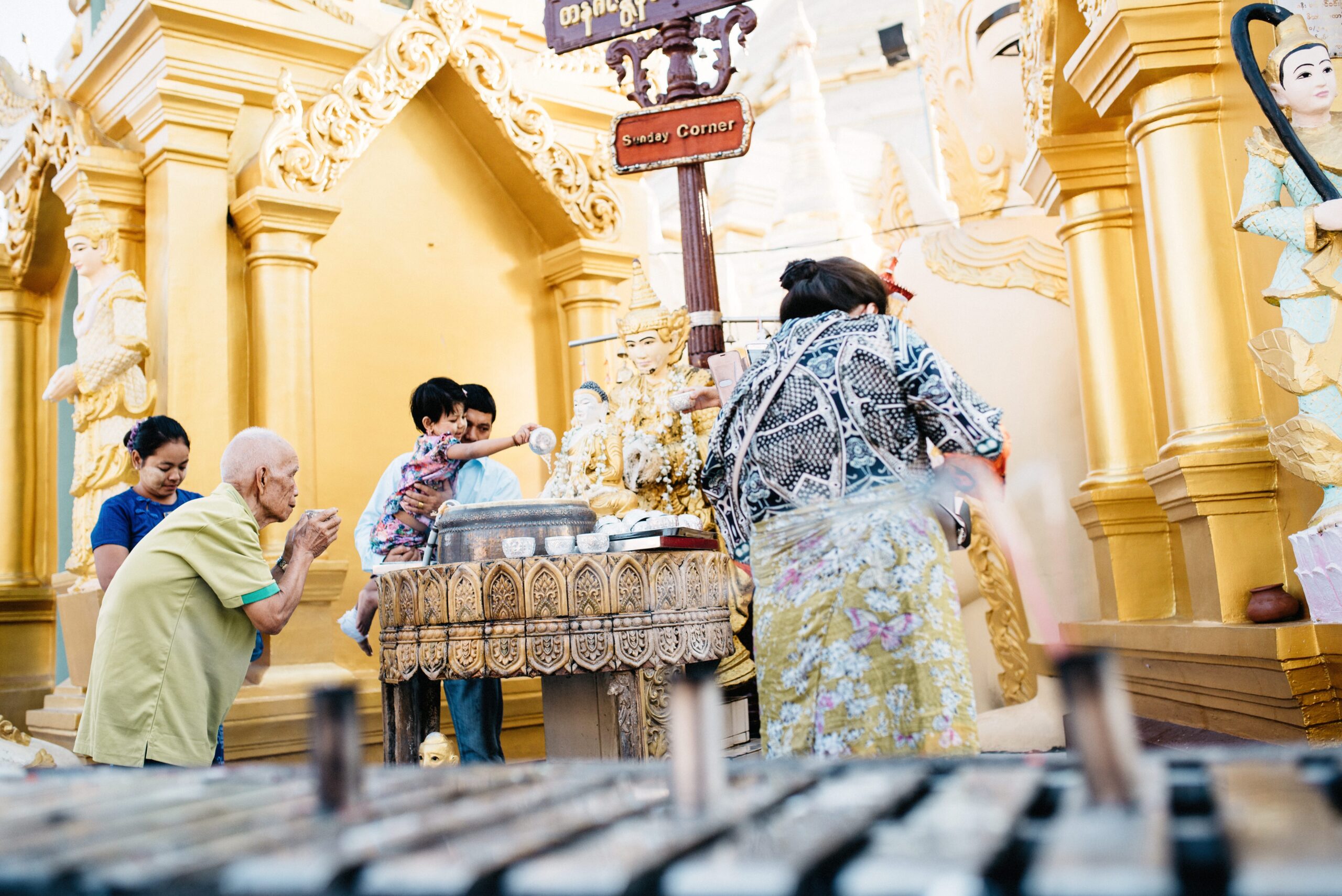
The most interesting thing you will observe there is definitely the people praying. It illustrates the importance religion has for people in Myanmar. Shwedagon Pagoda looks more stunning from further away, but we still recommend visiting the site because it is impressive up close and interesting to observe everything going on there.
People pour water over the statues and sit down on the floor to pray. Even toddlers and young children know exactly what to do. It is a really important part of their lives that they grow up with. Buddhist monks say their prayers, and several cleaning crews circulate around the area clockwise to make sure the floor is always clean.
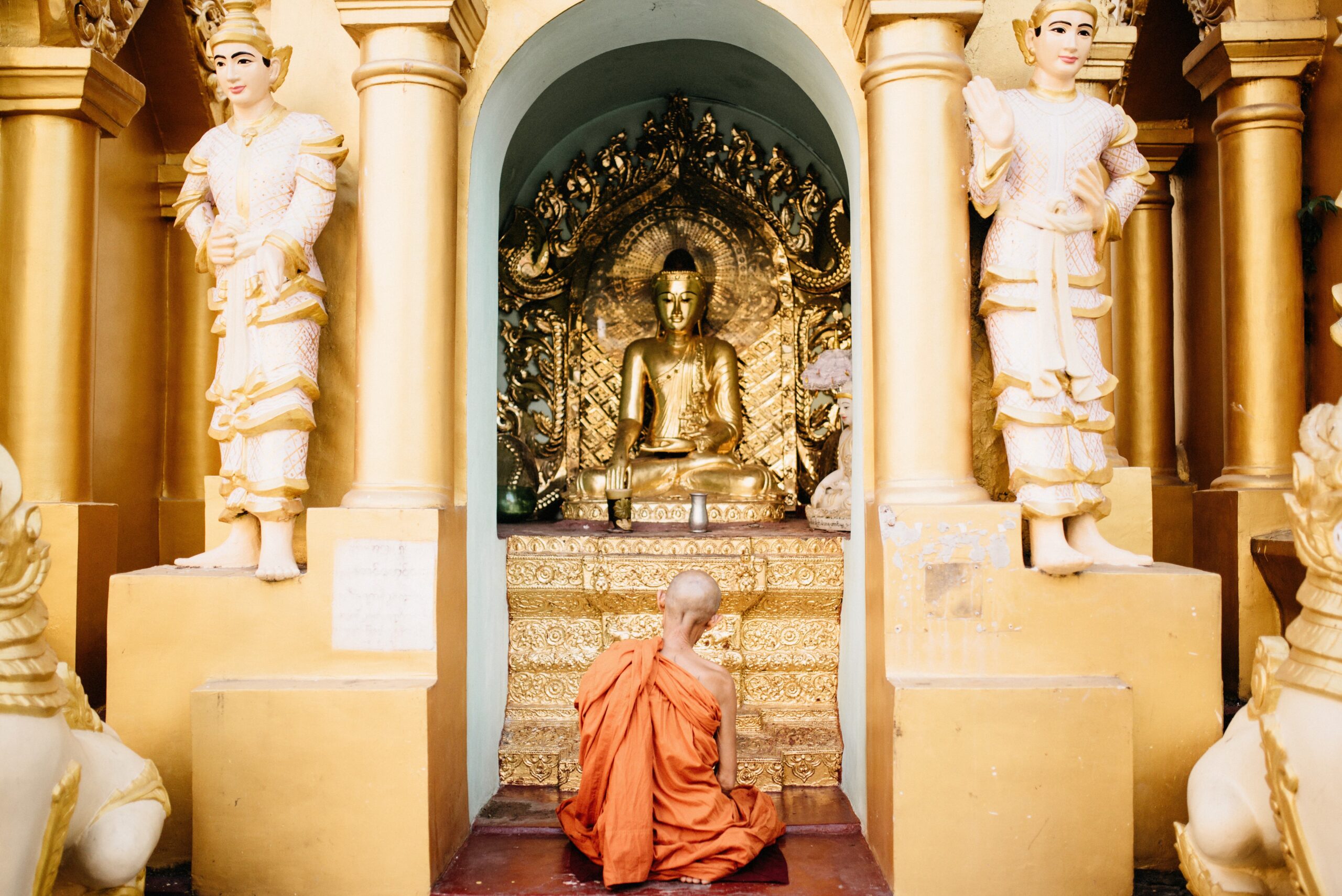
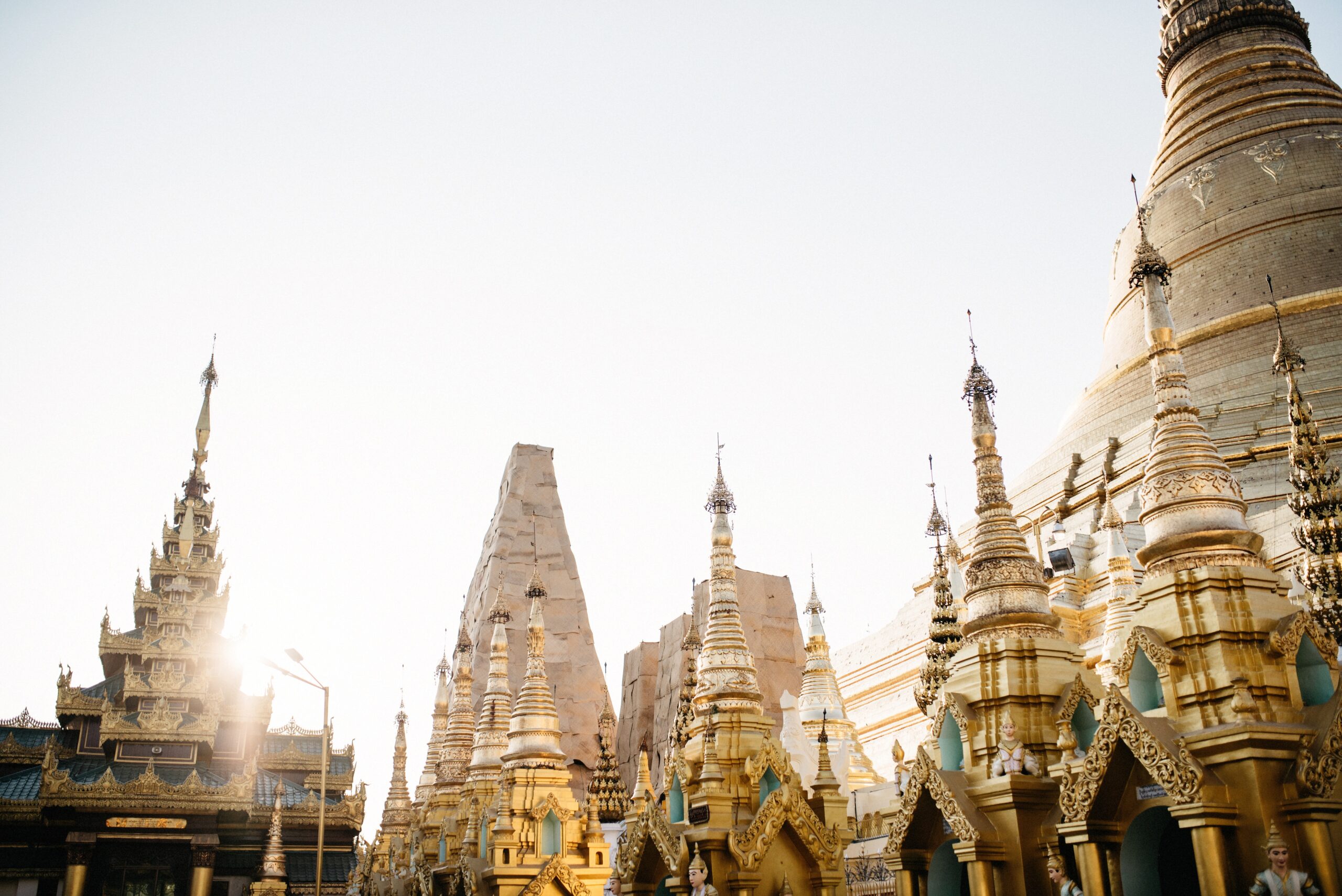
Shwedagon Pagoda is the most touristy site, but it was by far not our personal highlight. Our “Best of Yangon” followed after the pagoda and was, without a doubt, travelling on the Circular Train.
Getting around Yangon
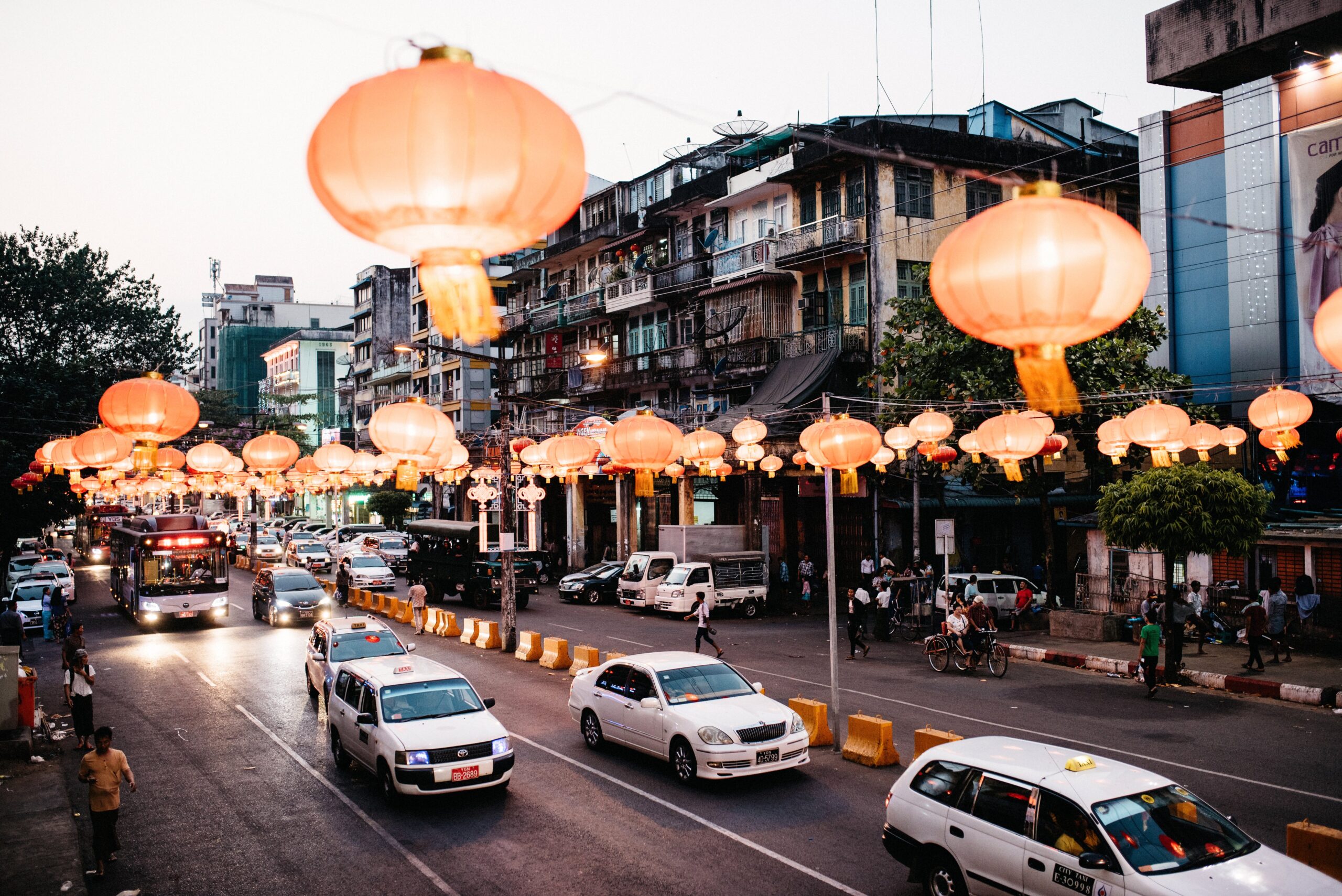
Lots of sights in Yangon can be reached on foot from accommodation in the centre. Another good and pretty cheap way to get around is Uber or Grab. There is also a tram in the south of the city, but the most economical option, in terms of time and money, is Uber or Grab. The advantage in Myanmar is that official taxis also drive as Ubers or Grabs, which increases the number of available vehicles a lot.
The parks of Yangon
Considering that it is an Asian metropolis, Yangon is a pretty green city. Kandawgyi Park and Bogyoke Park together form a huge park, while People’s Park offers the best photo opportunity for Shwedagon Pagoda.
Our overnight stay
Hostel Latha
We did not like this hostel and do not recommend staying there. The location is pretty good and the beds were really comfortable, but that is about it. There are no rooms. All the beds are placed in one tiny room, which is awfully hot, and there is no real common space where you could comfortably set up your computer, eat something or just chill out.
The bathroom is also the storage room for linen, towels and a fridge, and you shower right in the middle of all this. The included breakfast is not very delicious either. When you are lucky there is toast. When you are not lucky, there are only pork meatballs, which are not very good. All in all, it is cheap, but it is really not a very nice place.
We cover our three days among Bagan’s pagodas in a separate report.