
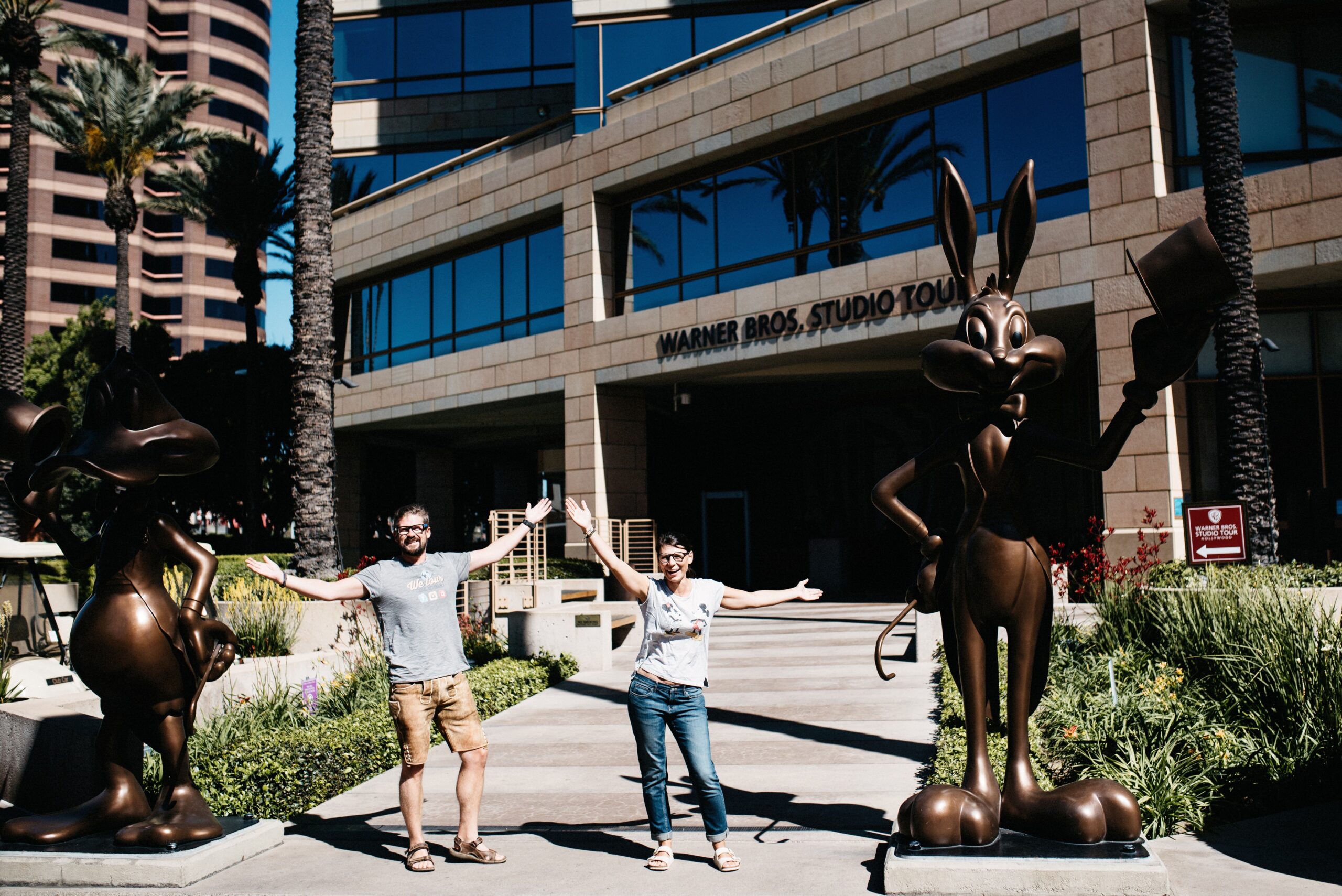
Los Angeles gave us several ways to look behind film and television. We visited Universal Studios for the theme park and standard studio tour, then chose the Warner Bros. Classic Studio Tour for a closer look at sound stages, props and outdoor sets.
We finished the experiment by attending a live recording of The Big Bang Theory. The studio tour explained how television was built. Sitting in the audience for several hours showed us how much work went into producing a short episode.
Why we chose Warner Bros. as well
The standard Universal tour was entertaining and included effects such as artificial rain, a collapsing metro station and the shark from Jaws. It moved a large group through the backlot and worked well as a first impression. What it did not do was spend much time inside real sound stages or the prop department.
Warner Bros. was the more technical tour. In 2018, our Classic Studio Tour cost USD 65 per person and included roughly two guided hours plus a self-guided exhibition. The current offer may be different; for us, it was the affordable alternative to Universal’s much more expensive VIP tour.
Inside a working sound stage
Which sound stage a group could enter depended on the production schedule. We visited Lucifer’s penthouse from the television series. Seeing the familiar room without camera angles, lighting and editing changed how we watched the show afterwards.
A television apartment did not need to exist like a real apartment. It needed to look convincing from the positions used by the cameras. Walls ended, spaces were shallower than expected and details that seemed natural on screen had been selected very deliberately.
The prop department
The prop department was a huge hall filled with chairs, lamps, tables, door handles and almost every other object that might appear behind an actor. Most viewers would never consciously notice these things, yet somebody had to choose and place every one of them before filming began.
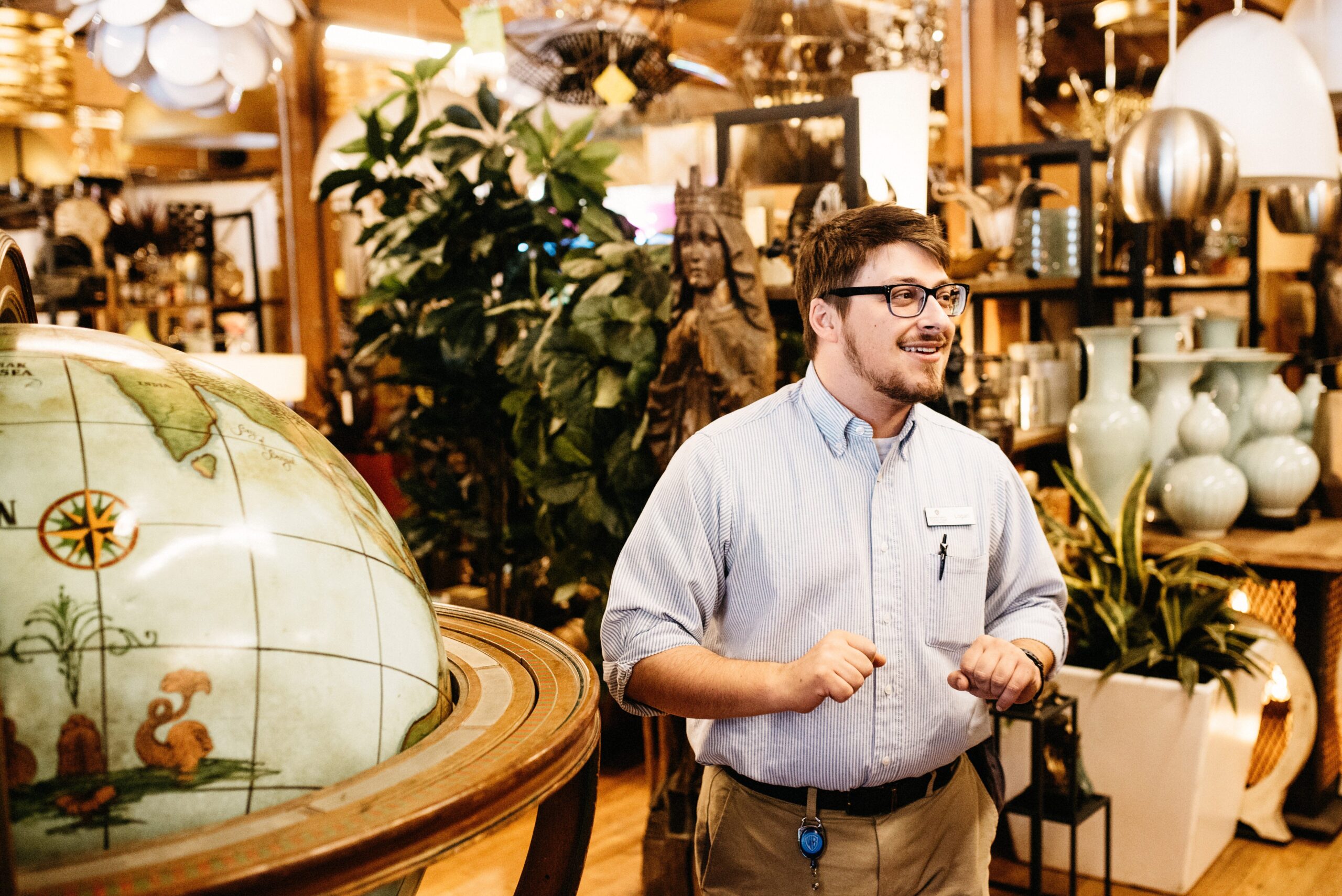
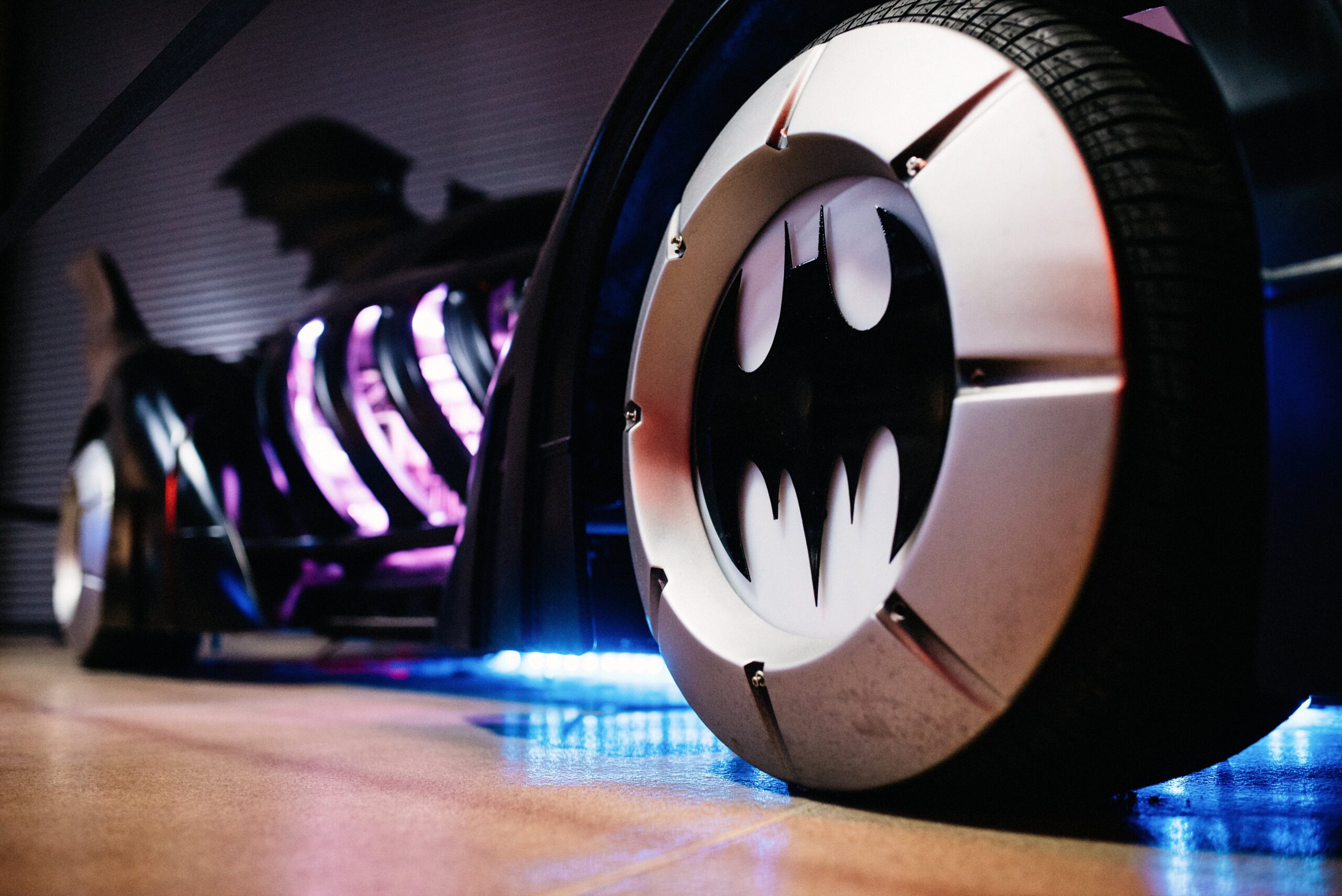
Recognising an object from another production turned the warehouse into a strange television memory game. The hero pieces were easier, including the Batman collection, but the ordinary furniture made the scale of the work clearer.

Streets that became almost any city
The outdoor backlot contained cafés, houses, a church, a park and buildings that could become a university, courthouse or fire station depending on the production. A single street did not represent one fixed place. Small changes in signs, props and camera position allowed it to become several.
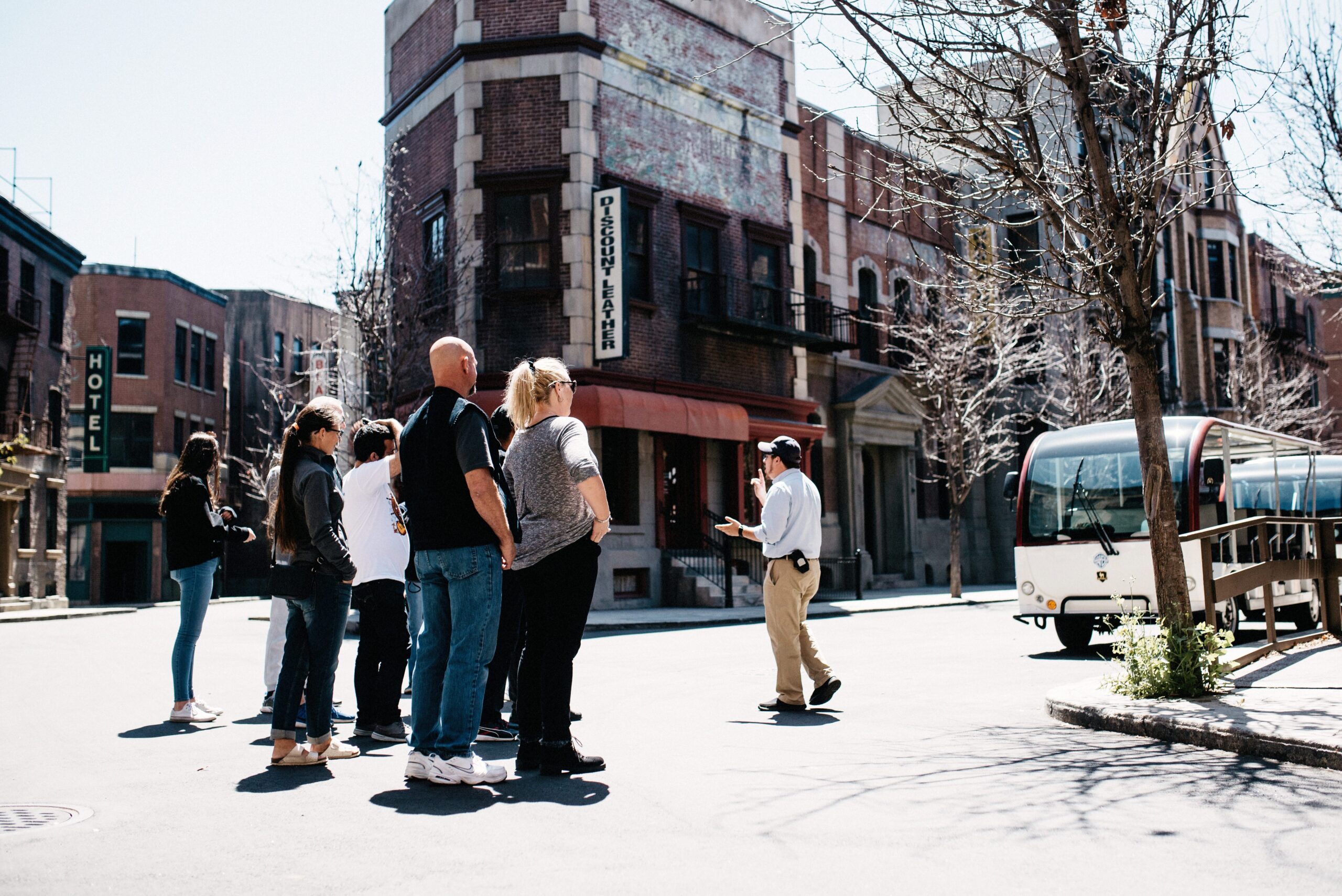
This was where Warner Bros. felt less like a ride and more like a working studio. We still saw famous locations, but the guide focused on how crews reused and transformed them rather than pretending every façade belonged to one show forever.
From script to screen and Central Perk
The guided section ended at a self-guided exhibition about the route from script to screen. We could try green-screen effects, look at sound design and see how dialogue, music and small background noises created the final scene.
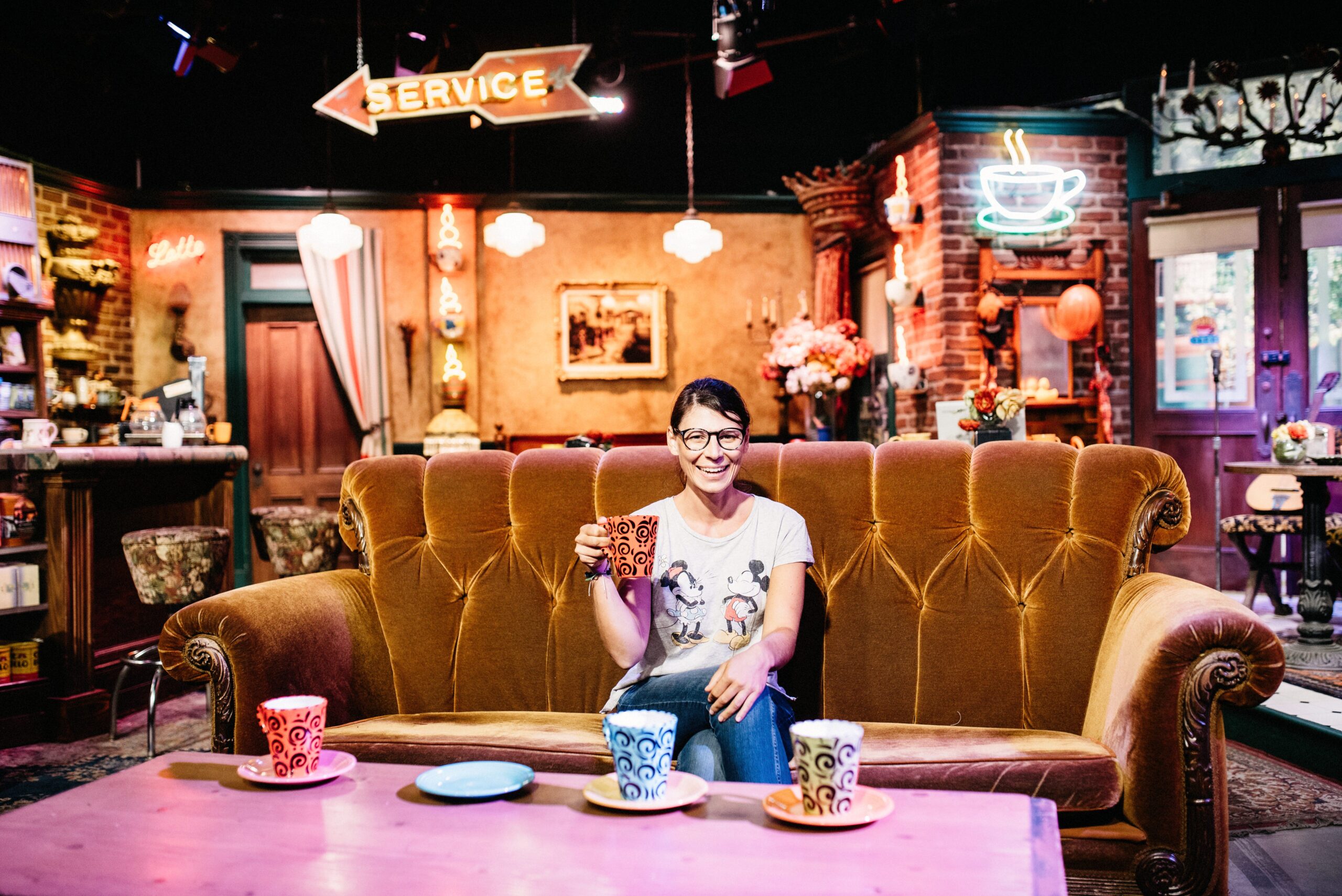
The less technical highlight was Central Perk from Friends. Bianca sat on the sofa with a coffee cup, which was exactly the photograph everybody came for and therefore one we obviously took as well.
Watching The Big Bang Theory live
We obtained free audience tickets online. Tickets could be confirmed or standby, and arriving early mattered because the queue started building in the afternoon. We brought food and drinks for the wait but no cameras or other technical equipment.
The recording itself took around three to four hours. A finished episode was much shorter, so the evening made all the repetition, timing and pauses between scenes visible. It was the practical counterpart to the studio tour: the sets were no longer empty, and the production process happened directly in front of us.
Universal or Warner Bros.?
For us, the best combination was a standard Universal ticket for the rides and entertaining overview, followed by Warner Bros. for the detailed studio work. Doing both full VIP experiences would have repeated too much and cost far more.
If we had wanted only one quick introduction, Universal would have been enough. Because we were genuinely curious about sets, props and television production, Warner Bros. added the part that the theme-park tour could not.
If you want to look behind the scenes yourself, you can check current dates and prices for the Warner Bros. Studio Tour on GetYourGuide.*
*Affiliate link: We may receive a commission if you book through this link.