
Grand Teton sat directly south of Yellowstone, but the two parks did not feel alike at all. Yellowstone had geysers, steaming ground and enormous loop roads. Grand Teton was alpine: sharp mountains, cold lakes, forests and trails leading straight towards the snow.
We visited in mid-June and planned two days. Several hikes at higher elevations were still closed or covered in snow, so that was enough for the routes available to us. In July or August, with more trails open, we could easily have filled a third day.
From Yellowstone to Grand Teton
The drive from Yellowstone took roughly two hours and made combining the parks simple. We stopped at the visitor centre in Moose for current trail conditions, the park film and a first look at what was open. Weather in the mountains changed quickly, so the useful answer was not only where to hike but what the conditions looked like that morning.
Jackson Lake and Colter Bay
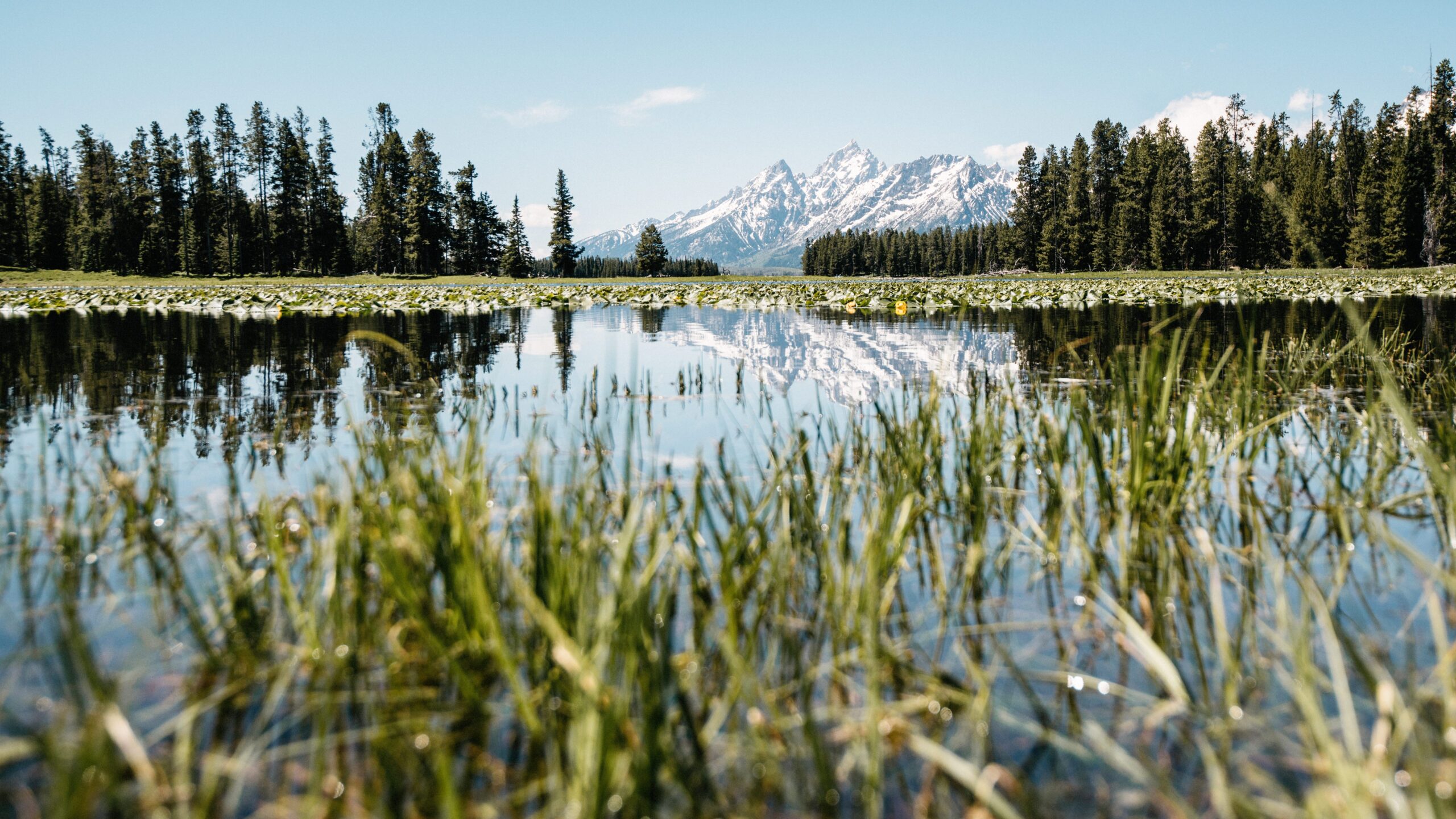
Our first part of the park followed Jackson Lake. The Teton Range rose directly behind the water, still covered with snow, while the lower trails were already green and full of flowers. It was the kind of landscape that looked arranged for a postcard even when we stopped at an ordinary pullout.
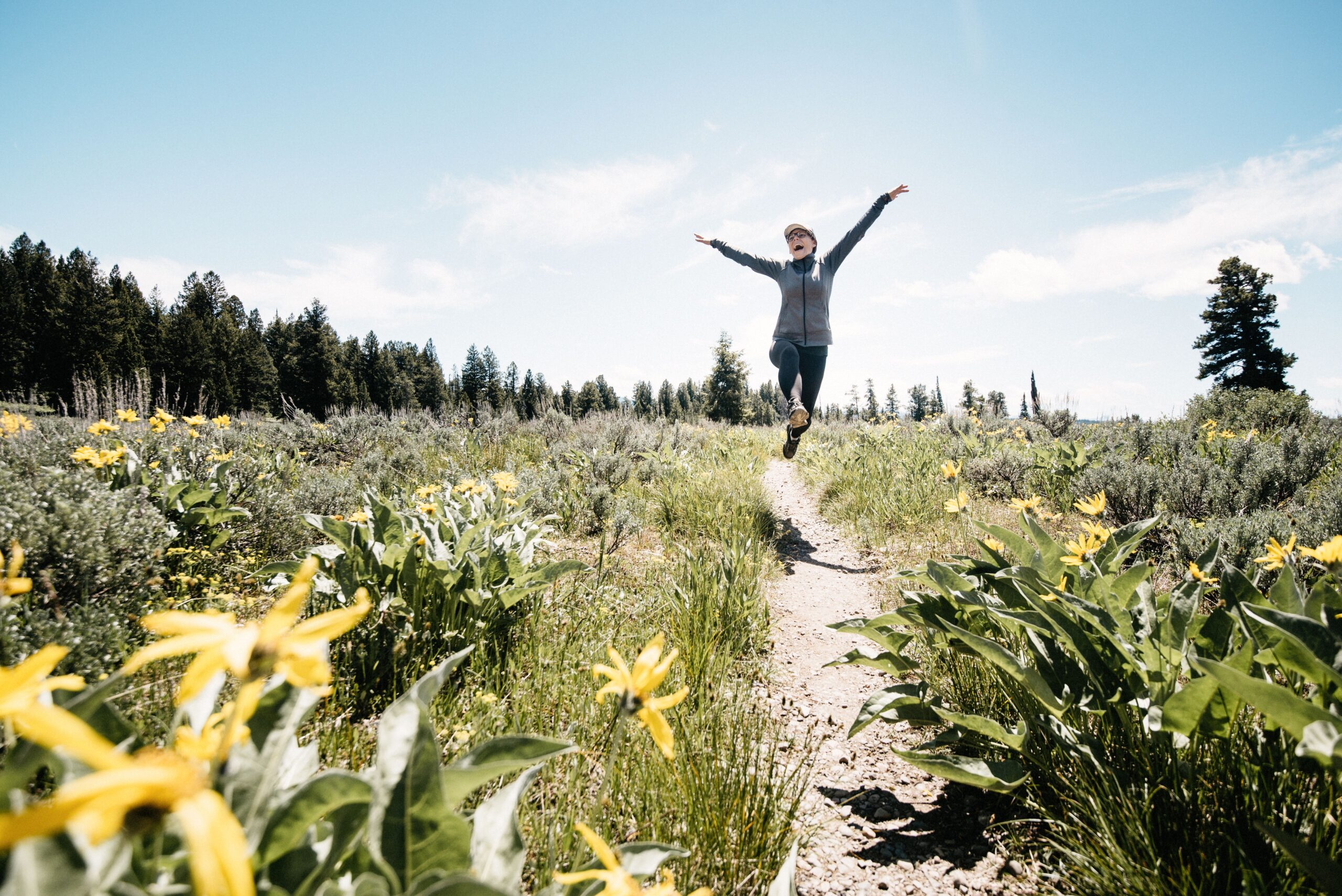
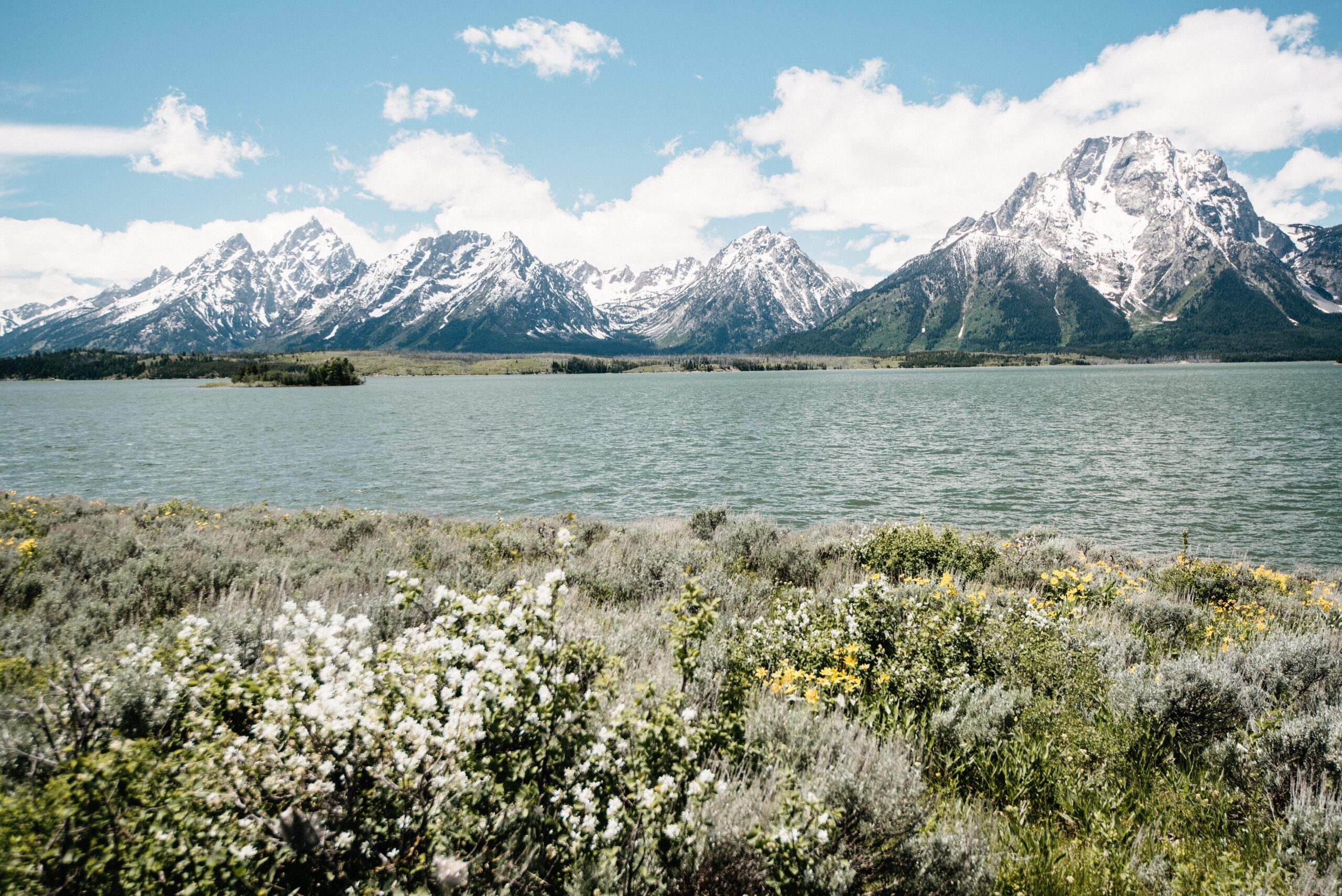
At Colter Bay we walked along the shore rather than trying to force a high mountain hike into the wrong season. The water was much too cold for swimming, but the views were enough. We sat by the lake, watched the light move across the peaks and enjoyed how quiet the park felt after Yellowstone.
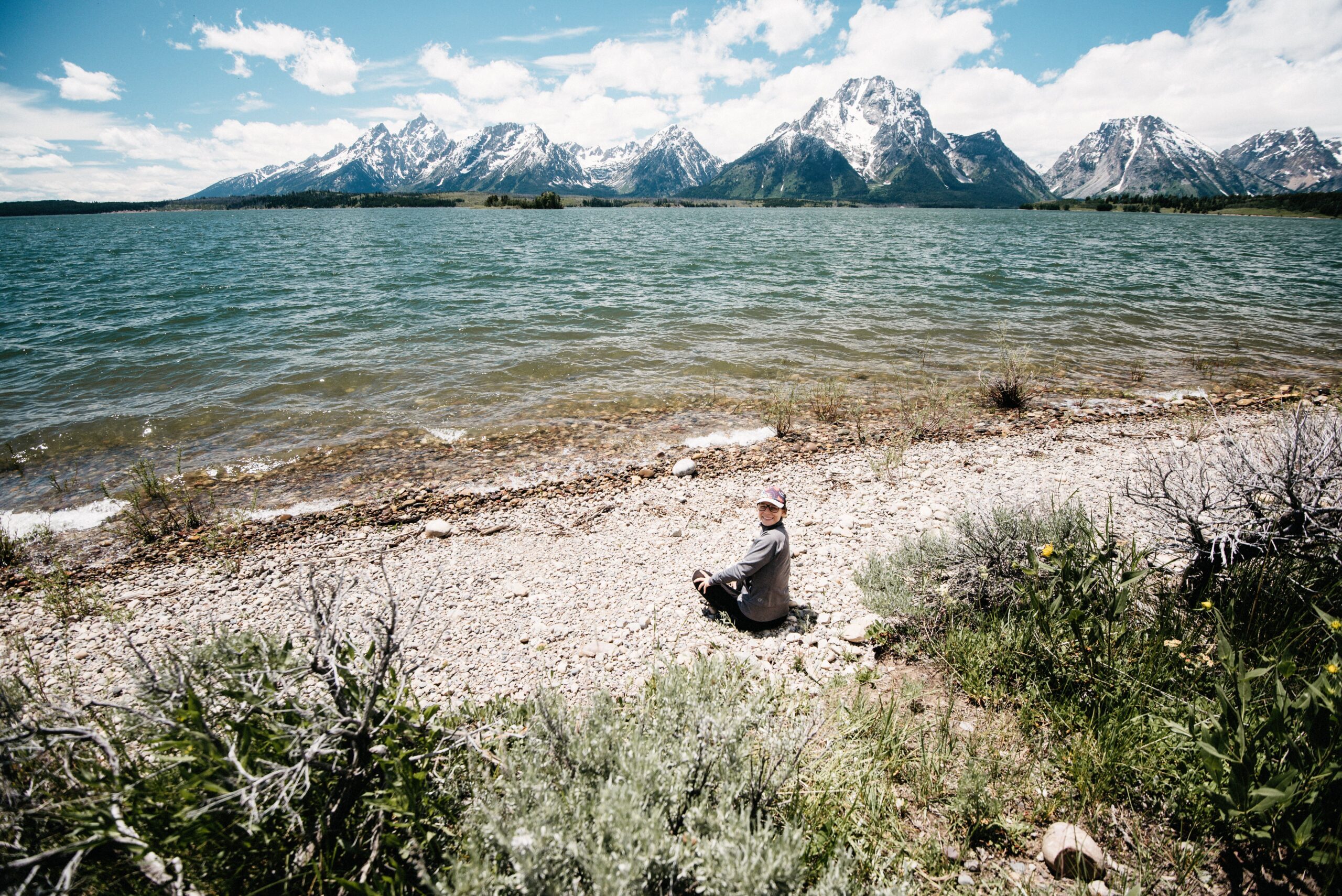
The panorama road beneath the Tetons
Driving through Grand Teton was one continuous panorama. There was no need to wait for one famous viewpoint because the mountains stayed beside us for most of the route. We stopped whenever the road opened towards the range, sometimes for a photograph and sometimes simply because continuing immediately seemed wasteful.
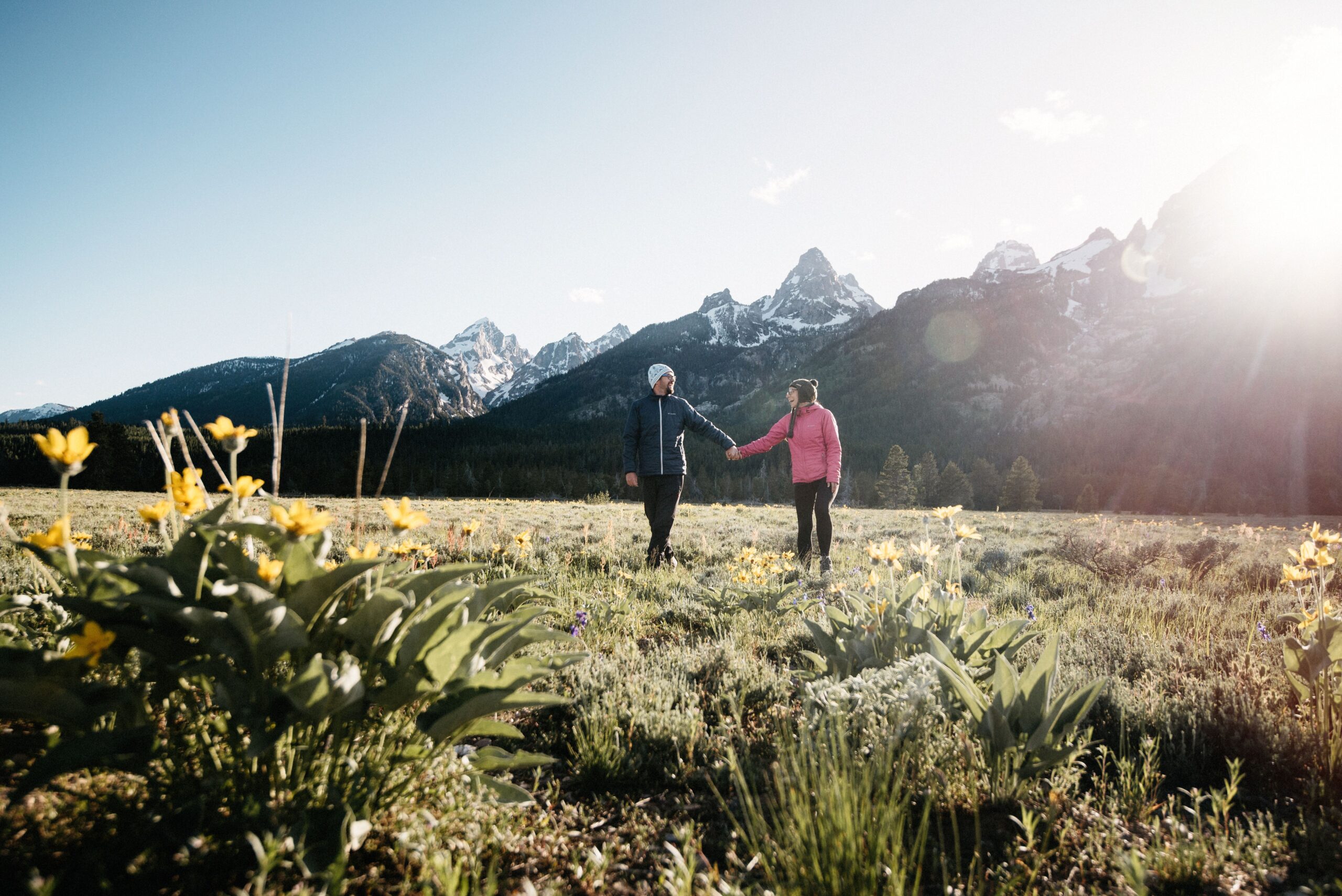
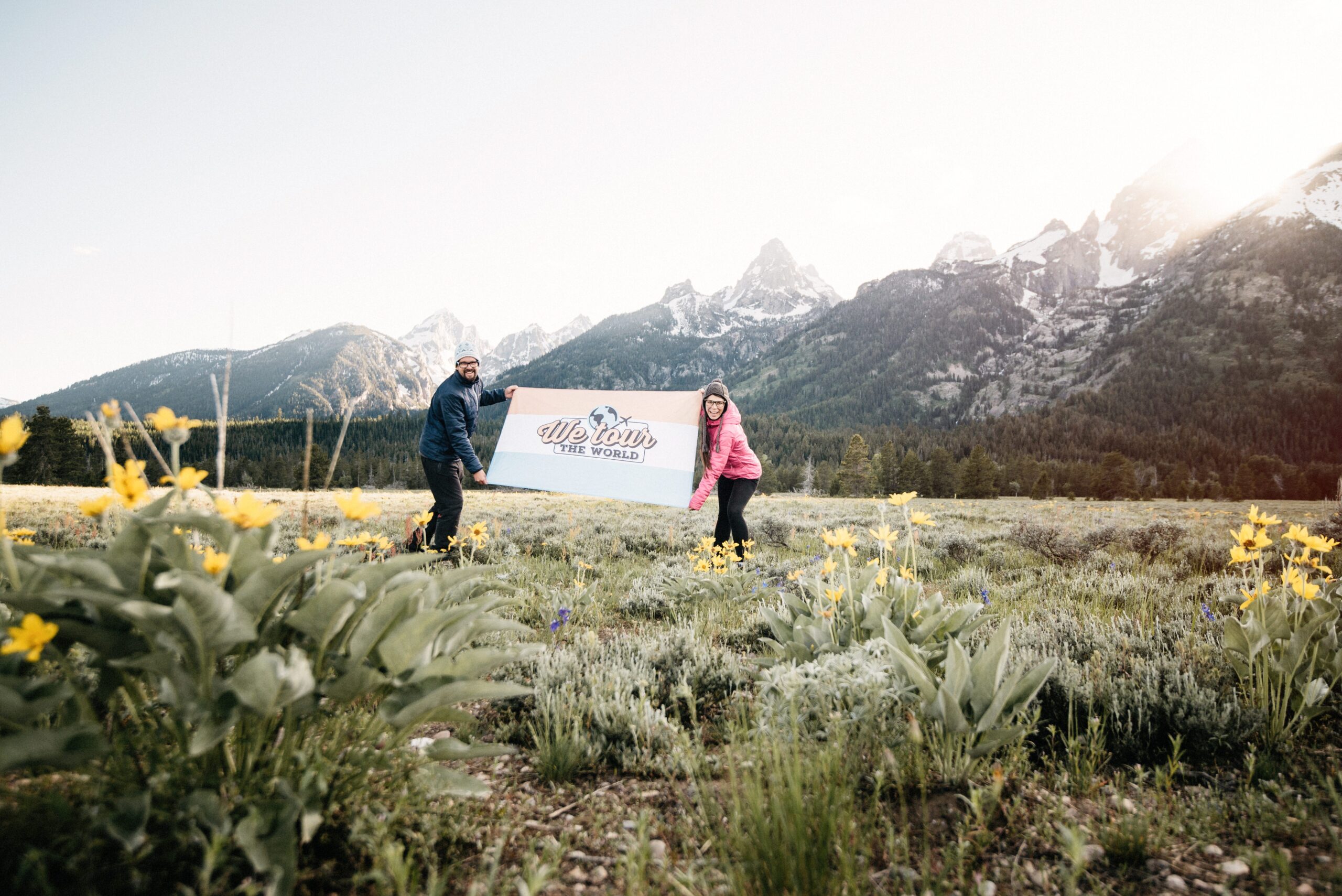
Holding our travel flag below the peaks became one of those small rituals that made the long route feel connected. The location changed every few days, but the flag, our rental car and the slightly improvised way we travelled stayed the same.
Wildlife beside the road
The open meadows also made wildlife easier to see. We spotted a moose grazing away from the road and later had a much closer encounter when a black bear crossed directly in front of the car. There was just enough time to stop and watch it disappear into the grass on the other side.
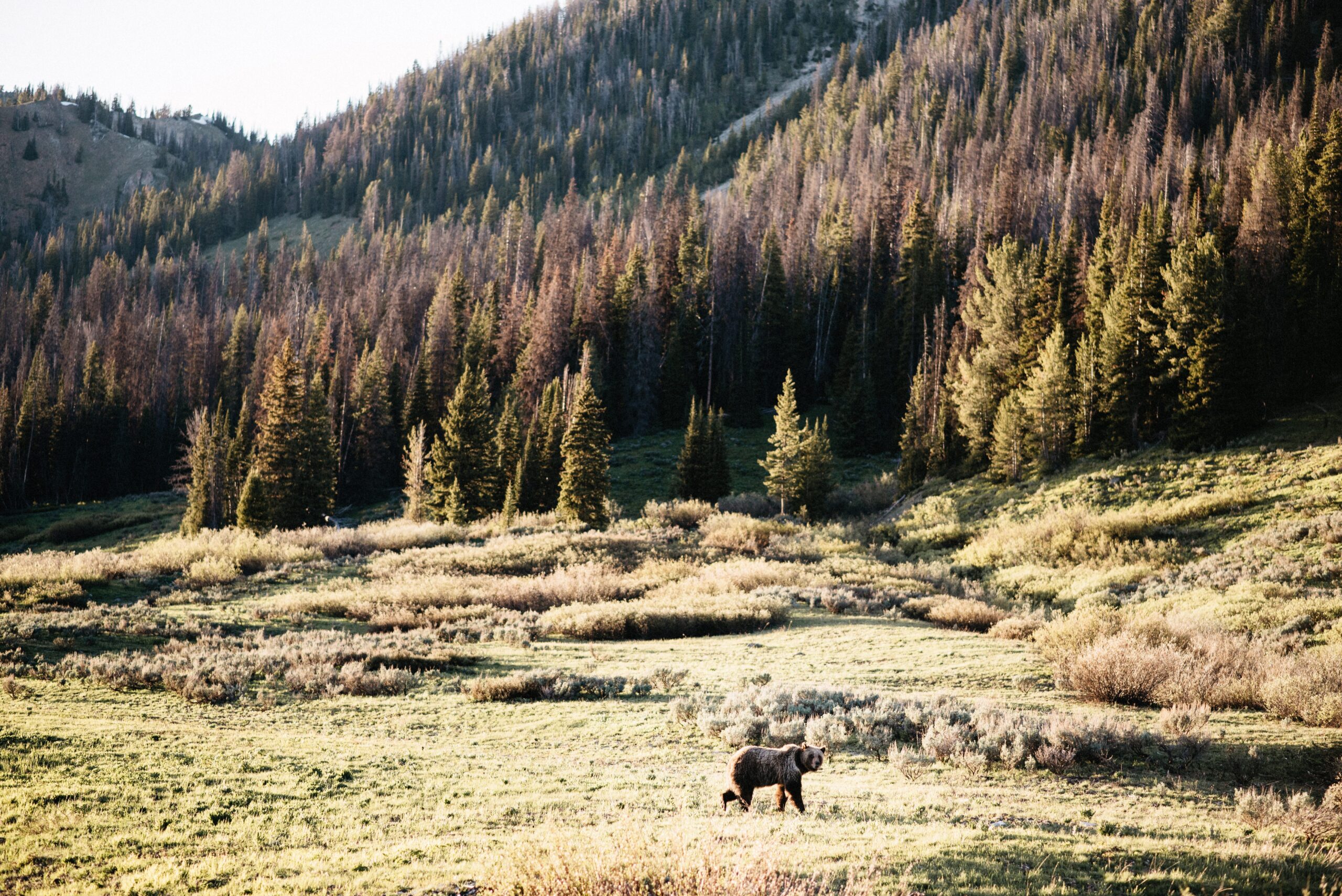
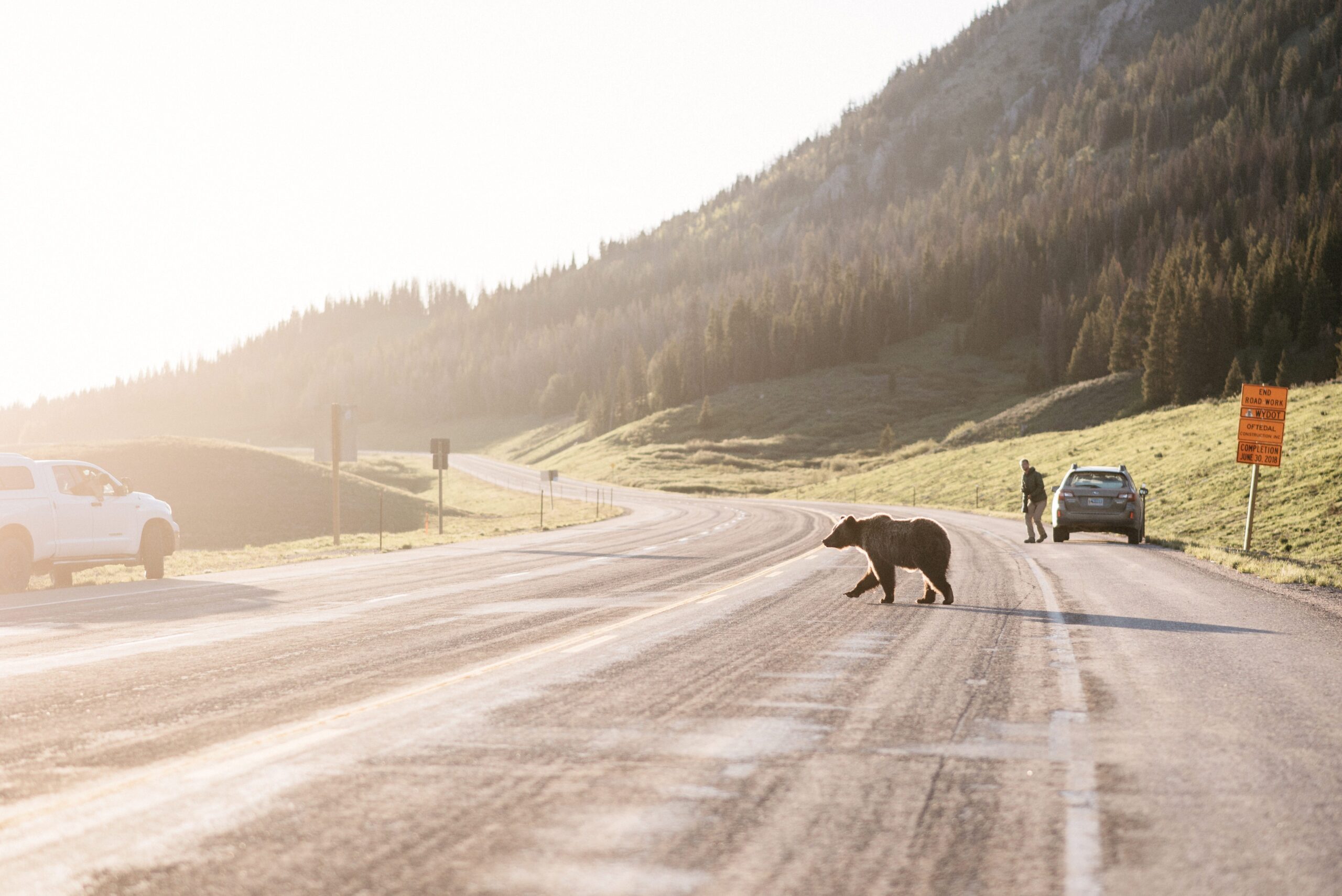
After Yellowstone, where traffic regularly stopped for bison, we had already learned not to treat an animal beside the road as an invitation to approach. We stayed in the car and let the bear decide where it wanted to go.
Hiking to Taggart Lake
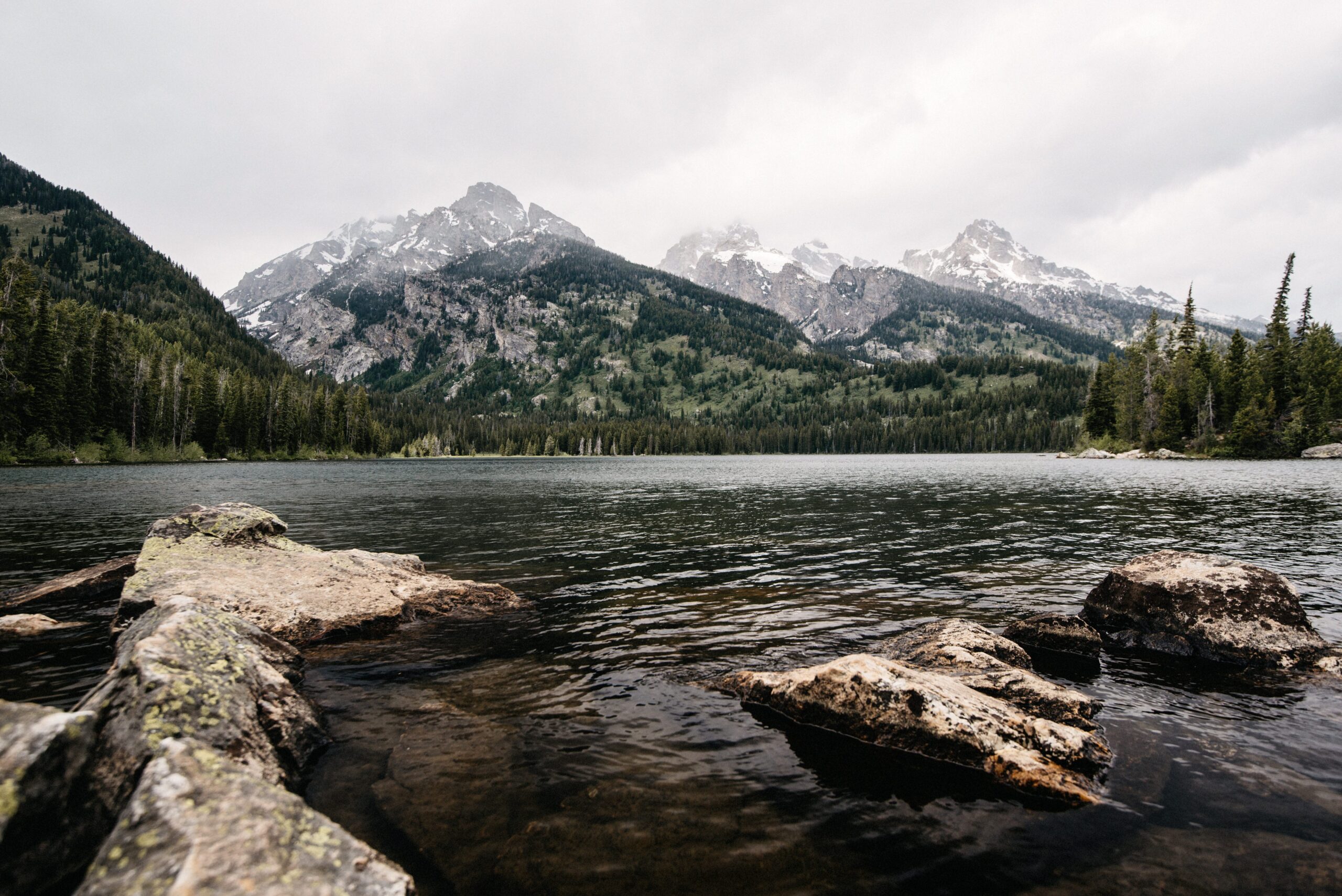
Taggart Lake began near Moose and was one of the lower hikes available during our visit. The trail climbed gently through forest, crossed rushing water and ended at a mountain lake below the Tetons. It was not a long expedition, but it delivered exactly the alpine view we had hoped for.
We carried layers even though the day began sunny. Clouds gathered around the peaks quickly and the temperature beside the water felt very different from the open road. Grand Teton was one of those places where preparing for several kinds of weather in the same afternoon was not excessive.


Staying in Dubois on a budget
Lodges inside the park and rooms around Jackson were outside our budget, so we stayed in Dubois. On paper, the distance looked manageable. In practice, driving about an hour each way became annoying rather quickly, especially after a full day in the park.
We would not choose Dubois again if we found anything affordable closer to Moose or Jackson. For a tight budget it worked, but the money saved came with two extra hours on the road each day.
What we would plan differently
For a June visit, checking trail and road conditions mattered more than arriving with a fixed list. Two days suited what was open for us. Later in summer, we would add another day, stay closer to the park and choose at least one longer hike into the mountains.
What remained was the contrast: broad lakes and sharp peaks instead of Yellowstone’s steam and crowds. Combining both parks made sense geographically, but visiting Grand Teton as a short appendix to Yellowstone would have missed the point. It deserved its own two days.