
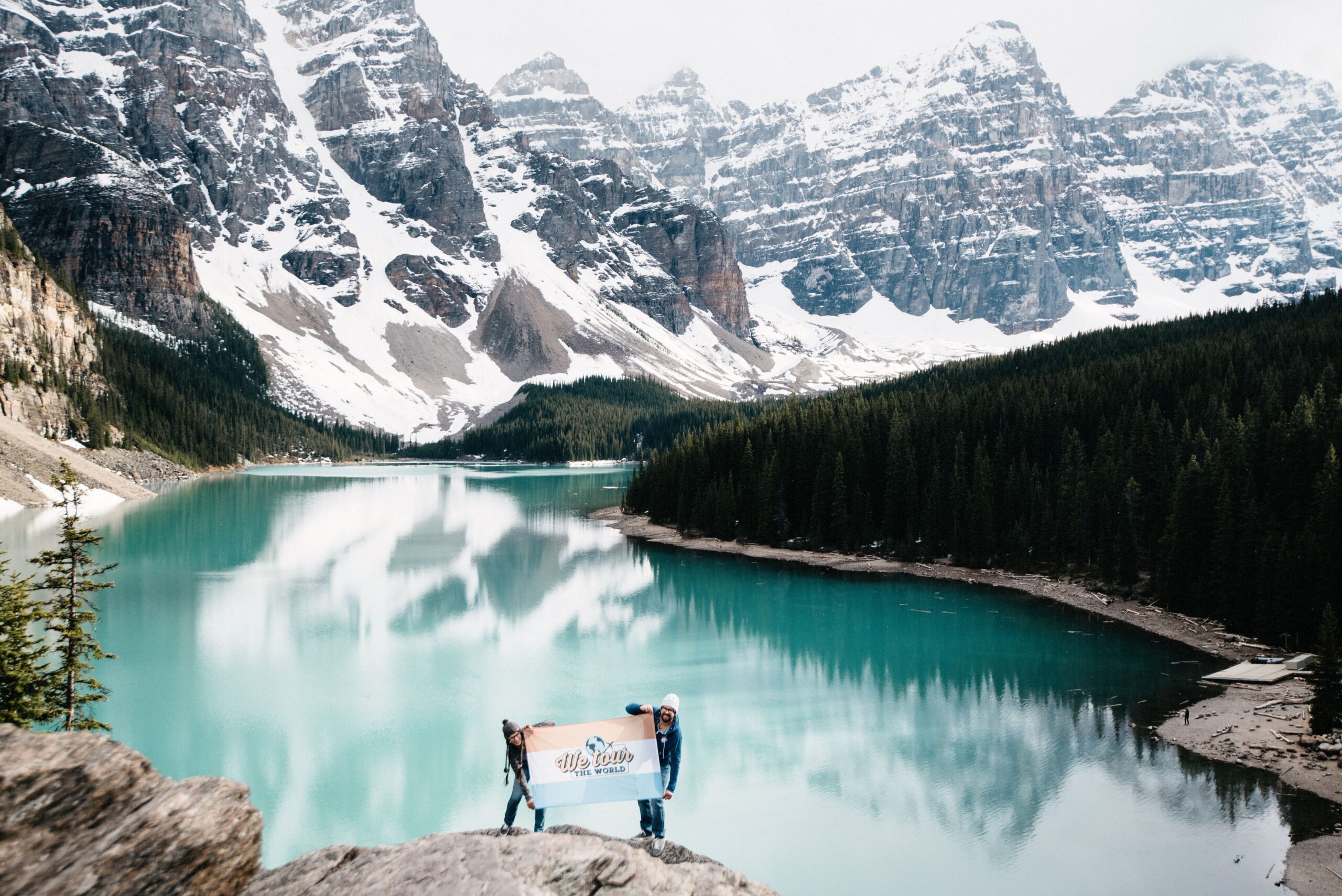
Our final week in Canada took us from the Icefields Parkway to Lake Louise, Banff and Waterton Lakes. The calendar said late May and early June, but the mountains had their own opinion. Fresh snow, frozen water and winter jackets appeared between the turquoise lakes we had expected from the Canadian Rockies.
We moved from one night at Mosquito Creek to three nights at Lake Louise, two in Banff and one in Pincher Creek for Waterton Lakes. From there we crossed back into the USA and continued to Glacier National Park.
From Mosquito Creek into fresh snow
The drive south from Jasper continued through the high part of the Rockies. Snow had already been part of the Icefields Parkway, but it did not disappear when we reached the Lake Louise area. Roads, forest clearings and trails were white again, and our first photographs look much more like winter than the beginning of June.
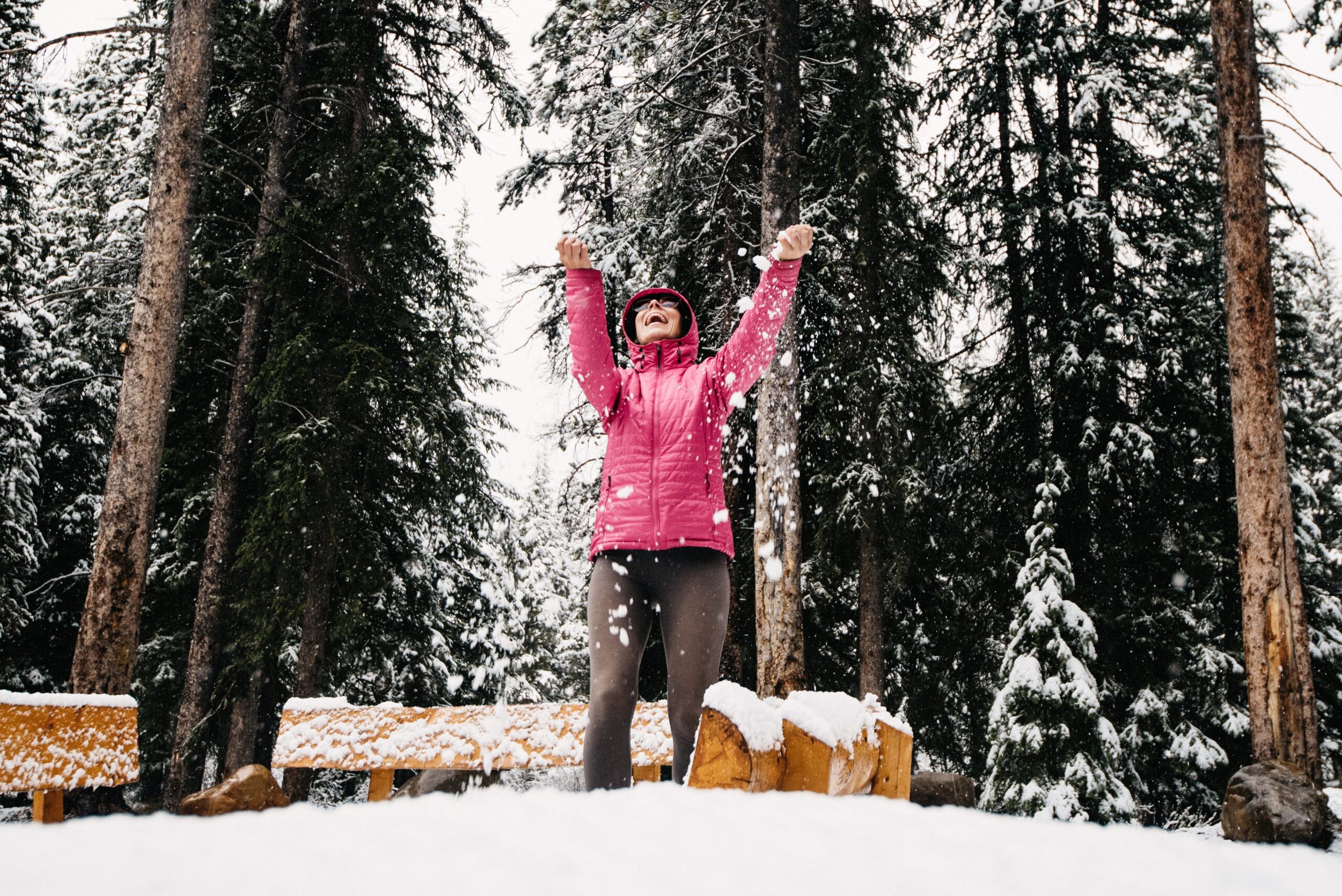
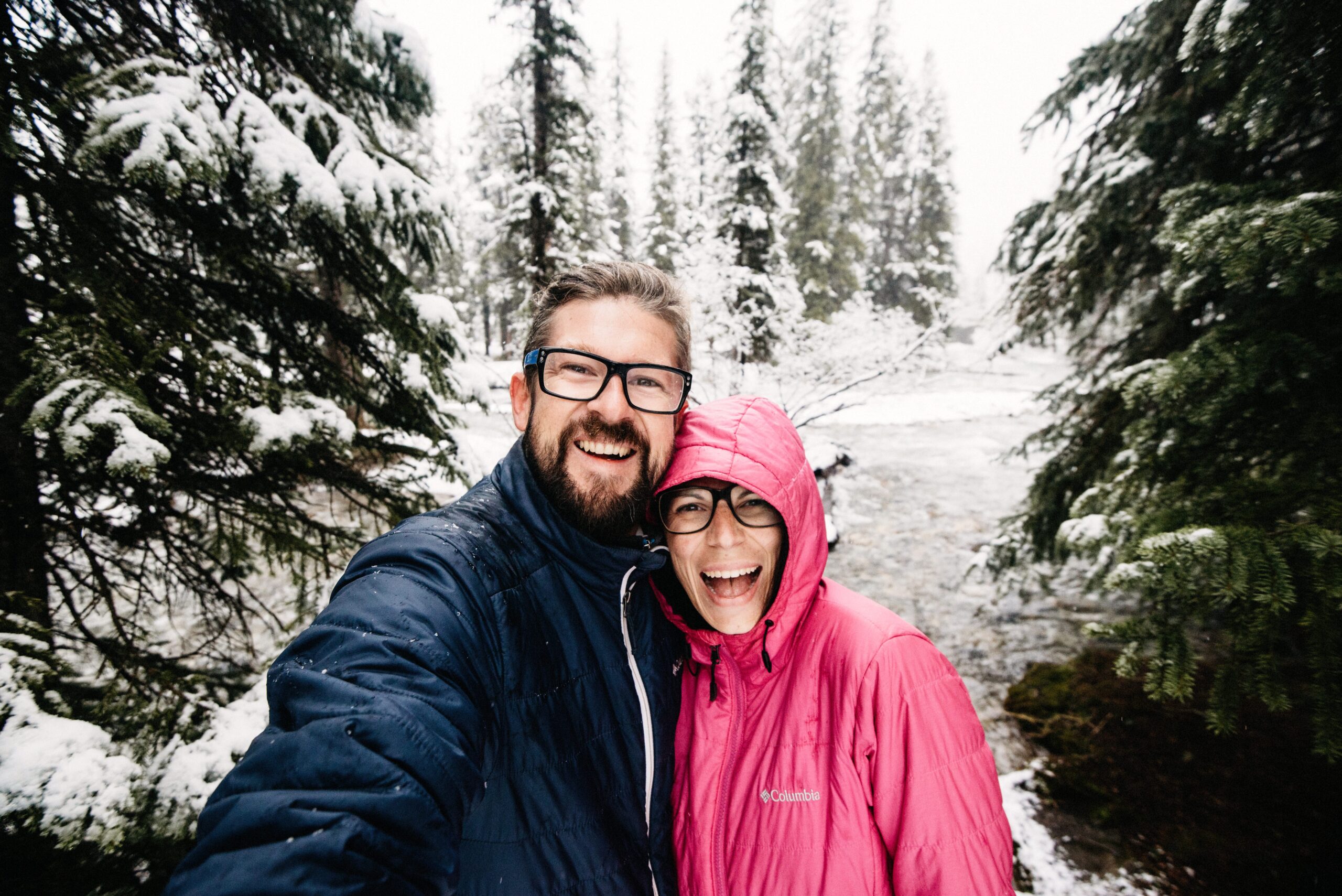
We had travelled with clothing for almost every climate by then, so the cold itself was manageable. What kept changing was the combination: dark forest, low cloud, turquoise water and a layer of snow around it all. The same landscape looked completely different as soon as the cloud moved.
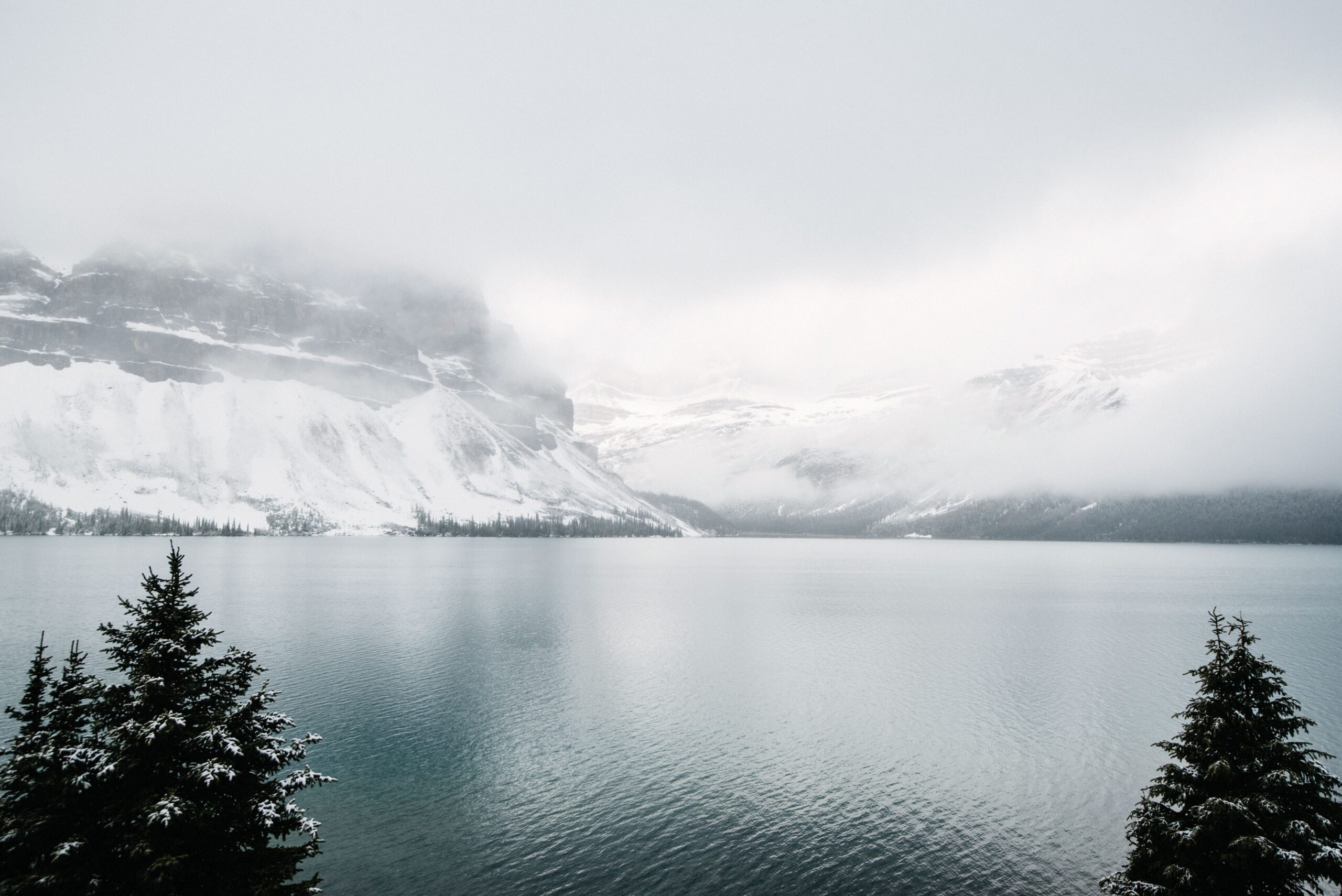
Lake Louise from the shore and above
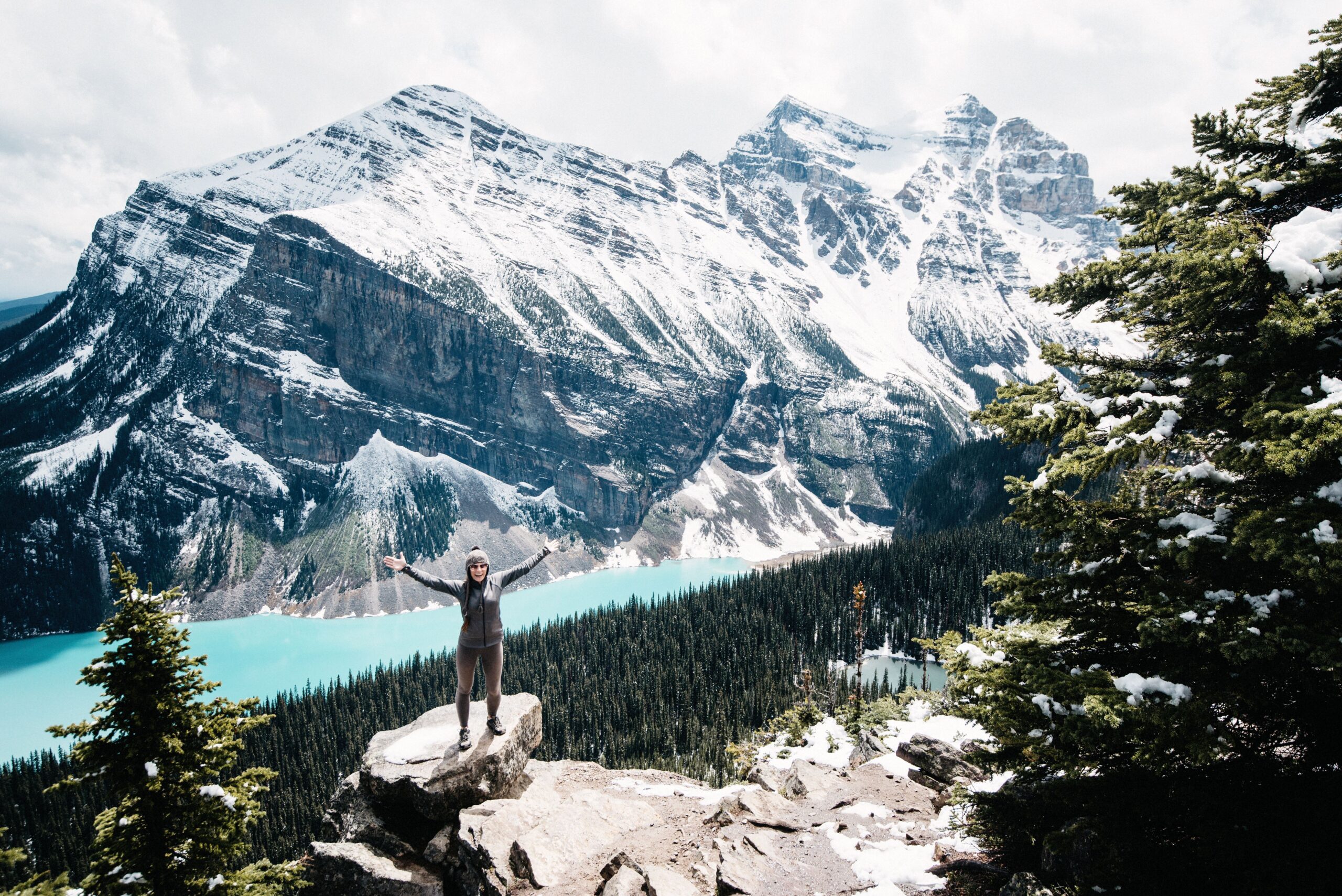
Lake Louise was the centre of this part of the route. At shore level the lake filled the valley between steep mountains. From the higher trails, it became a bright strip of water below us, surrounded by forest and snow.
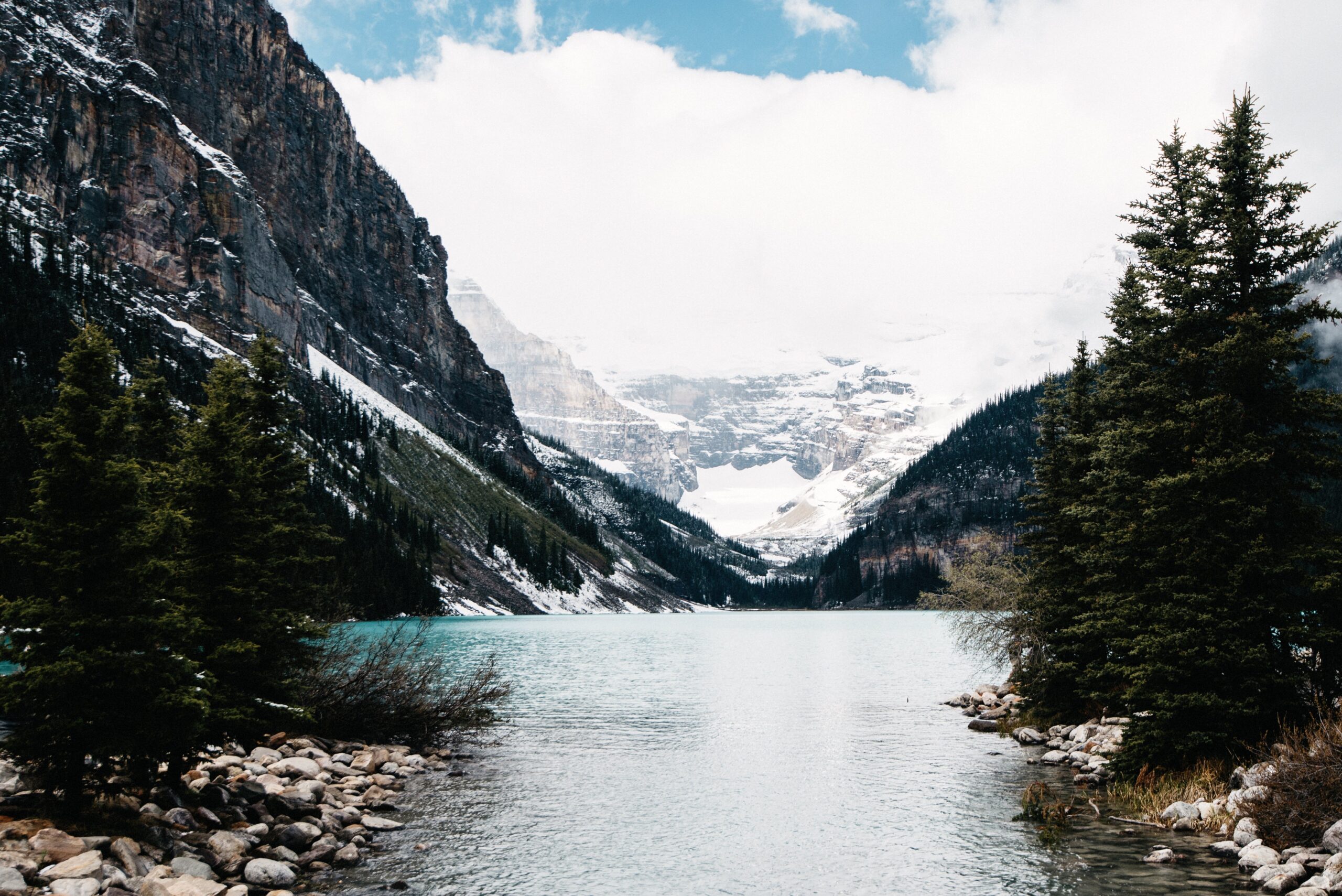
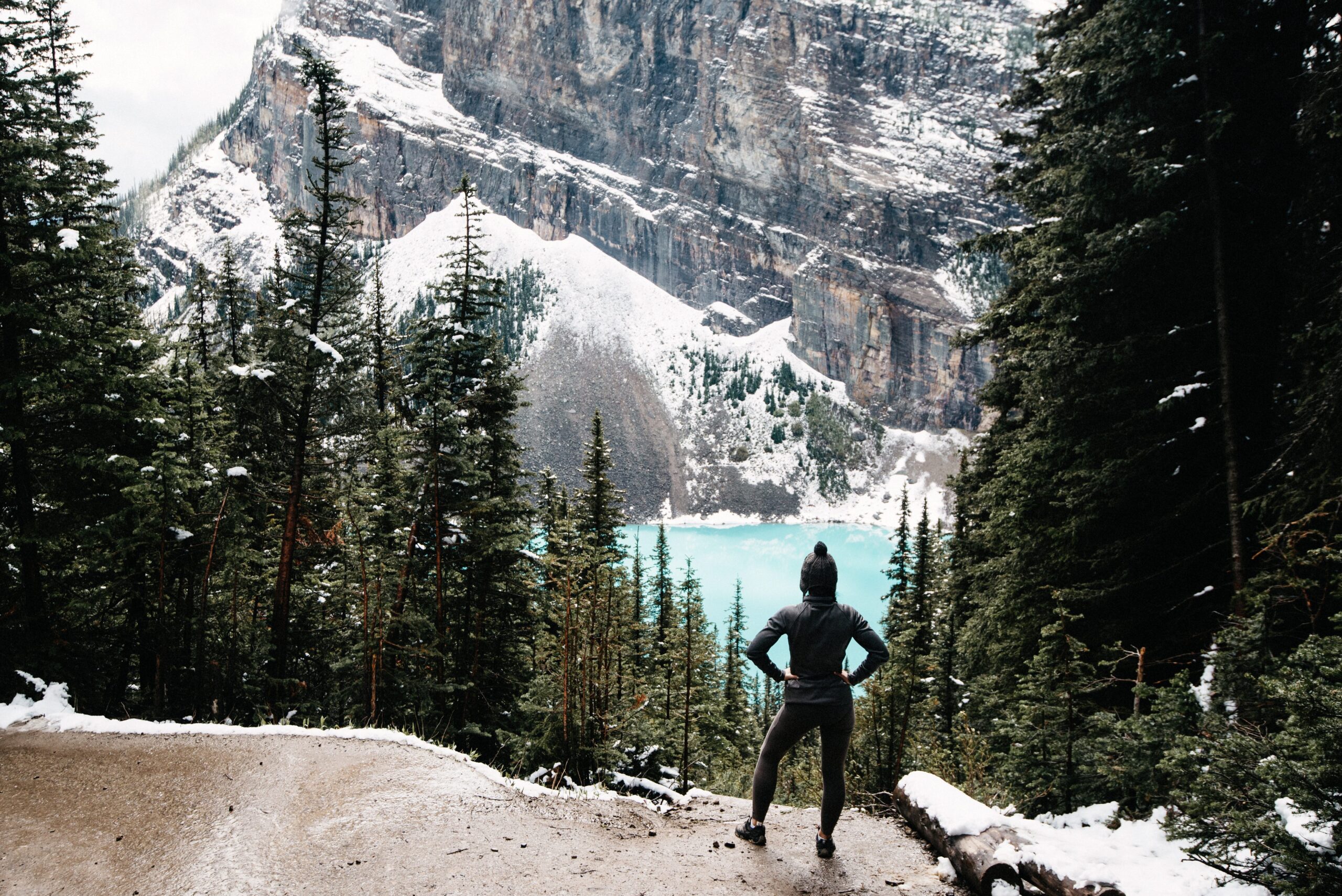
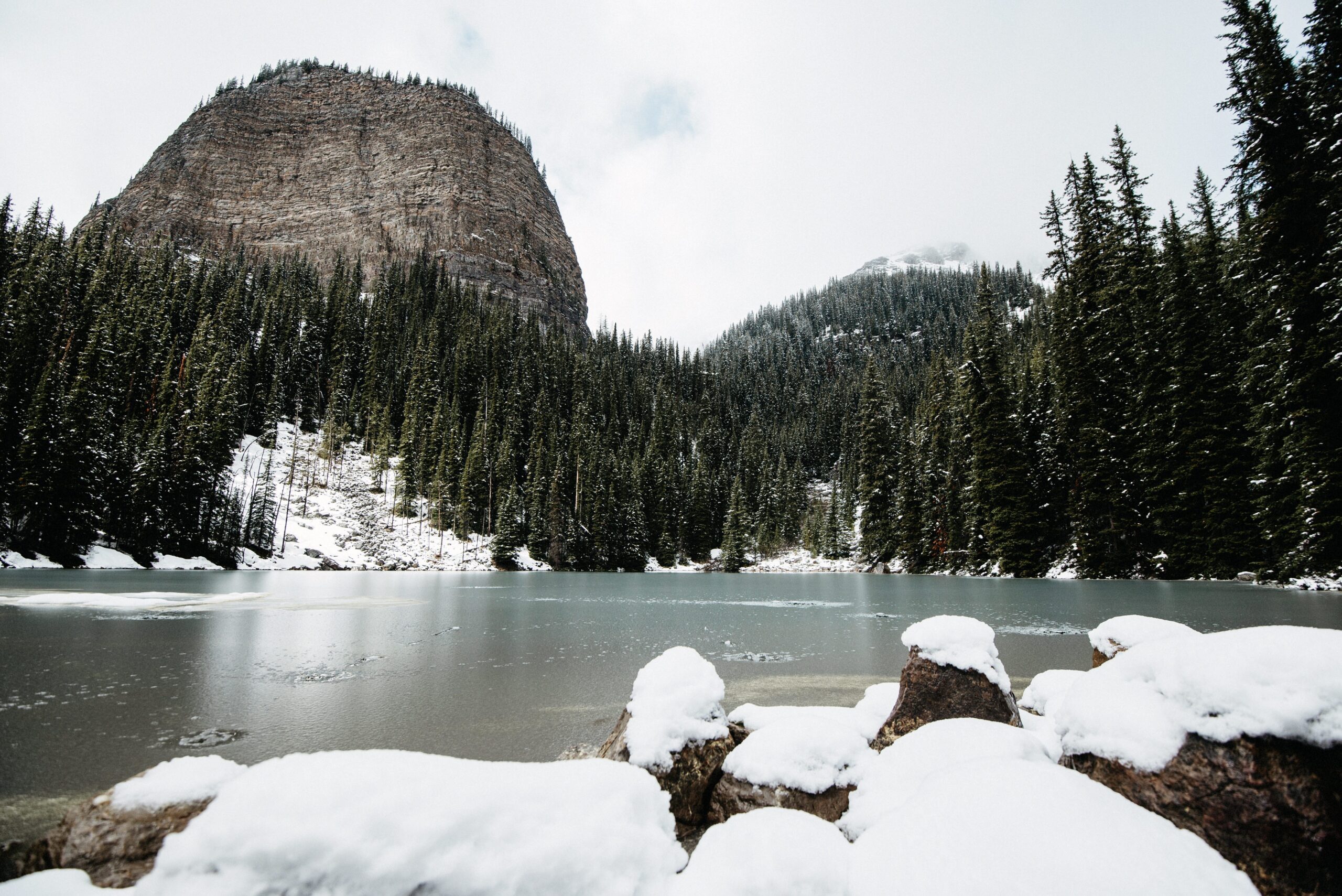
The trail conditions were not consistently summery. Some sections were clear, others still crossed snow, and smaller lakes higher up remained partly or completely frozen. It made the walks slower but also gave us views we would not have found a few weeks later.
Moraine Lake between water and winter
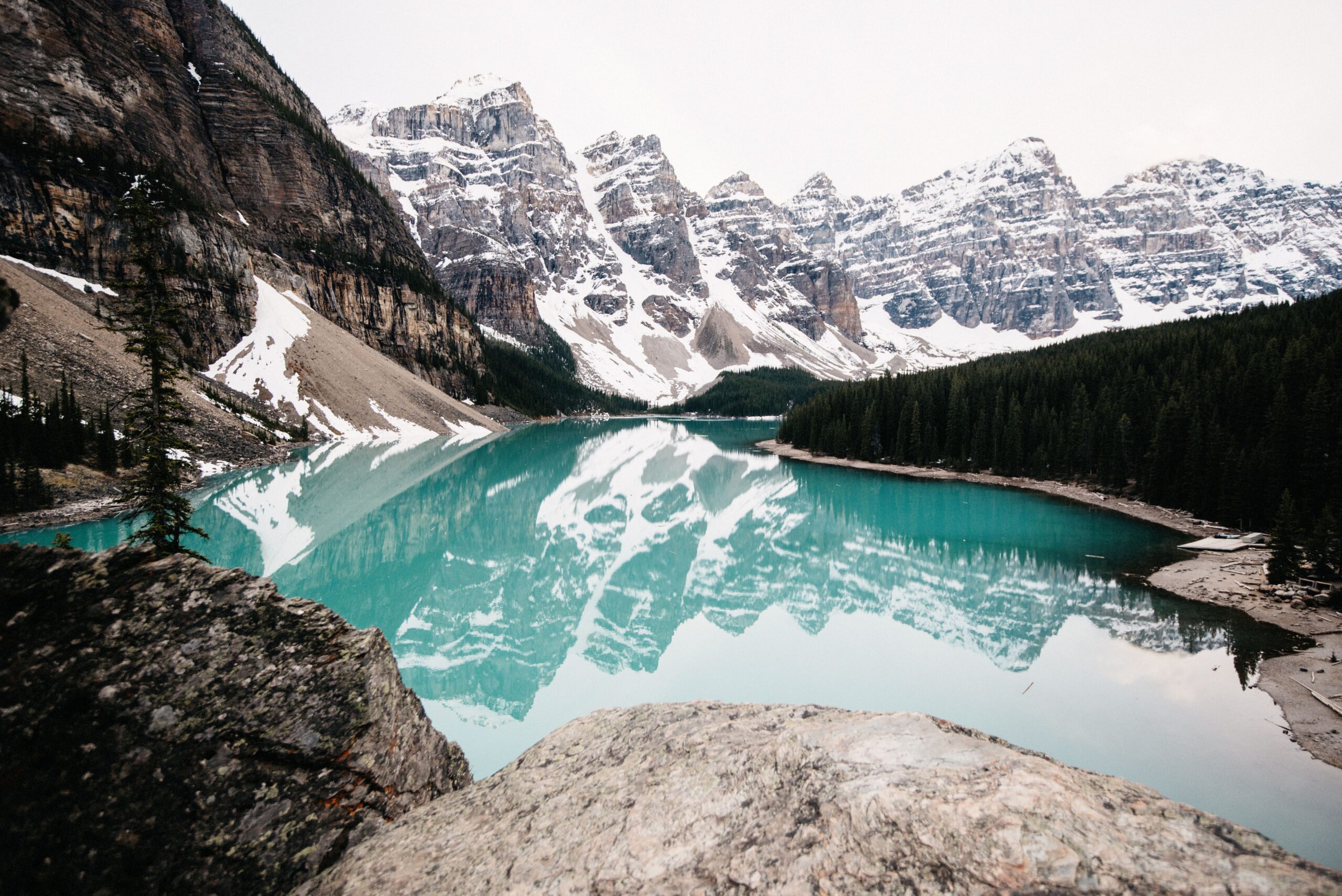
Moraine Lake delivered the colour everybody associates with the Canadian Rockies, even though snow still covered parts of the surrounding ground. The water reflected the mountains almost perfectly whenever the surface became quiet.
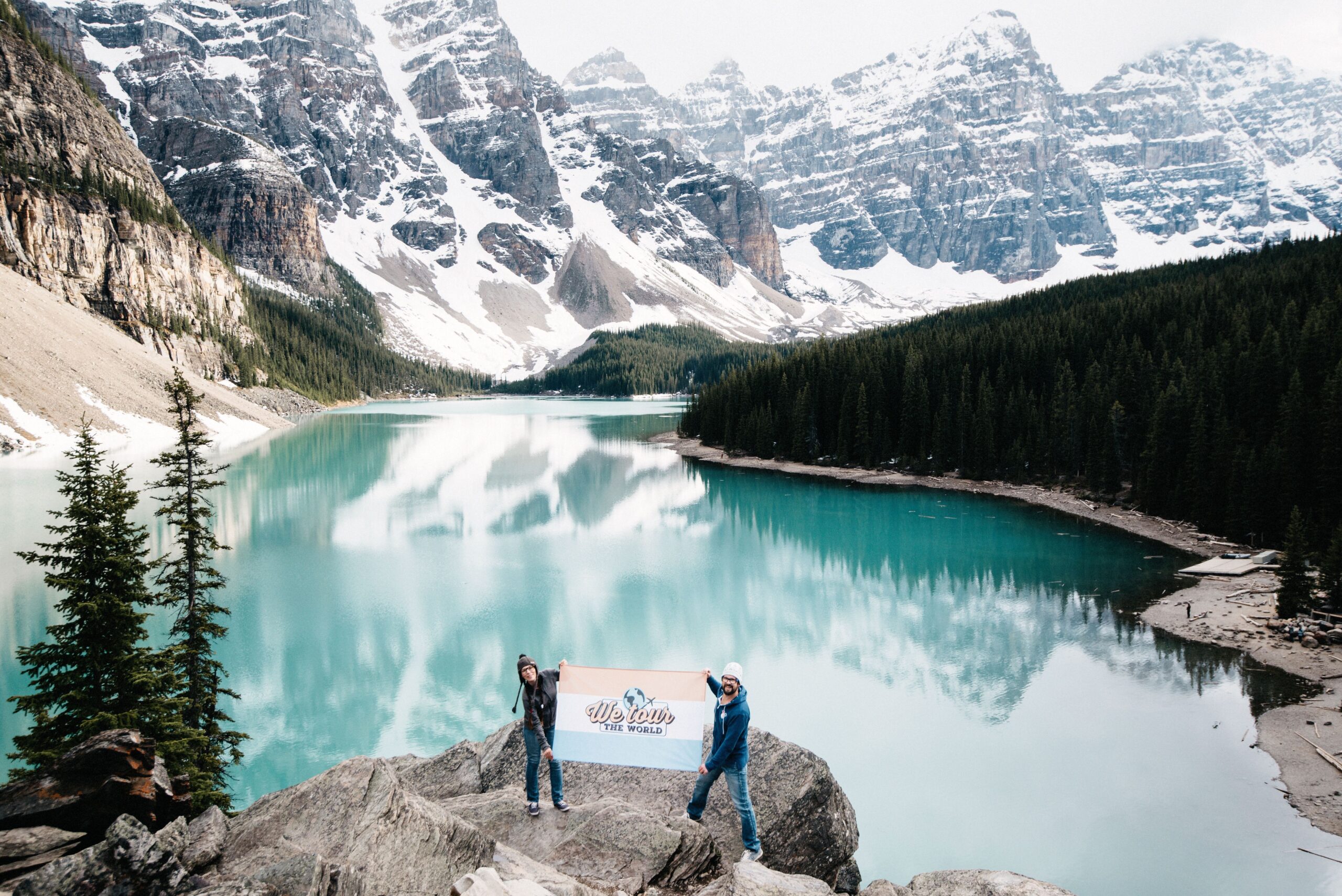
We walked above the lake and through the remaining snow rather than stopping only at the shore. From higher up, the blue became even more obvious against the white slopes and grey rock. It was one of those places where moving a few hundred metres changed the whole photograph.
More water on the road to Banff
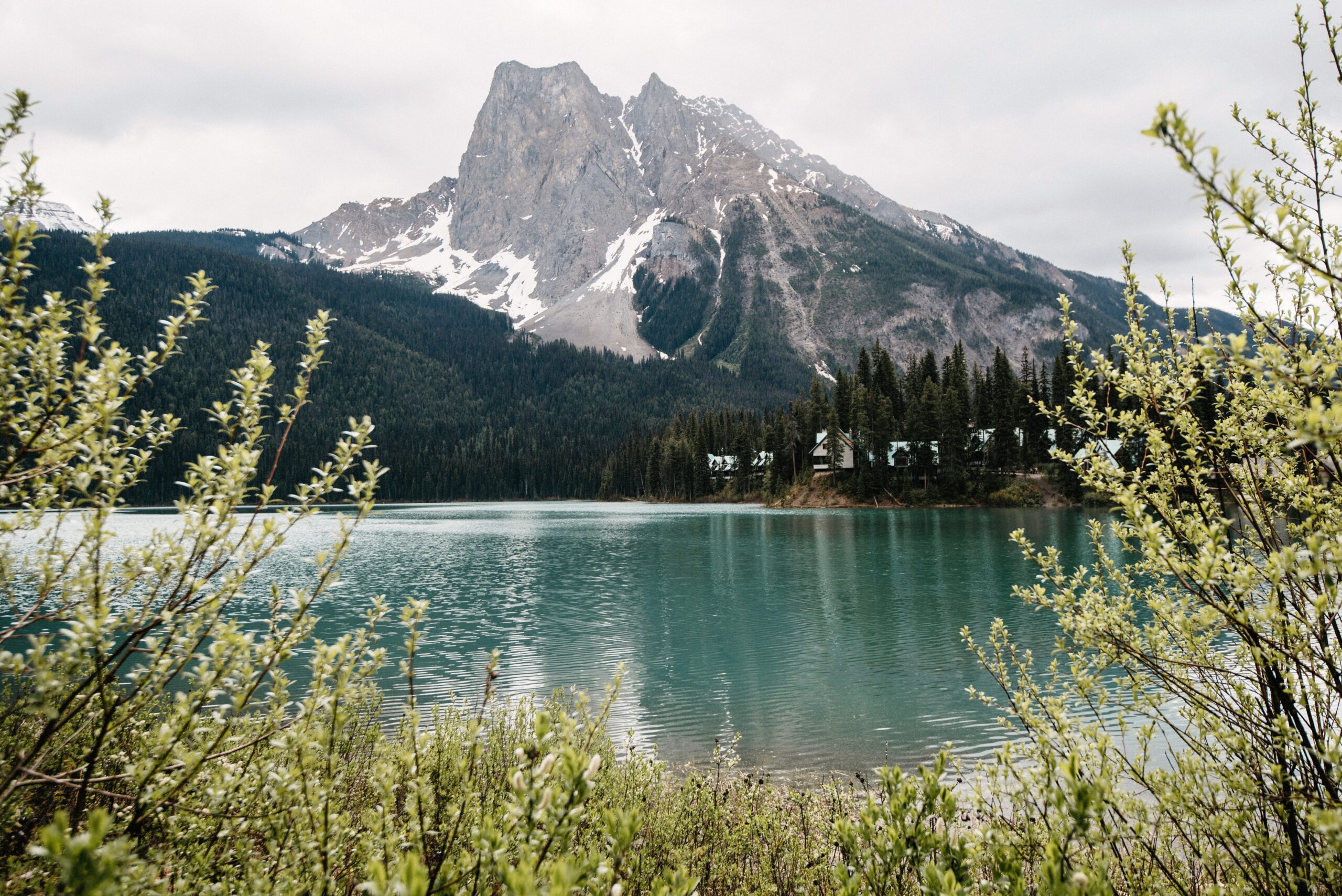
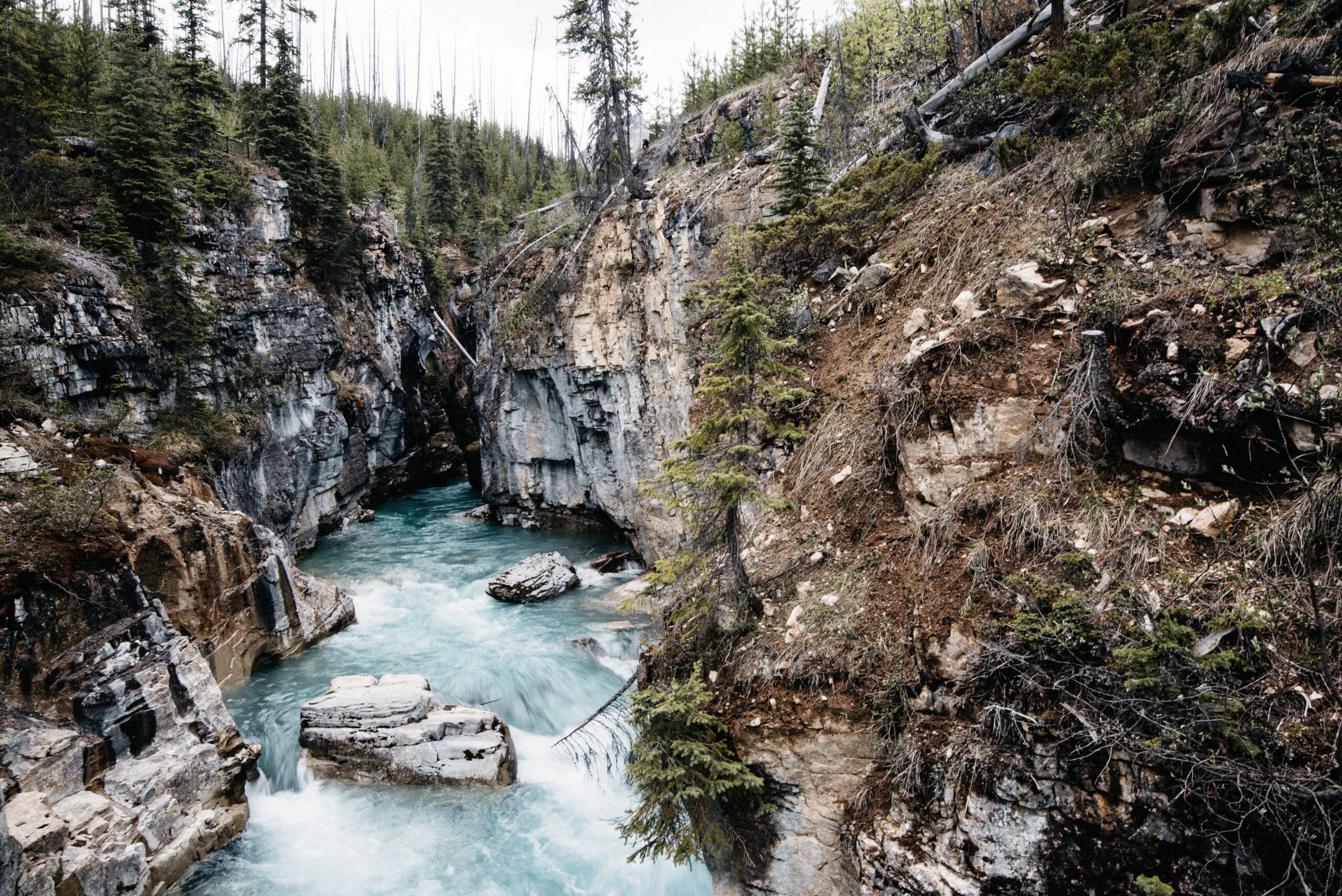
The route towards Banff continued past more lakes, rivers and narrow sections of canyon. Not every stop needed a famous name. We repeatedly left the car because the colour of the water or the view between the trees was enough reason to pause.
After several days dominated by mountains and trails, Banff felt noticeably more like a town again. We had two nights there, which meant time for the streets as well as the landscape around them.
Banff at street level
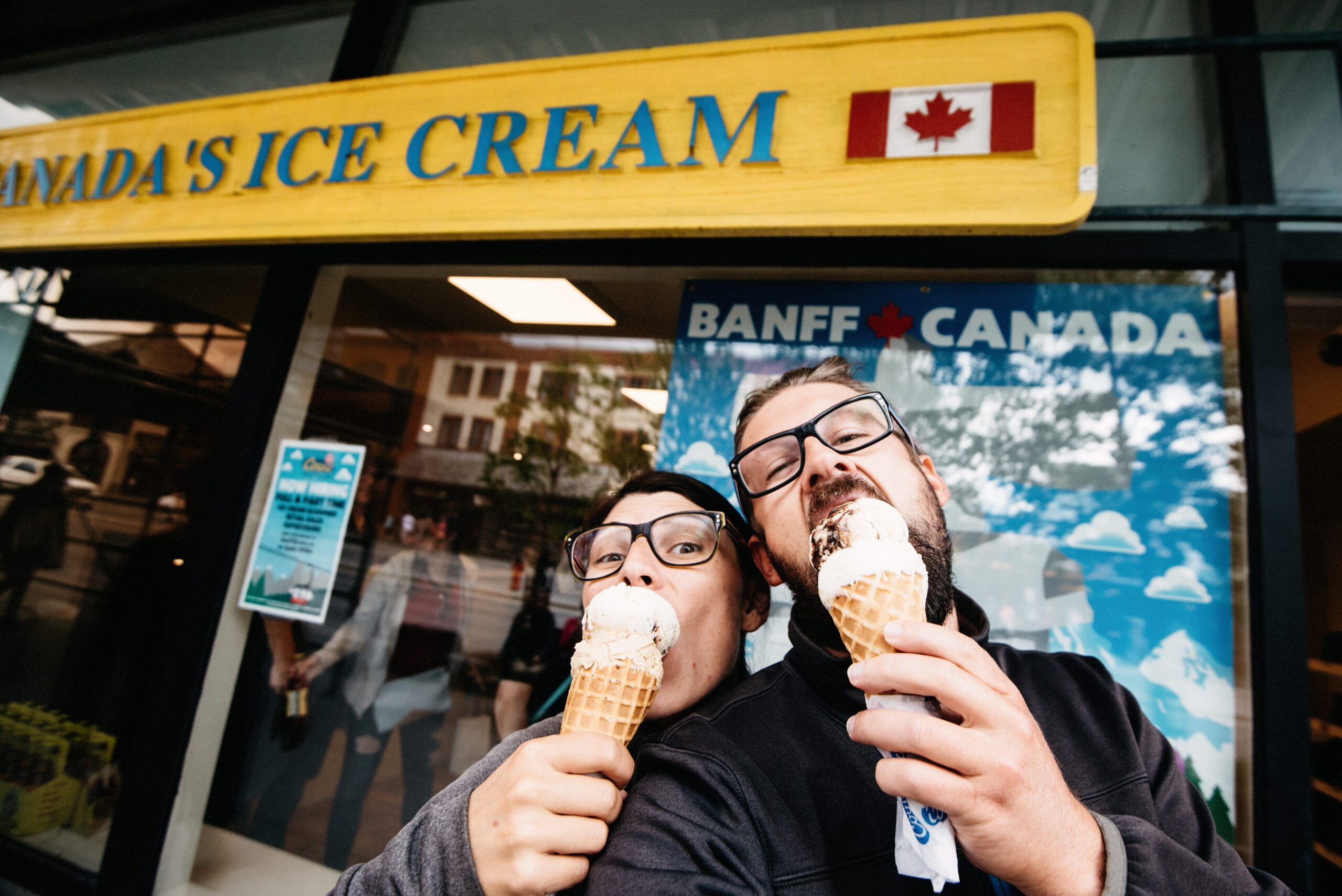
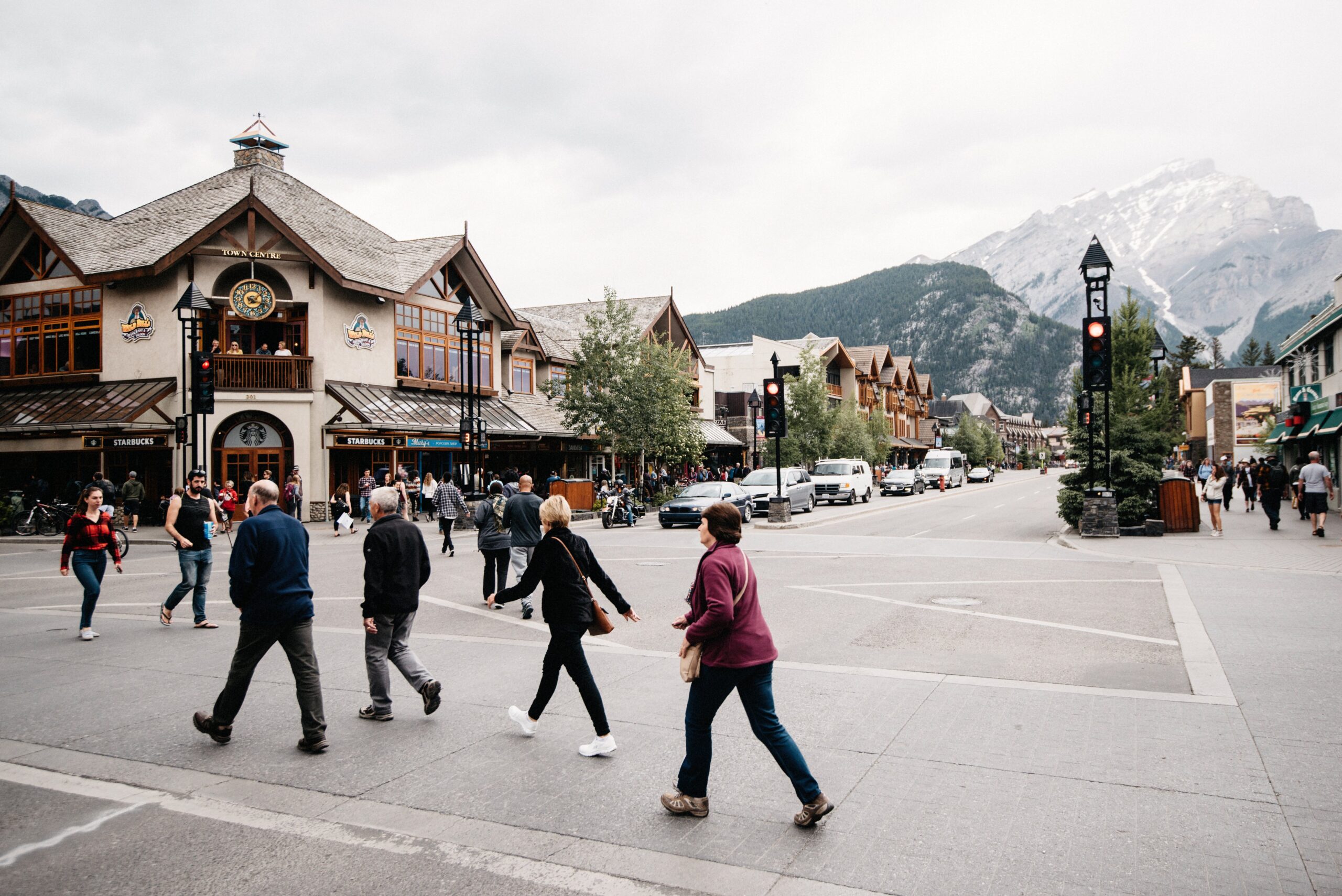
Banff put cafés, shops and traffic directly between the mountains. We walked through the centre, ate ice cream and then returned to the water and forest outside town. It was an easy change of pace after the snowy walks around Lake Louise.
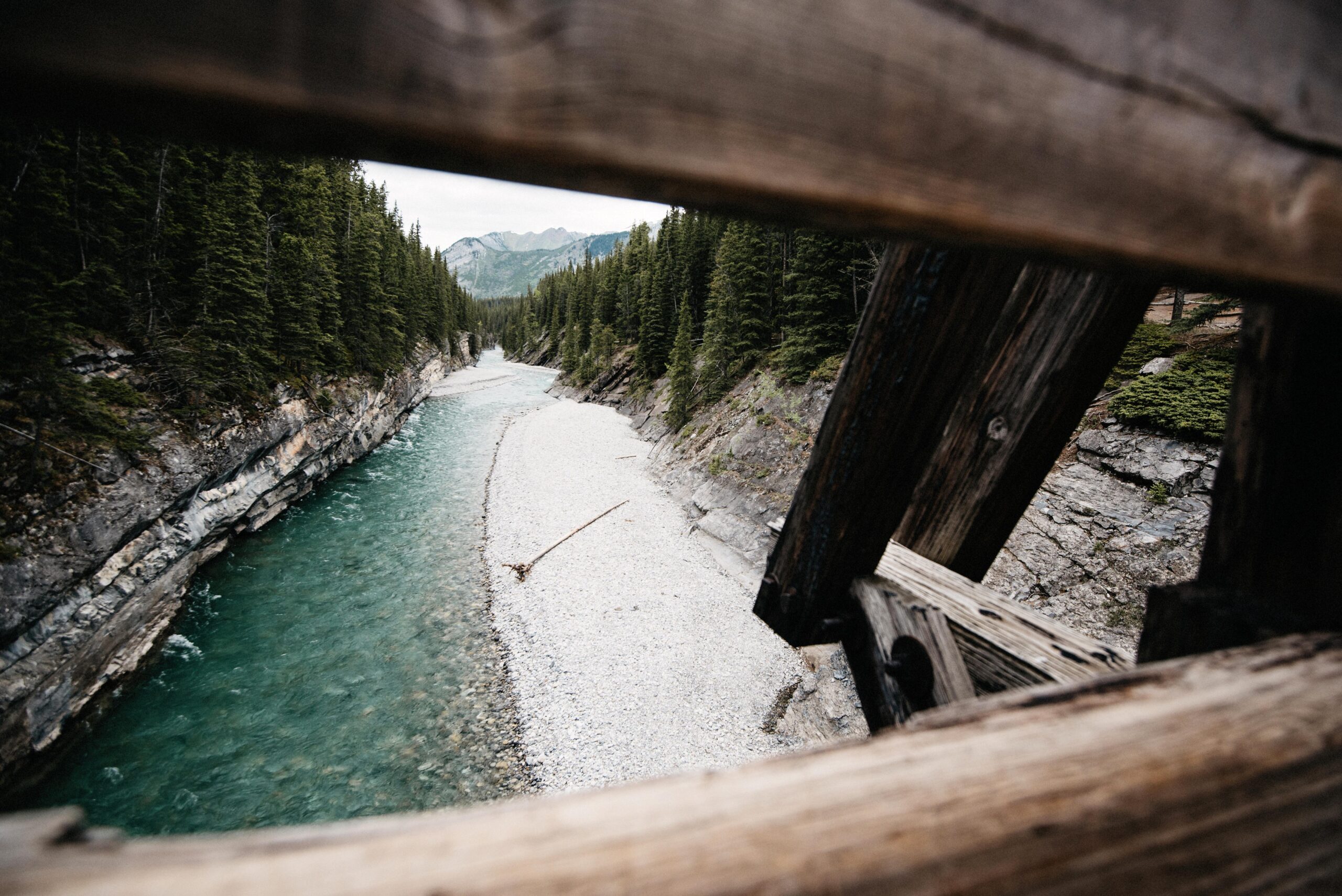
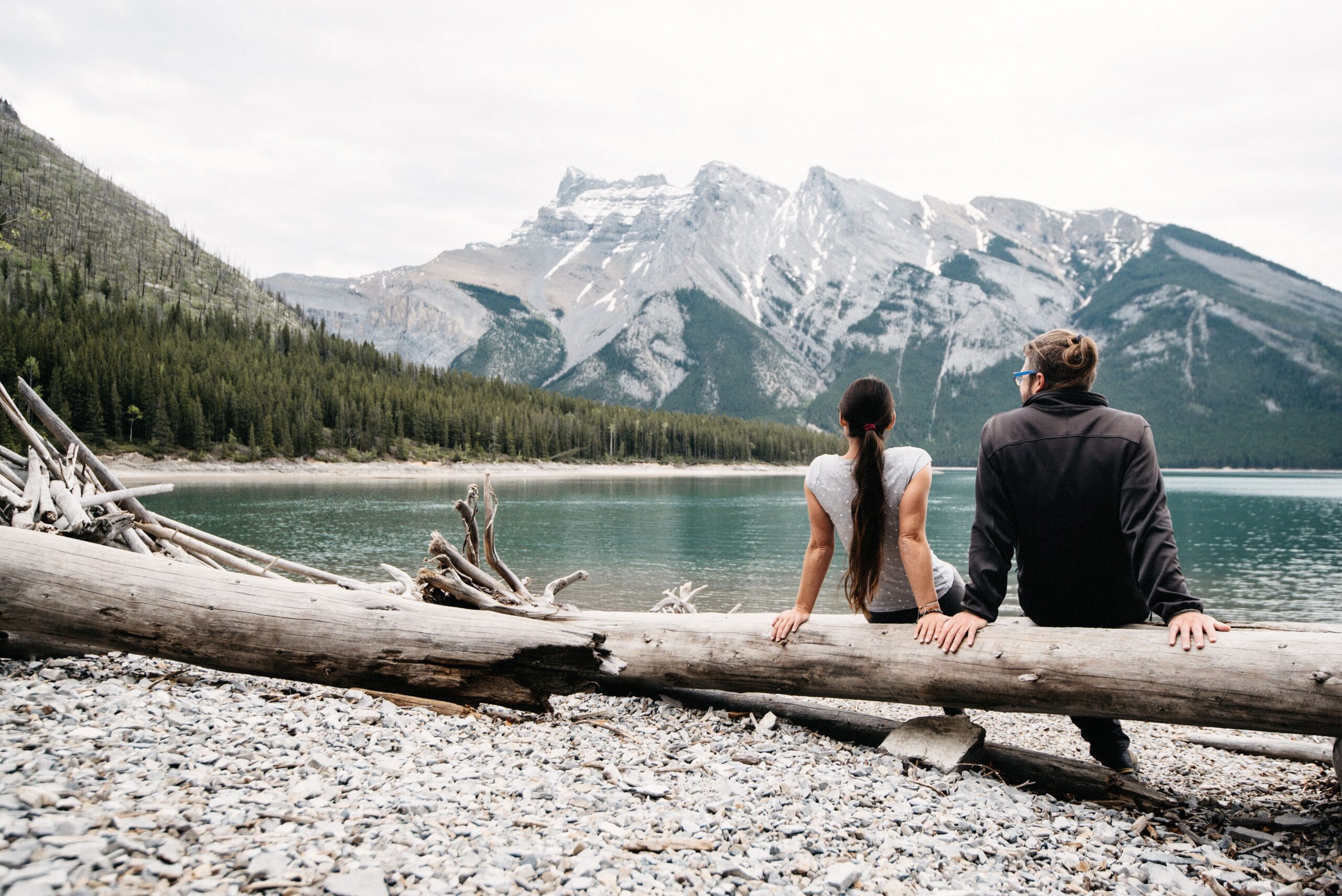
Near town, clear water ran through a narrow gorge beneath wooden bridges. A quieter lake gave us another place to sit by the water before we changed perspective completely and went higher.
Banff from above
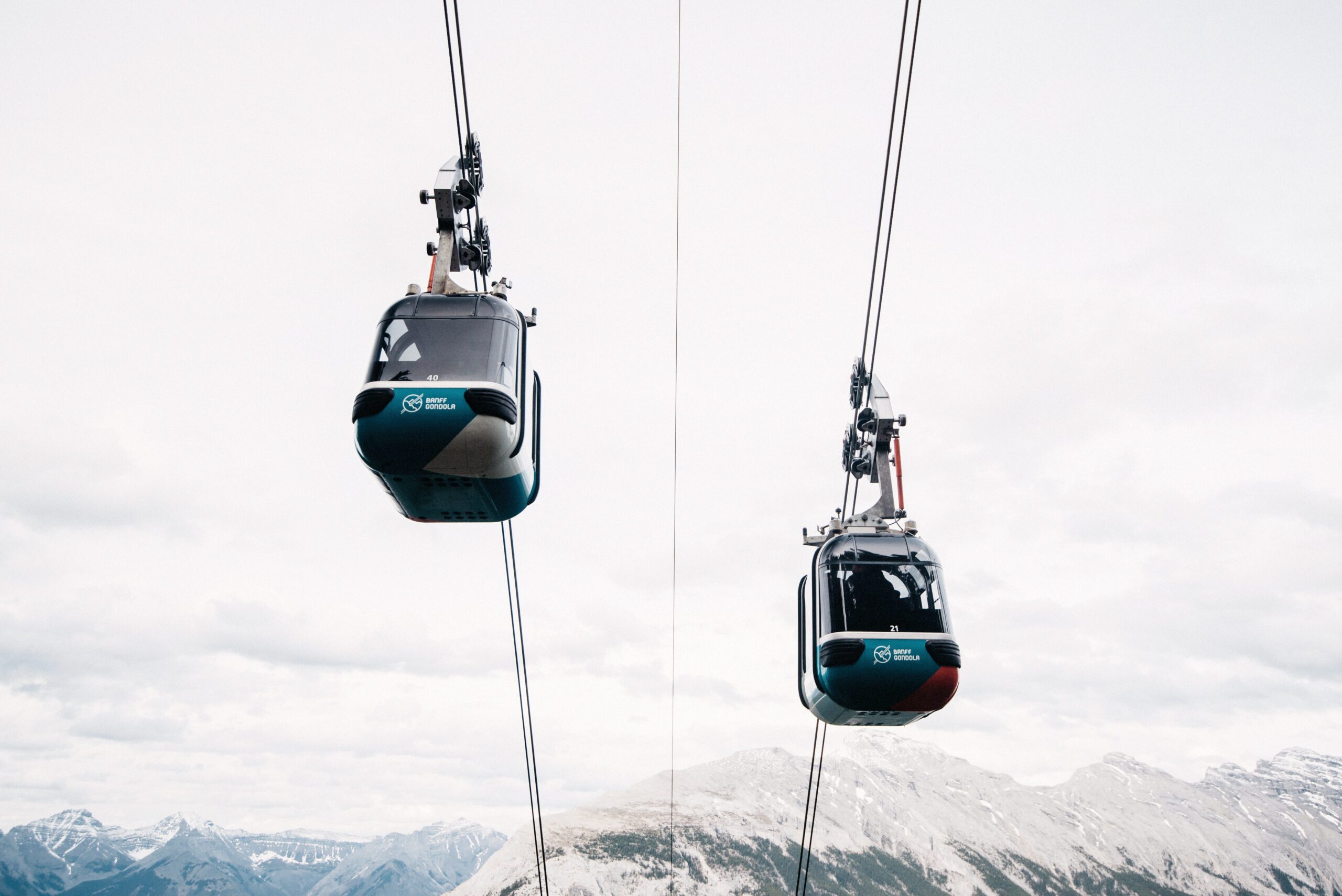
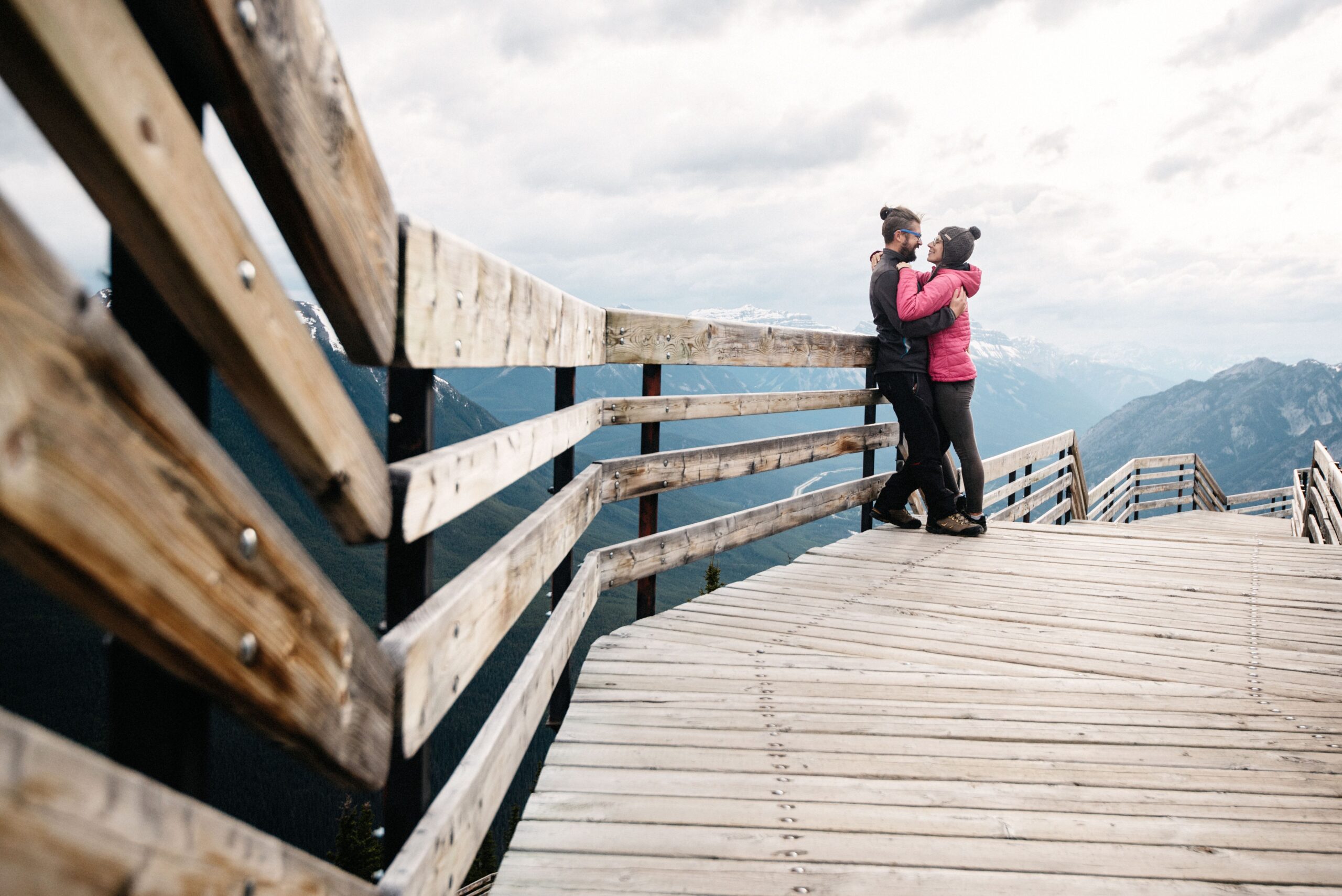
The gondola carried us above Banff and turned the town into a small patch in a much wider valley. From the viewing platforms, mountain ranges continued in every direction. It was the clearest overview of how tightly the town sits between them.

Waterton Lakes and one final Canadian night
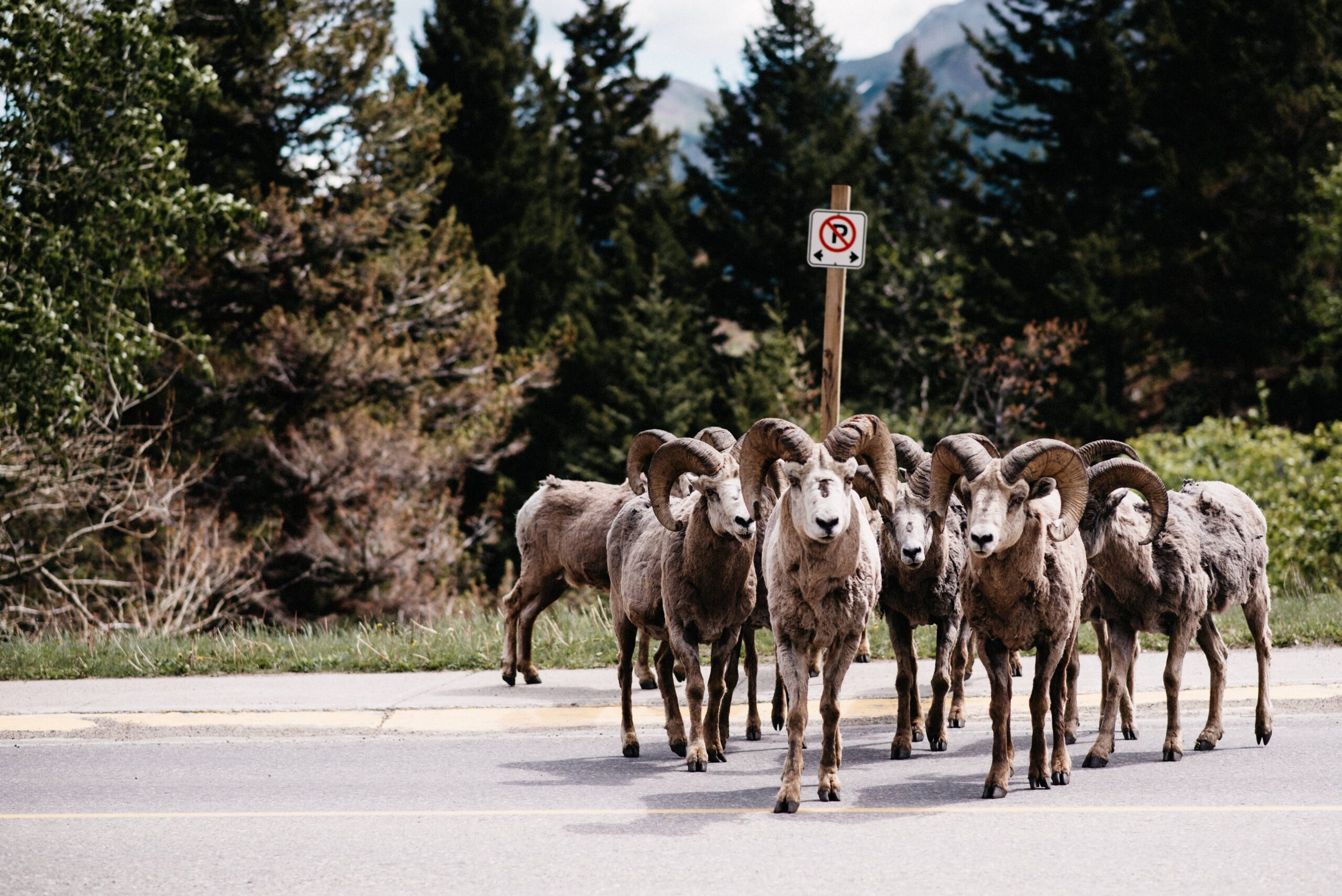
After Banff we stayed in Pincher Creek for our visit to Waterton Lakes. The landscape opened up as we travelled south, but the mountains remained directly behind the lake. A herd of bighorn sheep standing on the road made sure the final Canadian section did not become only another scenic drive.
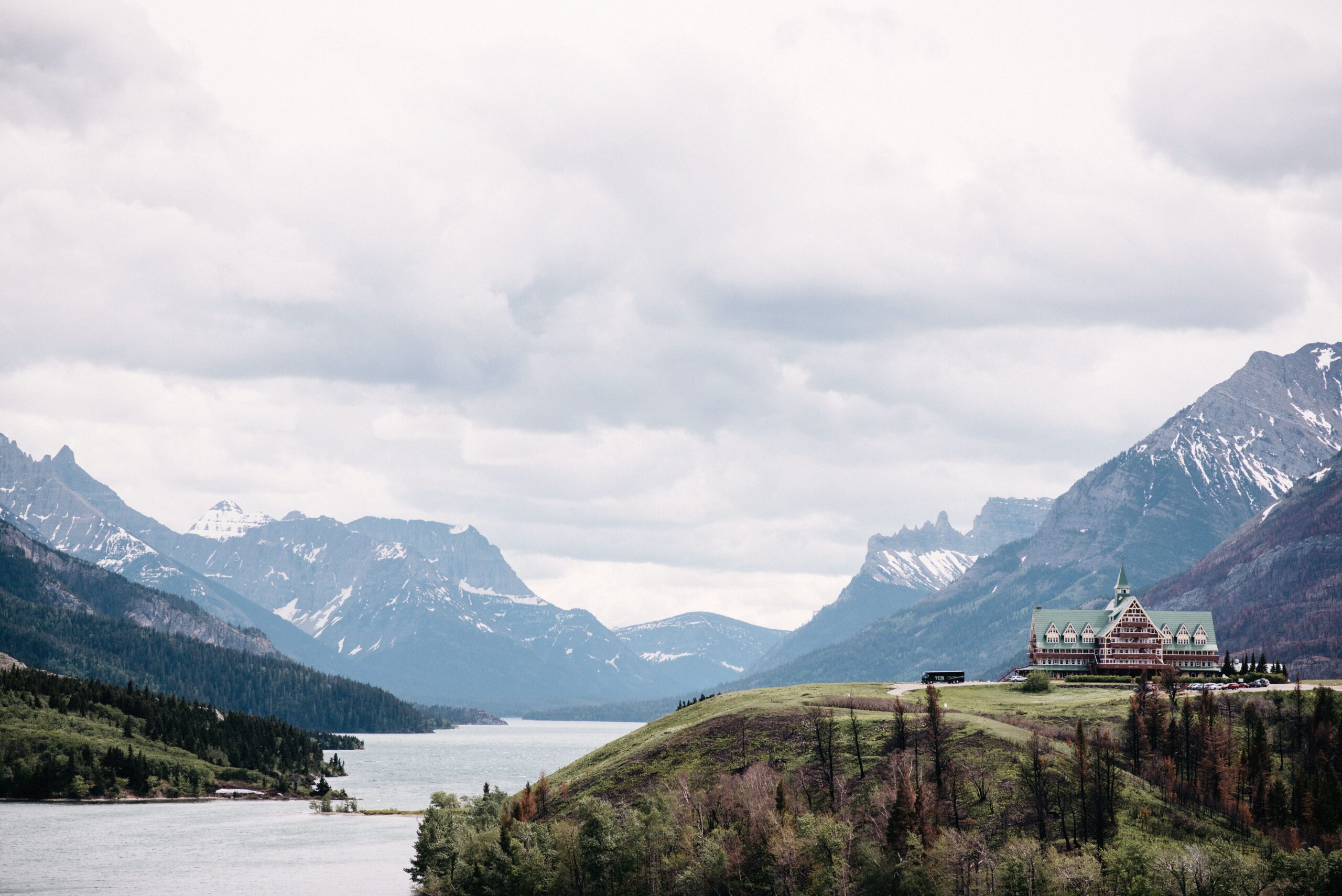
The Prince of Wales Hotel sat alone above the water and was visible from far across the valley. That view became our last major Canadian image before the route crossed into Montana the following day.
Across the border to Montana
After one night in Pincher Creek we continued to Kalispell and Glacier National Park. Canada had taken us from Vancouver through Whistler, Wells Gray, Jasper and the Icefields Parkway to this final stretch. Waterton Lakes did not feel like a dramatic ending, but it was a fitting transition: one mountain park led almost directly into the next country and the next part of the journey.